

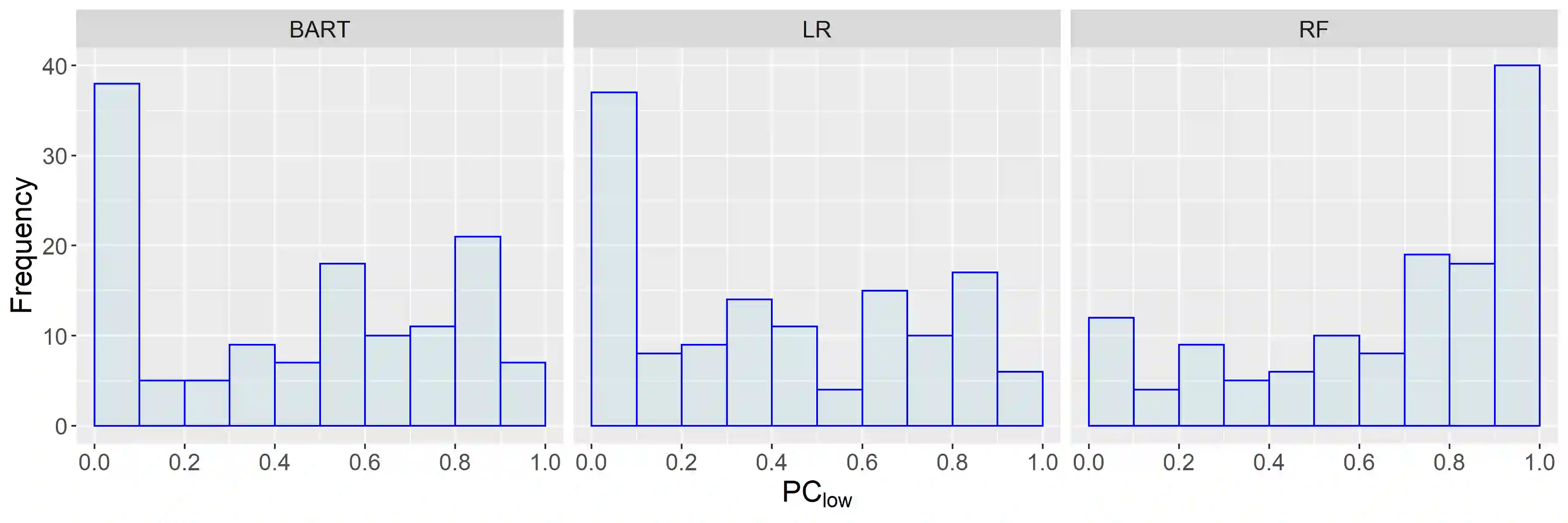
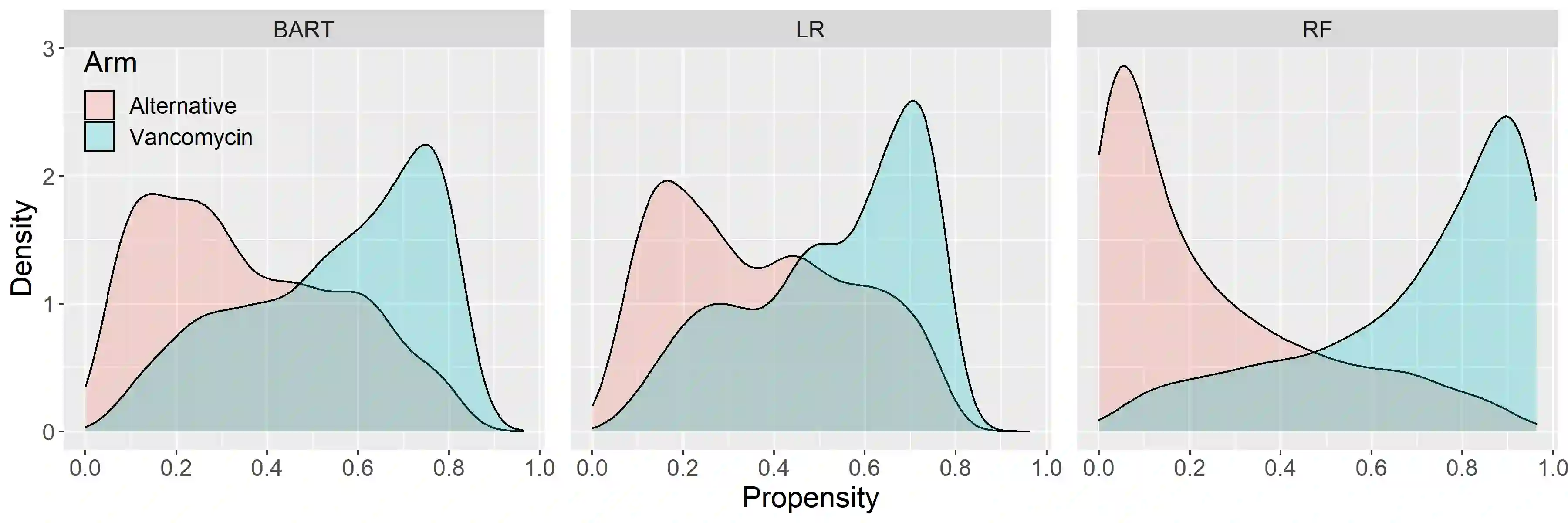
The current best practice approach for the retrospective diagnosis of adverse drug events (ADEs) in hospitalized patients relies on a full patient chart review and a formal causality assessment by multiple medical experts. This evaluation serves to qualitatively estimate the probability of causation (PC); the probability that a drug was a necessary cause of an adverse event. This practice is manual, resource intensive and prone to human biases, and may thus benefit from data-driven decision support. Here, we pioneer a causal modeling approach using observational data to estimate a lower bound of the PC (PC$_{low}$). This method includes two key causal inference components: (1) the target trial emulation framework and (2) estimation of individualized treatment effects using machine learning. We apply our method to the clinically relevant use-case of vancomycin-induced acute kidney injury in intensive care patients, and compare our causal model-based PC$_{low}$ estimates to qualitative estimates of the PC provided by a medical expert. Important limitations and potential improvements are discussed, and we conclude that future improved causal models could provide essential data-driven support for medication safety monitoring in hospitalized patients.
翻译:当前,对住院患者中药物不良事件进行回顾性诊断的最佳实践方法依赖于完整的病历审查以及由多位医学专家进行的正式因果关系评估。该评估旨在定性估计因果概率(PC),即药物作为不良事件的必要原因的概率。这种做法是手动的、资源密集型的,且容易受到人为偏见的影响,因此可能受益于数据驱动的决策支持。在此,我们率先采用一种利用观测数据的因果建模方法来估计PC的下限(PC$_{low}$)。该方法包含两个关键因果推断组分:(1)目标试验模拟框架和(2)使用机器学习估计个体化治疗效果。我们将该方法应用于临床上相关的情景——重症监护病房患者中万古霉素诱发的急性肾损伤,并将基于因果模型的PC$_{low}$估计值与医学专家提供的定性PC估计值进行比较。讨论了重要的局限性和潜在的改进方向,我们得出结论,未来改进后的因果模型可为住院患者的药物安全性监测提供关键的数据驱动支持。




相关内容



 微信扫码咨询专知VIP会员