

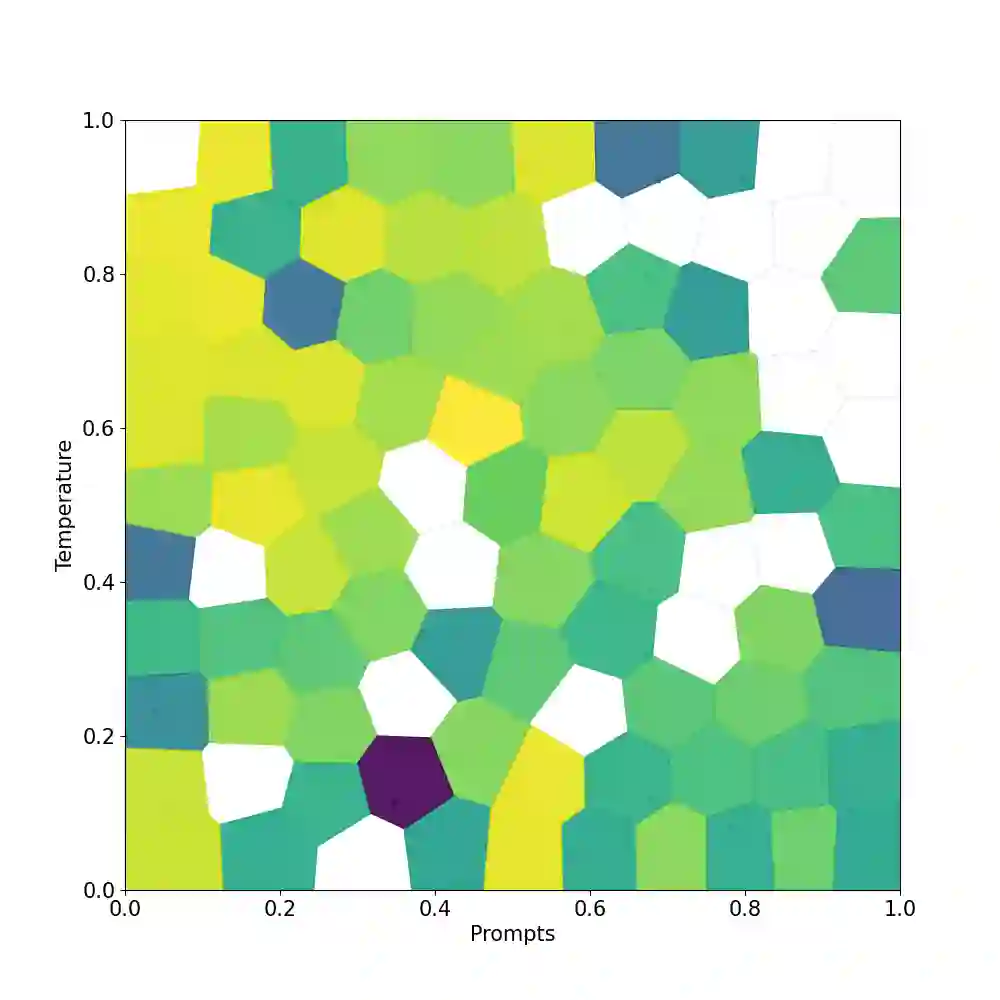
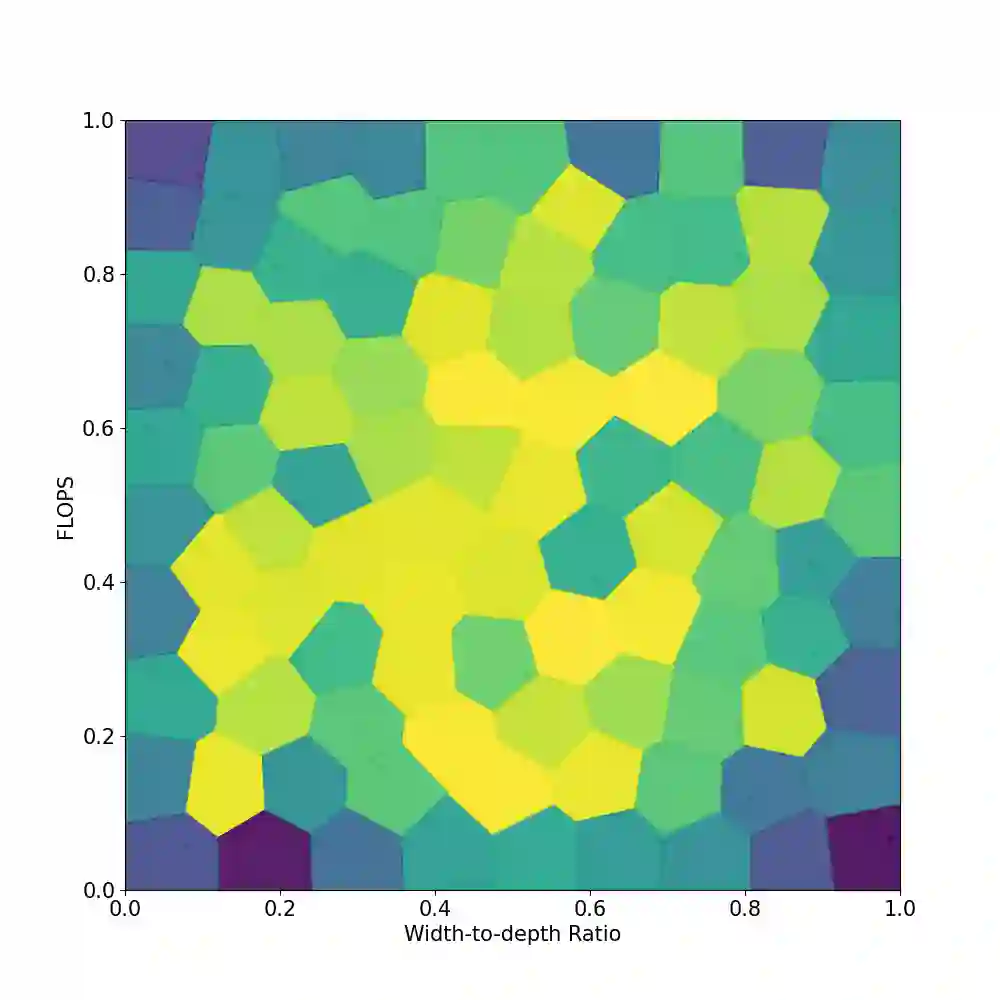
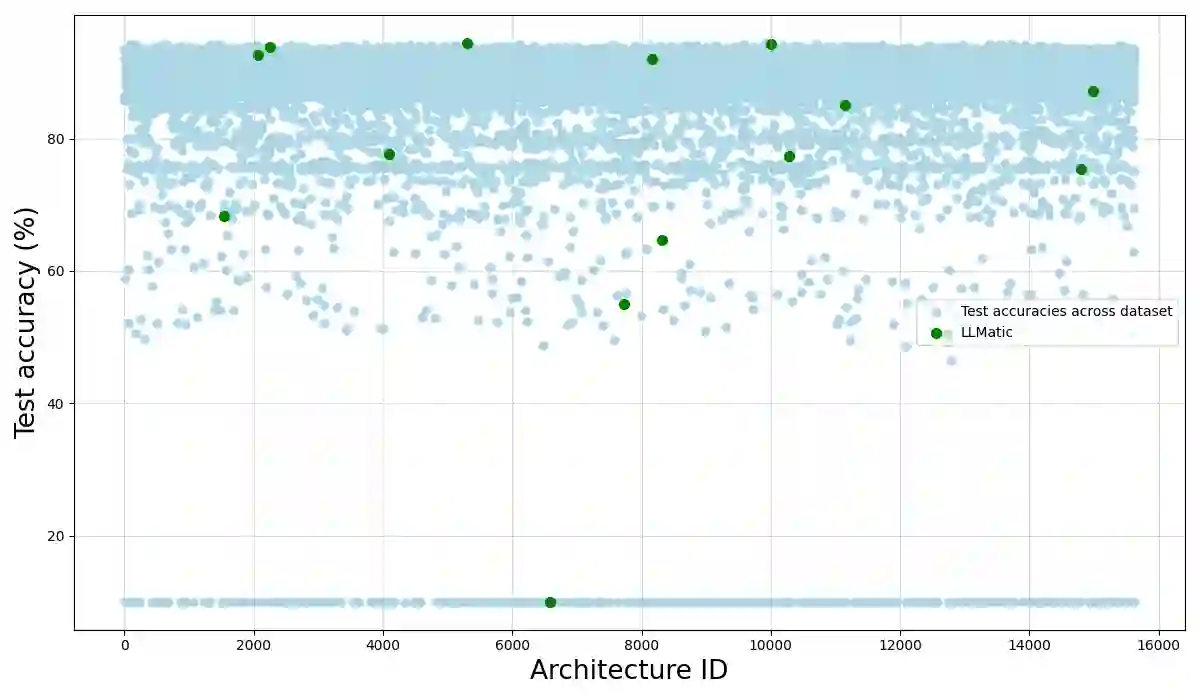
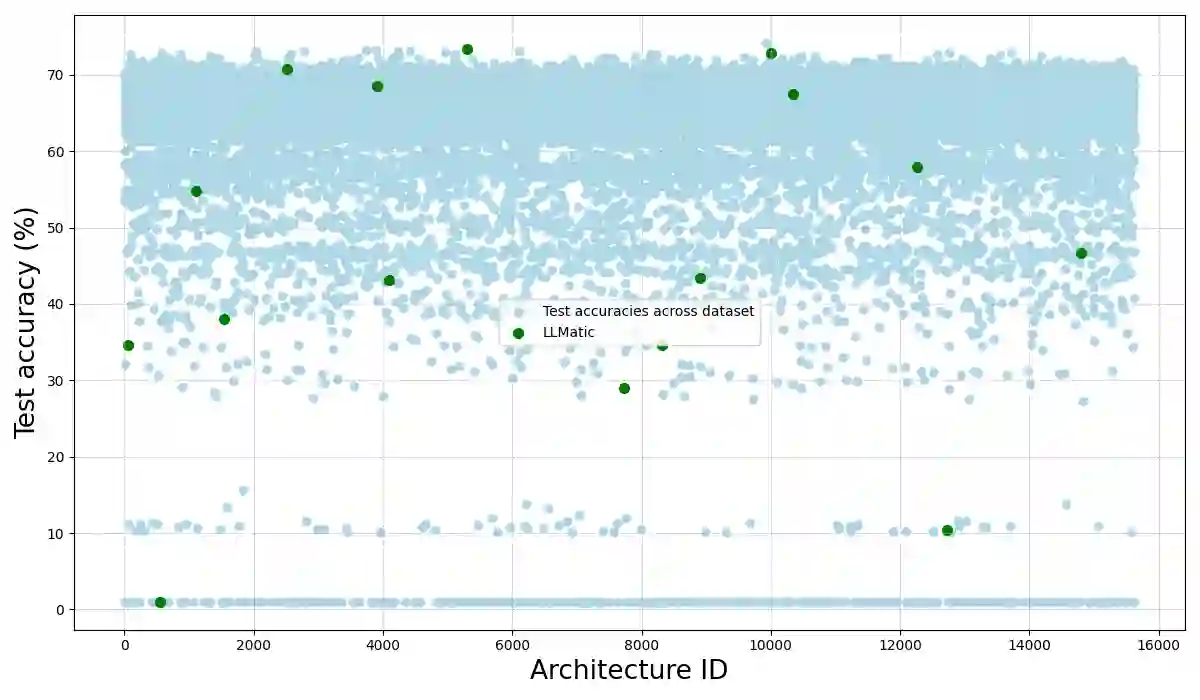
Large Language Models (LLMs) have emerged as powerful tools capable of accomplishing a broad spectrum of tasks. Their abilities span numerous areas, and one area where they have made a significant impact is in the domain of code generation. In this context, we view LLMs as mutation and crossover tools. Meanwhile, Quality-Diversity (QD) algorithms are known to discover diverse and robust solutions. By merging the code-generating abilities of LLMs with the diversity and robustness of QD solutions, we introduce LLMatic, a Neural Architecture Search (NAS) algorithm. While LLMs struggle to conduct NAS directly through prompts, LLMatic uses a procedural approach, leveraging QD for prompts and network architecture to create diverse and highly performant networks. We test LLMatic on the CIFAR-10 image classification benchmark, demonstrating that it can produce competitive networks with just $2,000$ searches, even without prior knowledge of the benchmark domain or exposure to any previous top-performing models for the benchmark.
翻译:大语言模型(LLMs)已成为能够完成广泛任务的强大工具。其能力涵盖众多领域,并在代码生成方面产生了重大影响。在此背景下,我们将LLMs视为变异与交叉工具。同时,质量多样性(QD)算法以发现多样且稳健的解决方案而著称。通过融合LLMs的代码生成能力与QD解决方案的多样性和鲁棒性,我们提出了LLMatic——一种神经架构搜索(NAS)算法。尽管LLMs难以直接通过提示词进行NAS,但LLMatic采用程序化方法,利用QD优化提示词与网络架构,从而生成多样且高性能的网络。我们在CIFAR-10图像分类基准上测试LLMatic,结果表明,即便在无基准领域先验知识或未接触任何先前顶尖模型的情况下,该算法仅需$2,000$次搜索即可生成具有竞争力的网络架构。




相关内容




 微信扫码咨询专知VIP会员