

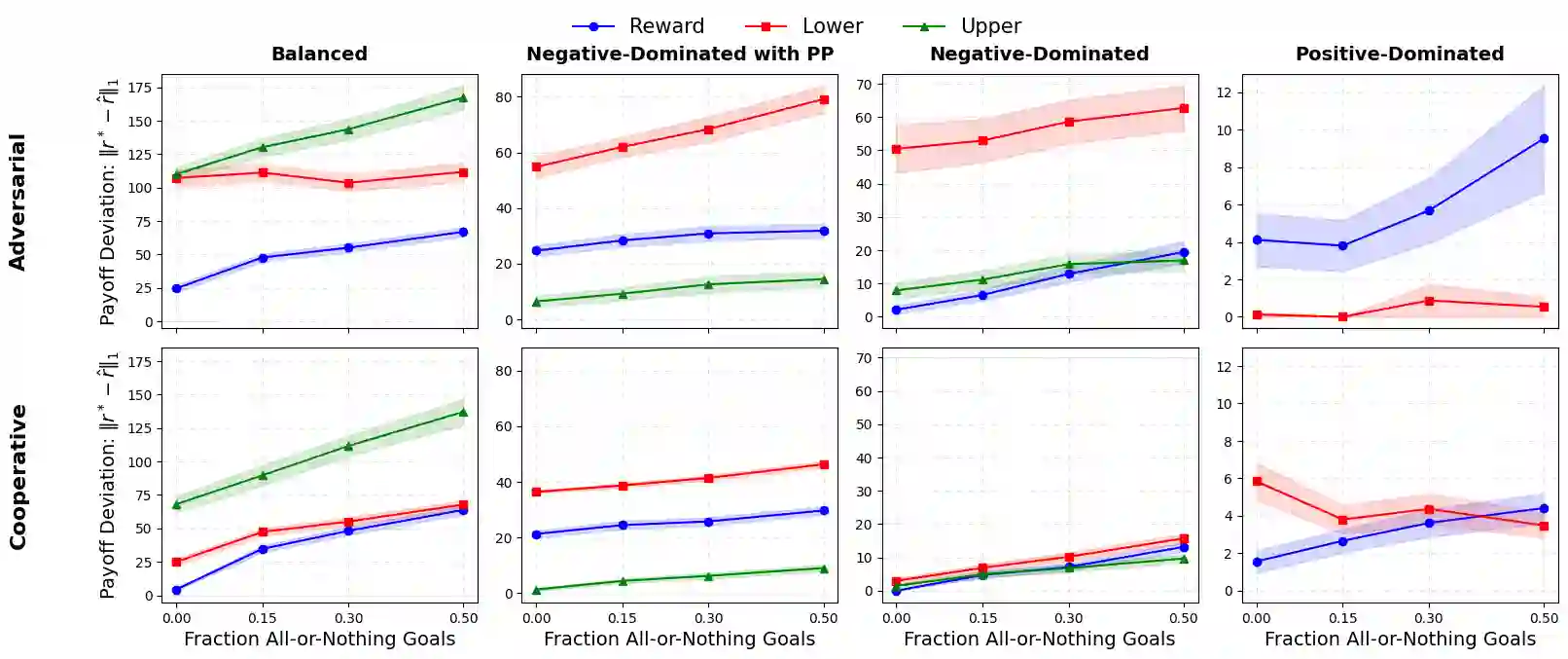
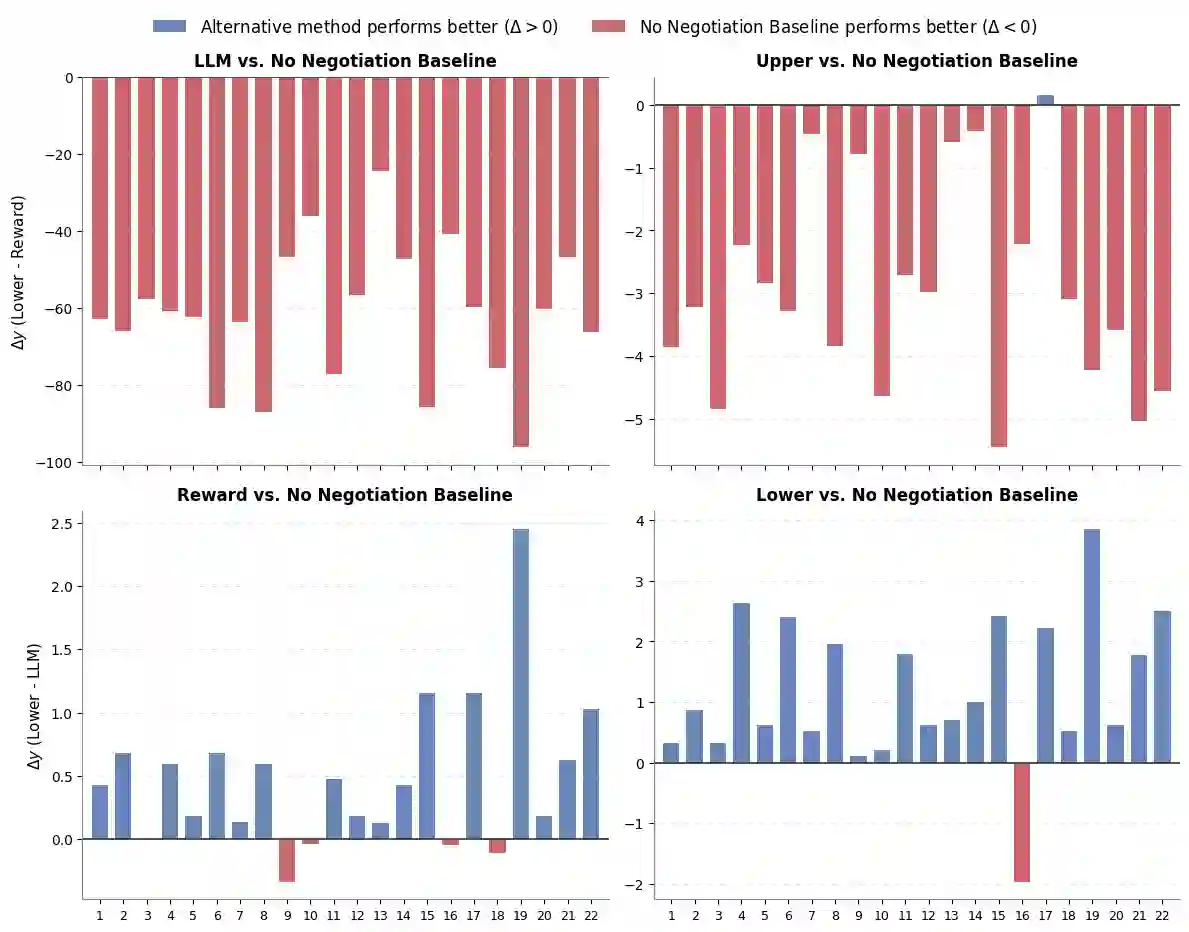
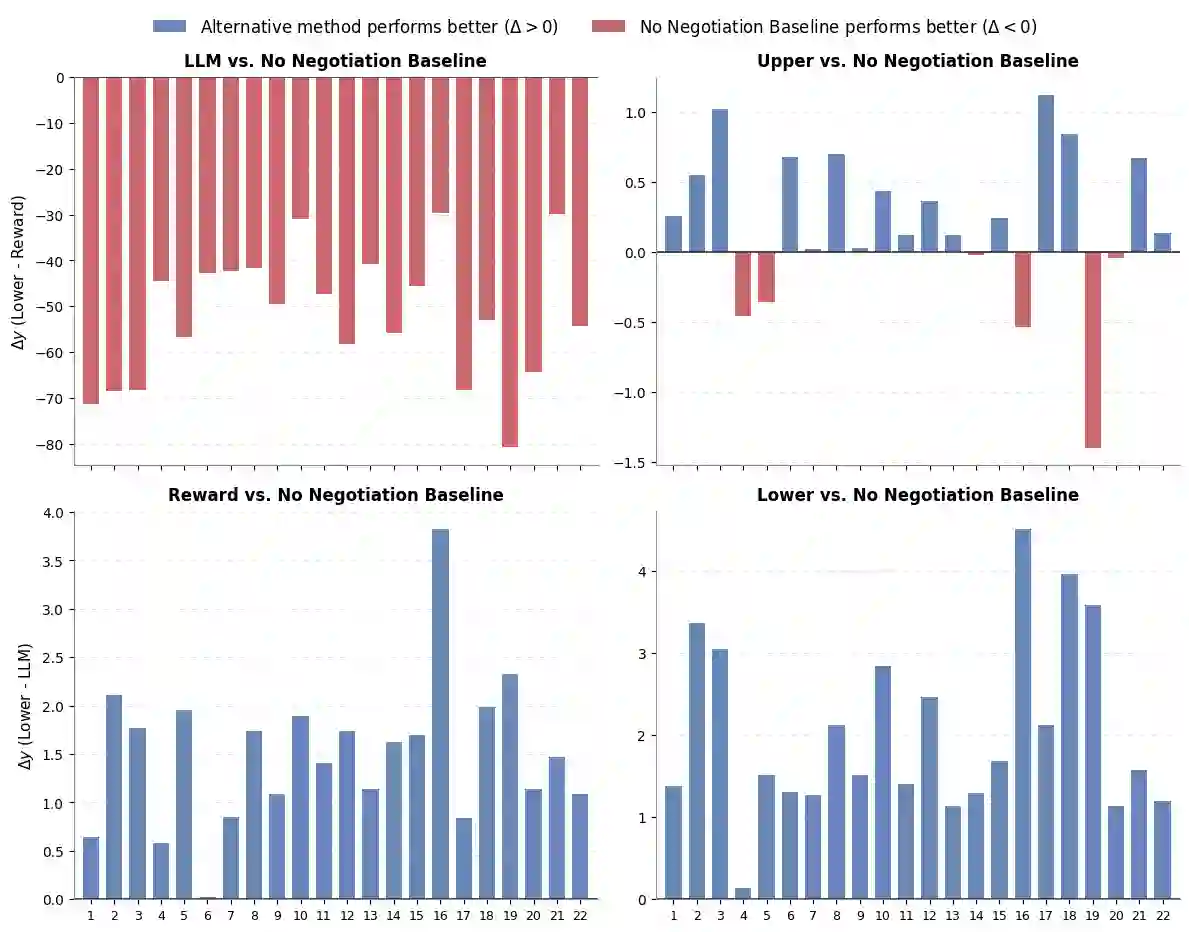
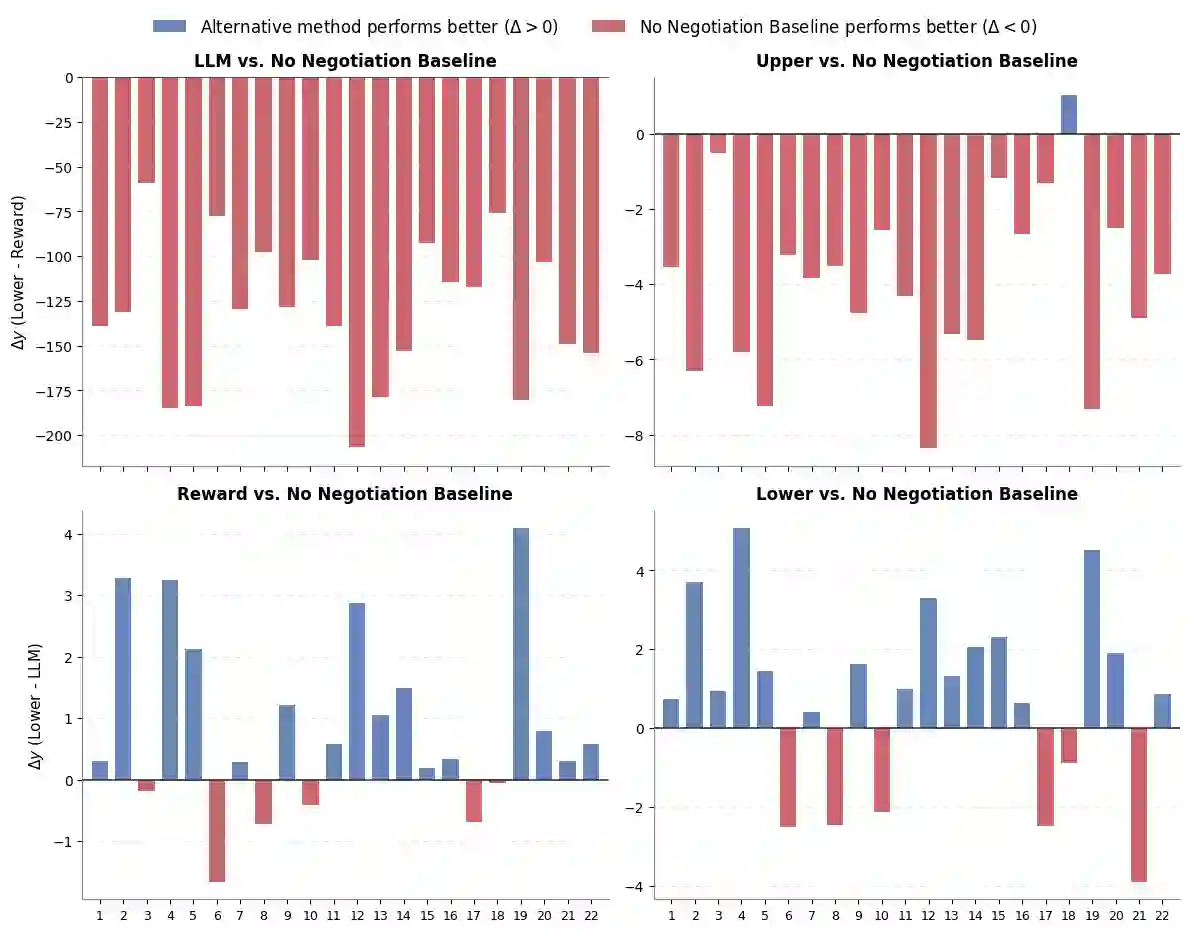
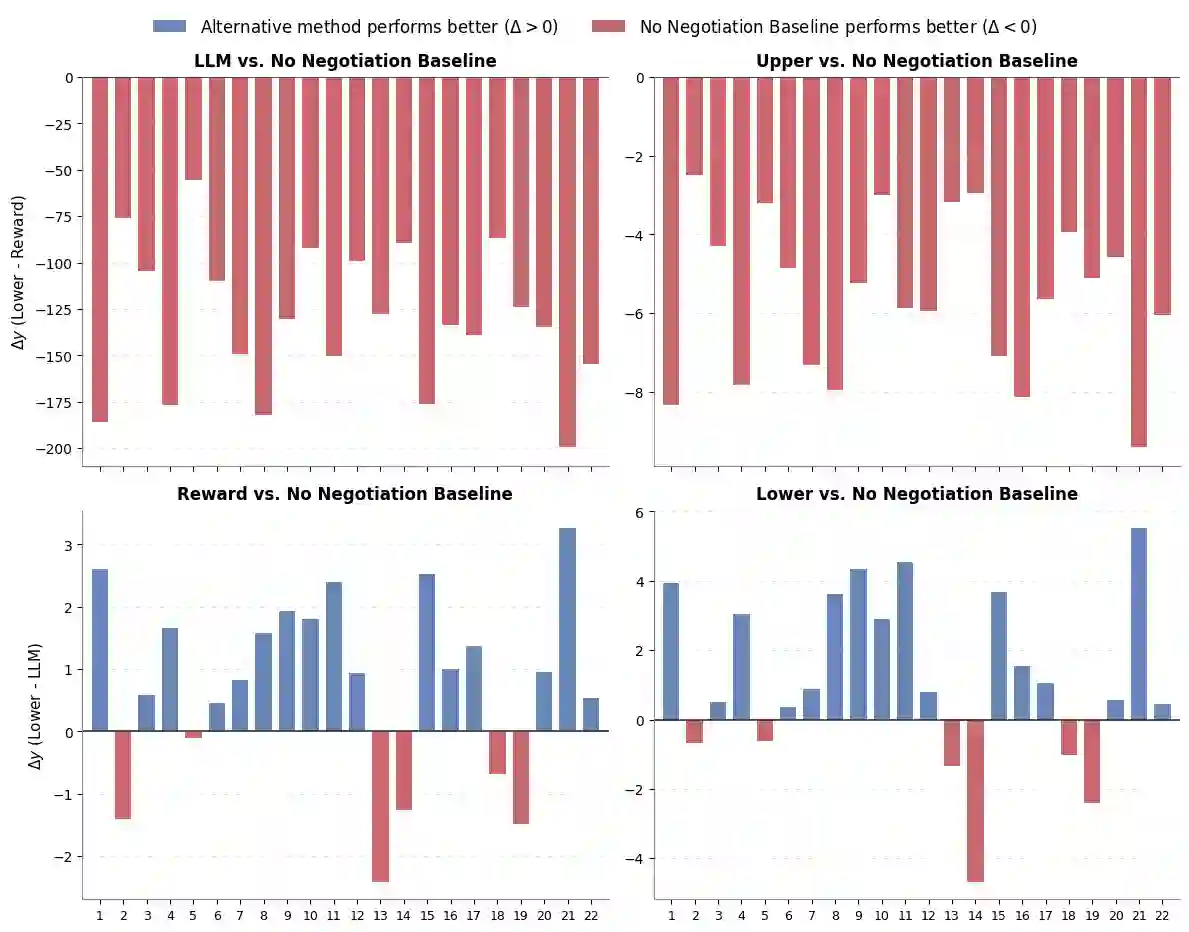
Many real-world multi-party negotiations unfold as sequences of binding, action-level commitments rather than a single final outcome. We introduce a benchmark for this under-studied regime featuring a configurable game generator that sweeps key structural properties such as incentive alignment, goal complexity, and payoff distribution. To evaluate decision-making, we test three value-function approximations - myopic reward, an optimistic upper bound, and a pessimistic lower bound - that act as biased lenses on deal evaluation. Through exact evaluation on small games and comparative evaluation on large, document-grounded instances derived from the Harvard Negotiation Challenge, we map the strategic regimes where each approximation succeeds or fails. We observe that different game structures demand different valuation strategies, motivating agents that learn robust state values and plan effectively over long horizons under binding commitments and terminal only rewards.
翻译:暂无翻译




相关内容


 微信扫码咨询专知VIP会员