Relational databases are widely used for managing structured data in real-world systems. Detecting anomalies from such relational data is crucial for identifying fraud, risks, and abnormal behaviors, yet remains under-explored. The key challenges lie in the intrinsic complexity of relational data: multi-table attributes are high-dimensional and heterogeneous, making sparse abnormal clues easy to overwhelm by normal or irrelevant information. Moreover, anomalies may further manifest as abnormal connection patterns across different foreign-key relations, which existing tabular and graph anomaly detection methods are ill-suited to capture. To address them, we propose RelAD, a reconstruction-based framework that captures anomalies from both attribute and relational edge reconstruction. RelAD contains two core modules: conditional sparse-gated attribute reconstruction, which suppresses redundant multi-table attributes and emphasizes abnormal semantic blocks, and dual-view multi-relational edge reconstruction, which detects relation-specific abnormal connections from both intrinsic and behavioral instance profiles. The resulting attribute and relational signals are integrated through a lightweight fusion module to produce the final anomaly score. We further construct 6 benchmark datasets with systematic anomalies, on which extensive experiments show that RelAD consistently outperforms baselines while achieving competitive efficiency..The source code is available at https://github.com/Shiy-Li/RelAD.


翻译:暂无翻译

0
下载
关闭预览

相关内容

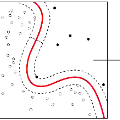
在数据挖掘中,异常检测(英语:anomaly detection)对不符合预期模式或数据集中其他项目的项目、事件或观测值的识别。通常异常项目会转变成银行欺诈、结构缺陷、医疗问题、文本错误等类型的问题。异常也被称为离群值、新奇、噪声、偏差和例外。 特别是在检测滥用与网络入侵时,有趣性对象往往不是罕见对象,但却是超出预料的突发活动。这种模式不遵循通常统计定义中把异常点看作是罕见对象,于是许多异常检测方法(特别是无监督的方法)将对此类数据失效,除非进行了合适的聚集。相反,聚类分析算法可能可以检测出这些模式形成的微聚类。 有三大类异常检测方法。[1] 在假设数据集中大多数实例都是正常的前提下,无监督异常检测方法能通过寻找与其他数据最不匹配的实例来检测出未标记测试数据的异常。监督式异常检测方法需要一个已经被标记“正常”与“异常”的数据集,并涉及到训练分类器(与许多其他的统计分类问题的关键区别是异常检测的内在不均衡性)。半监督式异常检测方法根据一个给定的正常训练数据集创建一个表示正常行为的模型,然后检测由学习模型生成的测试实例的可能性。
ICLR 2026 | DataMind: 构建通用数据分析智能体
专知会员服务
16+阅读 · 3月29日
WWW24 | 从数据中心化的角度校准图神经网络
专知会员服务
14+阅读 · 2024年9月14日
专知会员服务
37+阅读 · 2021年2月26日
【资源推荐】公开数据集收集汇总
专知
19+阅读 · 2019年6月5日
disentangled-representation-papers
CreateAMind
26+阅读 · 2018年9月12日
国家自然科学基金
1+阅读 · 2017年12月31日
国家自然科学基金
3+阅读 · 2015年12月31日
国家自然科学基金
0+阅读 · 2015年12月31日
国家自然科学基金
4+阅读 · 2015年12月31日
国家自然科学基金
4+阅读 · 2015年12月31日
国家自然科学基金
1+阅读 · 2015年12月31日
国家自然科学基金
1+阅读 · 2014年12月31日
国家自然科学基金
2+阅读 · 2014年12月31日
国家自然科学基金
0+阅读 · 2014年12月31日
国家自然科学基金
6+阅读 · 2014年12月31日
Arxiv
0+阅读 · 8月11日
VIP会员
最新内容
现代电磁战:集成式系统簇时代如何实现频谱优势
综述|谁来改进机器人?迈向物理递归自我改进
专知会员服务
0+阅读 · 今天14:47
软件定义无人机蜂群给防空带来全新压力
专知会员服务
9+阅读 · 10月13日
《半自主无人地面战车的互操作性》66页
专知会员服务
9+阅读 · 10月13日
迈向更智慧的军事情报
专知会员服务
9+阅读 · 10月12日
《美国陆军2026年野战手册 2-0 情报》
专知会员服务
8+阅读 · 10月12日
《基于启发式算法求解武器-目标分配问题》
专知会员服务
9+阅读 · 10月12日
相关VIP内容
ICLR 2026 | DataMind: 构建通用数据分析智能体
专知会员服务
16+阅读 · 3月29日
WWW24 | 从数据中心化的角度校准图神经网络
专知会员服务
14+阅读 · 2024年9月14日
专知会员服务
37+阅读 · 2021年2月26日
相关基金
国家自然科学基金
1+阅读 · 2017年12月31日
国家自然科学基金
3+阅读 · 2015年12月31日
国家自然科学基金
0+阅读 · 2015年12月31日
国家自然科学基金
4+阅读 · 2015年12月31日
国家自然科学基金
4+阅读 · 2015年12月31日
国家自然科学基金
1+阅读 · 2015年12月31日
国家自然科学基金
1+阅读 · 2014年12月31日
国家自然科学基金
2+阅读 · 2014年12月31日
国家自然科学基金
0+阅读 · 2014年12月31日
国家自然科学基金
6+阅读 · 2014年12月31日
Top
微信扫码咨询专知VIP会员