

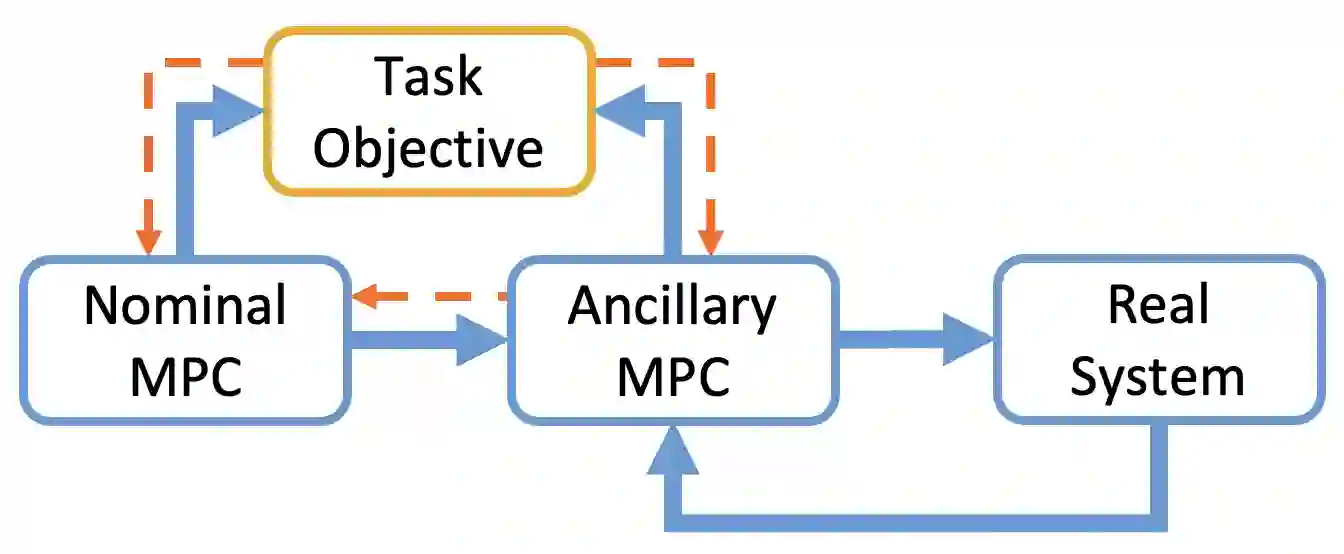
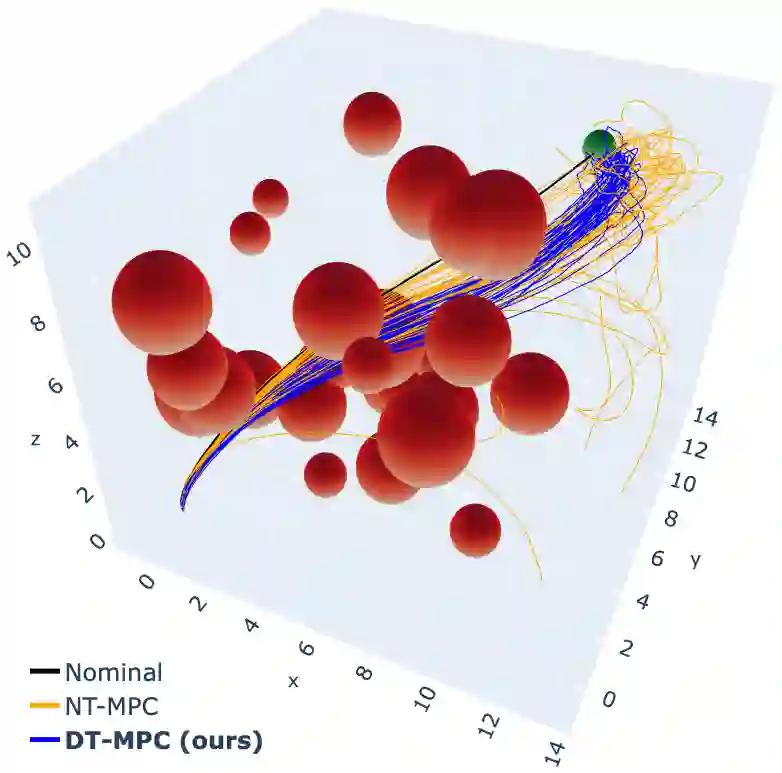
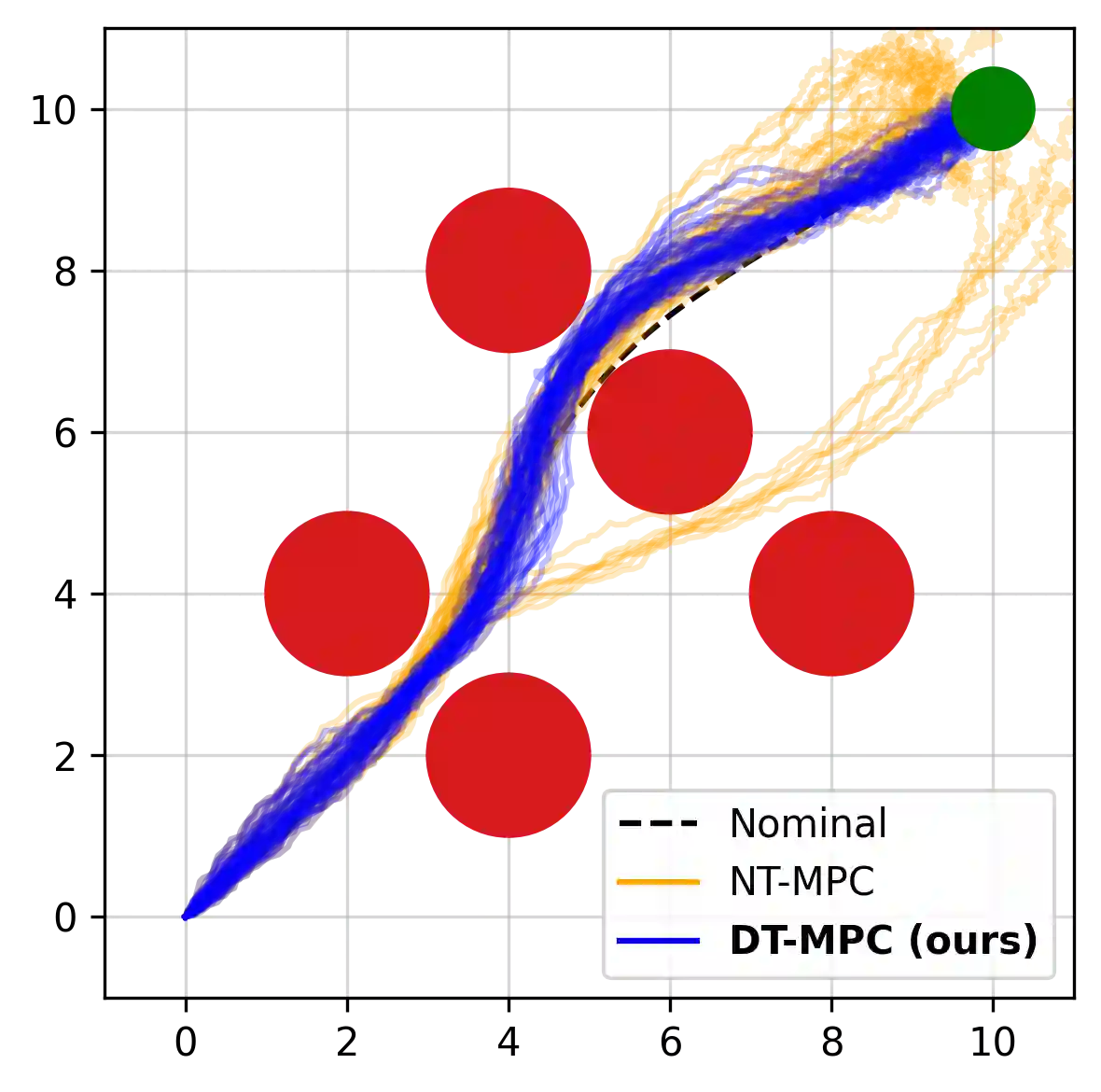
Deterministic model predictive control (MPC), while powerful, is often insufficient for effectively controlling autonomous systems in the real-world. Factors such as environmental noise and model error can cause deviations from the expected nominal performance. Robust MPC algorithms aim to bridge this gap between deterministic and uncertain control. However, these methods are often excessively difficult to tune for robustness due to the nonlinear and non-intuitive effects that controller parameters have on performance. To address this challenge, we first present a unifying perspective on differentiable optimization for control using the implicit function theorem (IFT), from which existing state-of-the art methods can be derived. Drawing parallels with differential dynamic programming, the IFT enables the derivation of an efficient differentiable optimal control framework. The derived scheme is subsequently paired with a tube-based MPC architecture to facilitate the automatic and real-time tuning of robust controllers in the presence of large uncertainties and disturbances. The proposed algorithm is benchmarked on multiple nonlinear robotic systems, including two systems in the MuJoCo simulator environment to demonstrate its efficacy.
翻译:确定性模型预测控制(MPC)虽然强大,但在实际环境中往往难以有效控制自主系统。环境噪声和模型误差等因素可能导致偏离预期的标称性能。鲁棒MPC算法旨在弥合确定性控制与不确定性控制之间的差距。然而,由于控制器参数对性能产生非线性和非直观的影响,这些方法在鲁棒性调整方面往往异常困难。为应对这一挑战,我们首先基于隐函数定理(IFT)提出了可微优化控制的统一视角,现有的先进方法均可由此推导得出。通过借鉴微分动态规划的思路,IFT使我们能够推导出高效的可微分最优控制框架。随后,将所提出的方案与基于管道的MPC架构相结合,以实现在存在大不确定性及扰动情况下鲁棒控制器的自动实时调整。该算法在多个非线性机器人系统上进行了基准测试,包括MuJoCo模拟器环境中的两个系统,以验证其有效性。





相关内容




 微信扫码咨询专知VIP会员