

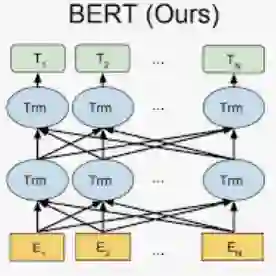
Autonomous vehicles (AVs) are more vulnerable to network attacks due to the high connectivity and diverse communication modes between vehicles and external networks. Deep learning-based Intrusion detection, an effective method for detecting network attacks, can provide functional safety as well as a real-time communication guarantee for vehicles, thereby being widely used for AVs. Existing works well for cyber-attacks such as simple-mode but become a higher false alarm with a resource-limited environment required when the attack is concealed within a contextual feature. In this paper, we present a lightweight intrusion detection model based on semantic fusion, named LSF-IDM. Our motivation is based on the observation that, when injected the malicious packets to the in-vehicle networks (IVNs), the packet log presents a strict order of context feature because of the periodicity and broadcast nature of the CAN bus. Therefore, this model first captures the context as the semantic feature of messages by the BERT language framework. Thereafter, the lightweight model (e.g., BiLSTM) learns the fused feature from an input packet's classification and its output distribution in BERT based on knowledge distillation. Experiment results demonstrate the effectiveness of our methods in defending against several representative attacks from IVNs. We also perform the difference analysis of the proposed method with lightweight models and Bert to attain a deeper understanding of how the model balance detection performance and model complexity.
翻译:自动驾驶汽车因其与外部网络的高度连接性和多样化通信模式,更容易遭受网络攻击。基于深度学习的入侵检测作为一种有效的网络攻击检测方法,可为车辆提供功能安全及实时通信保障,因此被广泛应用于自动驾驶汽车。现有方法对单模式网络攻击效果良好,但当攻击隐藏在上下文特征中时,在资源受限环境下会出现较高的误报率。本文提出一种基于语义融合的轻量级入侵检测模型,命名为LSF-IDM。我们的动机基于以下观察:当向车内网络注入恶意数据包时,由于CAN总线的周期性和广播特性,数据包日志呈现出严格的上下文特征顺序。因此,该模型首先通过BERT语言框架将上下文捕获为消息的语义特征。随后,轻量级模型(如BiLSTM)基于知识蒸馏,从输入数据包的分类结果及其在BERT中的输出分布中学习融合特征。实验结果表明,我们的方法在防御车内网络的多种典型攻击方面具有有效性。我们还对提出的方法进行了与轻量级模型及BERT的差异分析,以深入理解模型如何平衡检测性能与模型复杂度。




相关内容



 微信扫码咨询专知VIP会员