

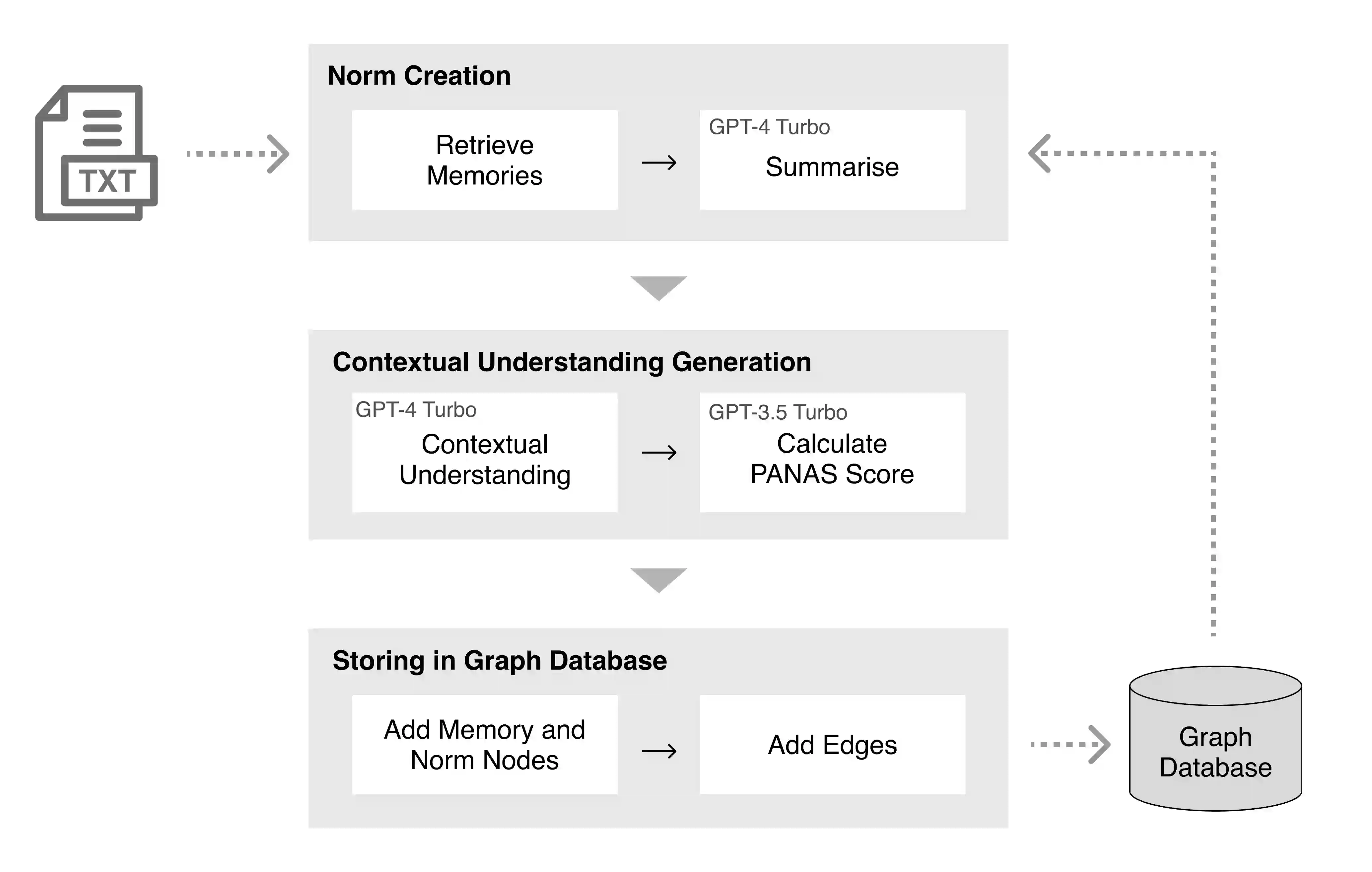
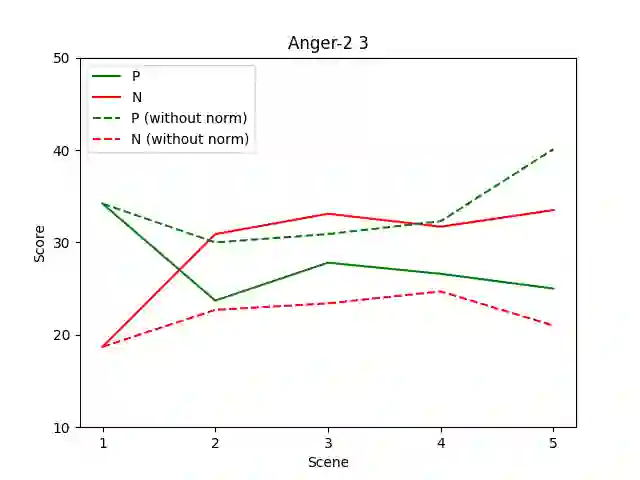
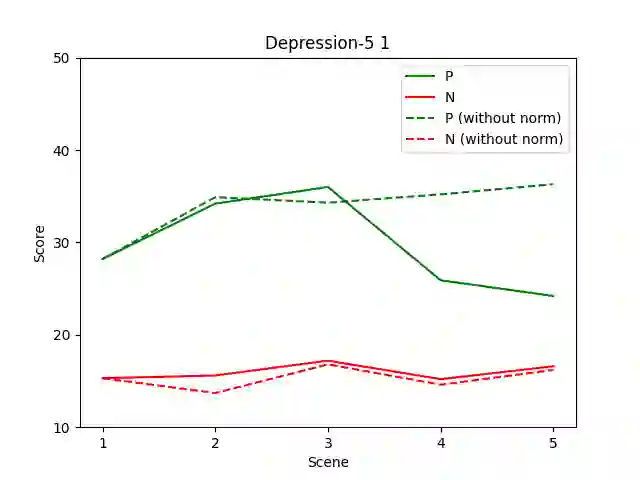
Large Language Models (LLMs) have demonstrated a number of human-like abilities, however the empathic understanding and emotional state of LLMs is yet to be aligned to that of humans. In this work, we investigate how the emotional state of generative LLM agents evolves as they perceive new events, introducing a novel architecture in which new experiences are compared to past memories. Through this comparison, the agent gains the ability to understand new experiences in context, which according to the appraisal theory of emotion is vital in emotion creation. First, the agent perceives new experiences as time series text data. After perceiving each new input, the agent generates a summary of past relevant memories, referred to as the norm, and compares the new experience to this norm. Through this comparison we can analyse how the agent reacts to the new experience in context. The PANAS, a test of affect, is administered to the agent, capturing the emotional state of the agent after the perception of the new event. Finally, the new experience is then added to the agents memory to be used in the creation of future norms. By creating multiple experiences in natural language from emotionally charged situations, we test the proposed architecture on a wide range of scenarios. The mixed results suggests that introducing context can occasionally improve the emotional alignment of the agent, but further study and comparison with human evaluators is necessary. We hope that this paper is another step towards the alignment of generative agents.
翻译:大型语言模型(LLMs)已展现出多项类人能力,但其共情理解与情感状态尚未与人类对齐。本研究探讨生成式LLM智能体在感知新事件时,其情感状态如何演化,并引入一种新型架构,使新体验能与过往记忆进行对比。通过这种对比,智能体获得在情境中理解新体验的能力——根据情感评价理论,这对情绪产生至关重要。首先,智能体将新体验感知为时间序列文本数据。感知每个新输入后,智能体会生成过往相关记忆的摘要(称为“规范”),并将新体验与此规范进行对比。通过这种对比,我们可分析智能体在情境中对新体验的反应。采用情感测试量表PANAS对智能体施测,捕捉其感知新事件后的情感状态。最后,新体验被存入智能体记忆库,用于生成未来规范。通过从情感密集型场景中构建多组自然语言体验,我们在广泛情境中测试了所提架构。混合结果表明,引入情境偶尔能提升智能体的情感对齐度,但尚需进一步研究及人类评估者的对比验证。我们期望本文能推动生成式智能体对齐领域的进展。





相关内容




 微信扫码咨询专知VIP会员