

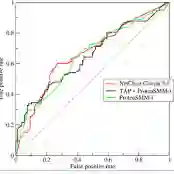
Longitudinal imaging is able to capture both static anatomical structures and dynamic changes in disease progression towards earlier and better patient-specific pathology management. However, conventional approaches for detecting diabetic retinopathy (DR) rarely take advantage of longitudinal information to improve DR analysis. In this work, we investigate the benefit of exploiting self-supervised learning with a longitudinal nature for DR diagnosis purposes. We compare different longitudinal self-supervised learning (LSSL) methods to model the disease progression from longitudinal retinal color fundus photographs (CFP) to detect early DR severity changes using a pair of consecutive exams. The experiments were conducted on a longitudinal DR screening dataset with or without those trained encoders (LSSL) acting as a longitudinal pretext task. Results achieve an AUC of 0.875 for the baseline (model trained from scratch) and an AUC of 0.96 (95% CI: 0.9593-0.9655 DeLong test) with a p-value < 2.2e-16 on early fusion using a simple ResNet alike architecture with frozen LSSL weights, suggesting that the LSSL latent space enables to encode the dynamic of DR progression.
翻译:纵向影像能够同时捕获静态解剖结构及疾病进展中的动态变化,从而实现更早且更具个体化的病理管理。然而,传统的糖尿病视网膜病变(DR)检测方法鲜少利用纵向信息来优化DR分析。本研究探讨了利用具有纵向特性的自监督学习方法提升DR诊断效能的优势。我们比较了多种纵向自监督学习(LSSL)方法,通过模拟纵向眼底彩色照片(CFP)中的疾病进展过程,利用连续两次检查结果检测早期DR严重程度变化。实验基于纵向DR筛查数据集开展,分别评估了是否采用预训练编码器(LSSL)作为纵向预训练任务的效果。结果显示,基线模型(从头训练)的AUC为0.875,而采用简单类ResNet架构与冻结LSSL权重的早期融合策略后,AUC达到0.96(95% CI: 0.9593-0.9655,DeLong检验,p值<2.2e-16),表明LSSL潜在空间能够有效编码DR进展的动态特征。




相关内容



 微信扫码咨询专知VIP会员