

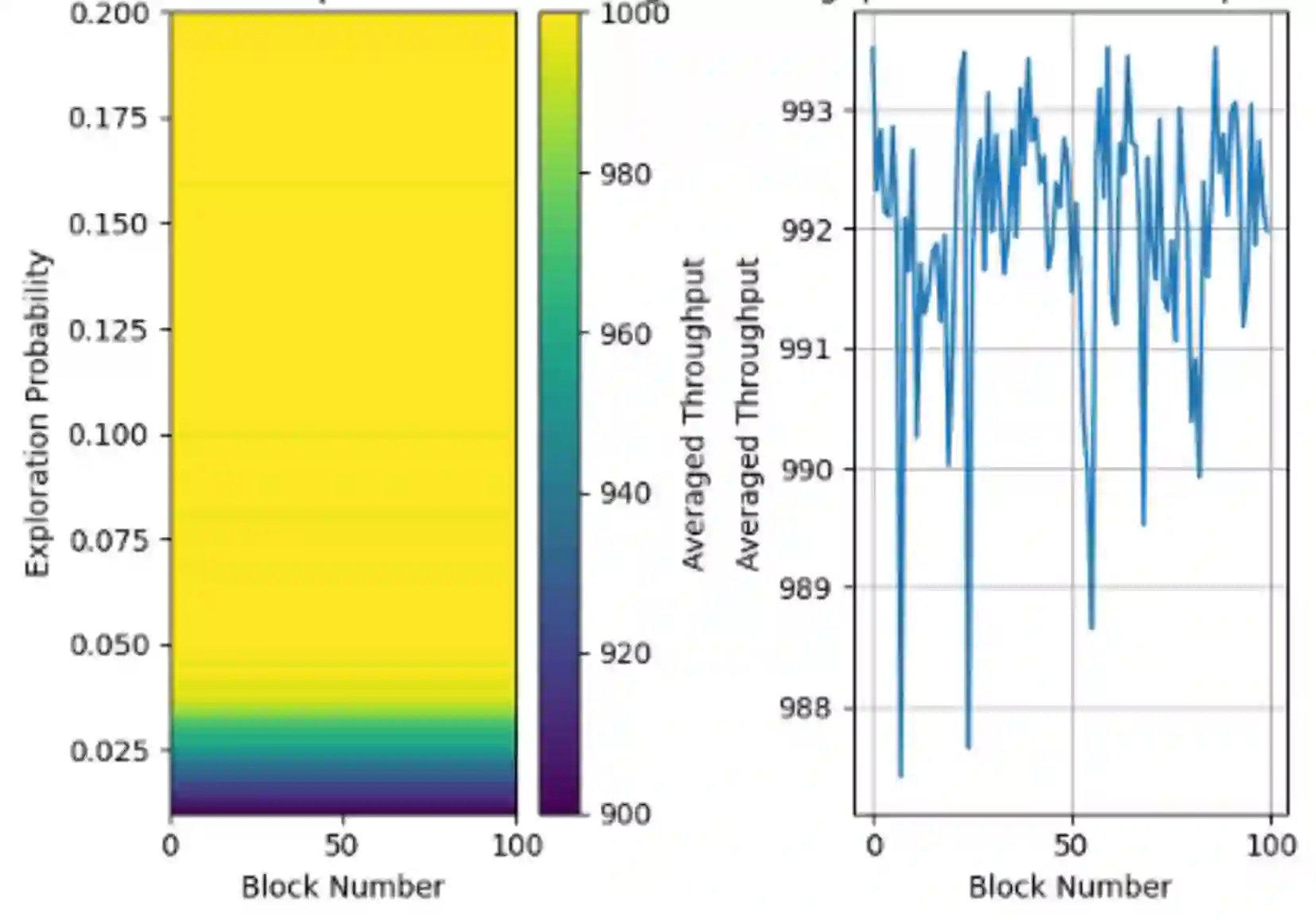
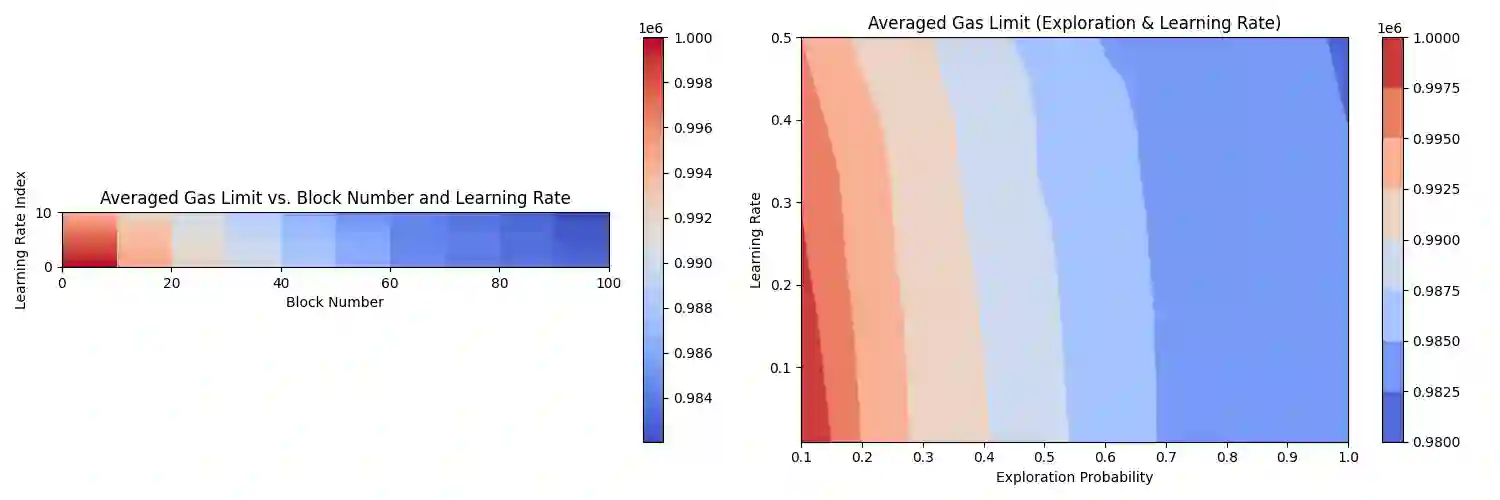
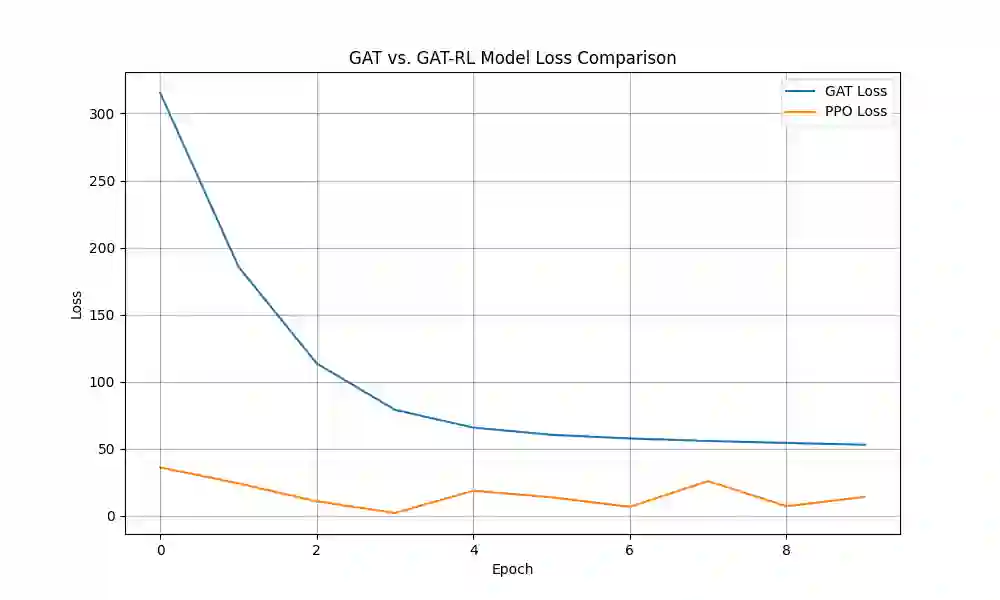
Blockchain technology has revolutionized the way information is propagated in decentralized networks. Ethereum plays a pivotal role in facilitating smart contracts and decentralized applications. Understanding information propagation dynamics in Ethereum is crucial for ensuring network efficiency, security, and scalability. In this study, we propose an innovative approach that utilizes Graph Convolutional Networks (GCNs) to analyze the information propagation patterns in the Ethereum network. The first phase of our research involves data collection from the Ethereum blockchain, consisting of blocks, transactions, and node degrees. We construct a transaction graph representation using adjacency matrices to capture the node embeddings; while our major contribution is to develop a combined Graph Attention Network (GAT) and Reinforcement Learning (RL) model to optimize the network efficiency and scalability. It learns the best actions to take in various network states, ultimately leading to improved network efficiency, throughput, and optimize gas limits for block processing. In the experimental evaluation, we analyze the performance of our model on a large-scale Ethereum dataset. We investigate effectively aggregating information from neighboring nodes capturing graph structure and updating node embeddings using GCN with the objective of transaction pattern prediction, accounting for varying network loads and number of blocks. Not only we design a gas limit optimization model and provide the algorithm, but also to address scalability, we demonstrate the use and implementation of sparse matrices in GraphConv, GraphSAGE, and GAT. The results indicate that our designed GAT-RL model achieves superior results compared to other GCN models in terms of performance. It effectively propagates information across the network, optimizing gas limits for block processing and improving network efficiency.
翻译:区块链技术彻底改变了去中心化网络中信息的传播方式。以太坊在促进智能合约和去中心化应用方面发挥着关键作用。理解以太坊中的信息传播动态对于确保网络效率、安全性和可扩展性至关重要。在本研究中,我们提出了一种创新方法,利用图卷积网络(Graph Convolutional Networks, GCNs)分析以太坊网络中的信息传播模式。研究的第一阶段涉及从以太坊区块链收集数据,包括区块、交易和节点度数。我们利用邻接矩阵构建交易图表示以捕获节点嵌入;而我们的主要贡献是开发了一种组合图注意力网络(Graph Attention Network, GAT)与强化学习(Reinforcement Learning, RL)的模型,以优化网络效率和可扩展性。该模型学习在不同网络状态下采取最佳行动,最终提高网络效率、吞吐量,并优化区块处理的燃料限制。在实验评估中,我们分析了该模型在大型以太坊数据集上的性能。我们研究了如何有效聚合来自邻居节点的信息,捕获图结构并使用GCN更新节点嵌入,以实现交易模式预测的目标,同时考虑不同网络负载和区块数量。我们不仅设计了一个燃料限制优化模型并提供了算法,还为了应对可扩展性问题,展示了在GraphConv、GraphSAGE和GAT中使用和实现稀疏矩阵的方法。结果表明,与其他GCN模型相比,我们设计的GAT-RL模型在性能上取得了更优的结果。它有效实现了网络中的信息传播,优化了区块处理的燃料限制,并提高了网络效率。




相关内容




 微信扫码咨询专知VIP会员