

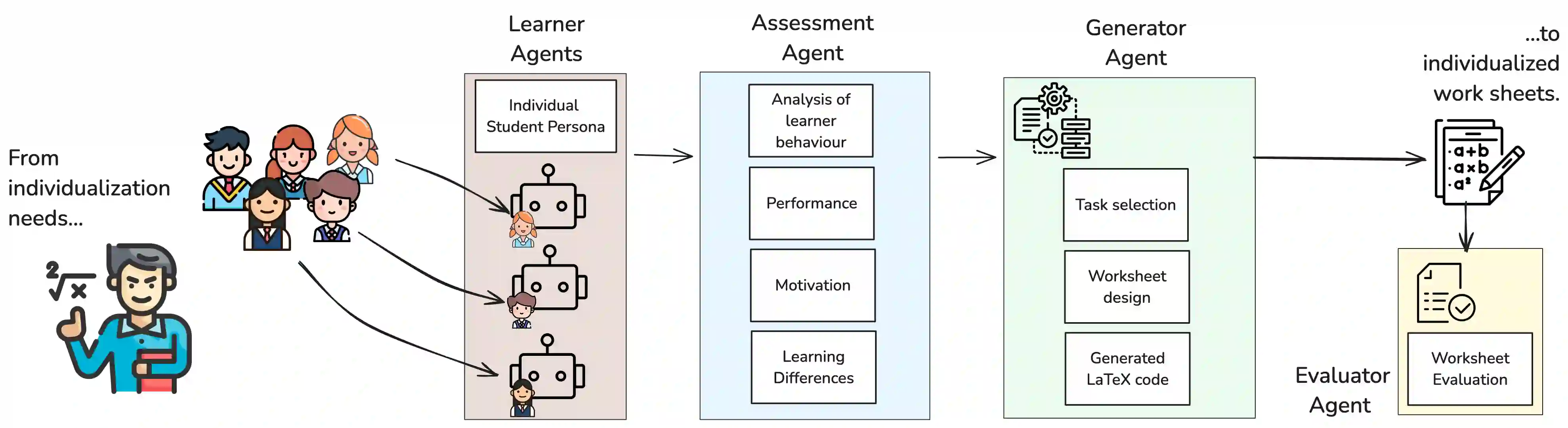
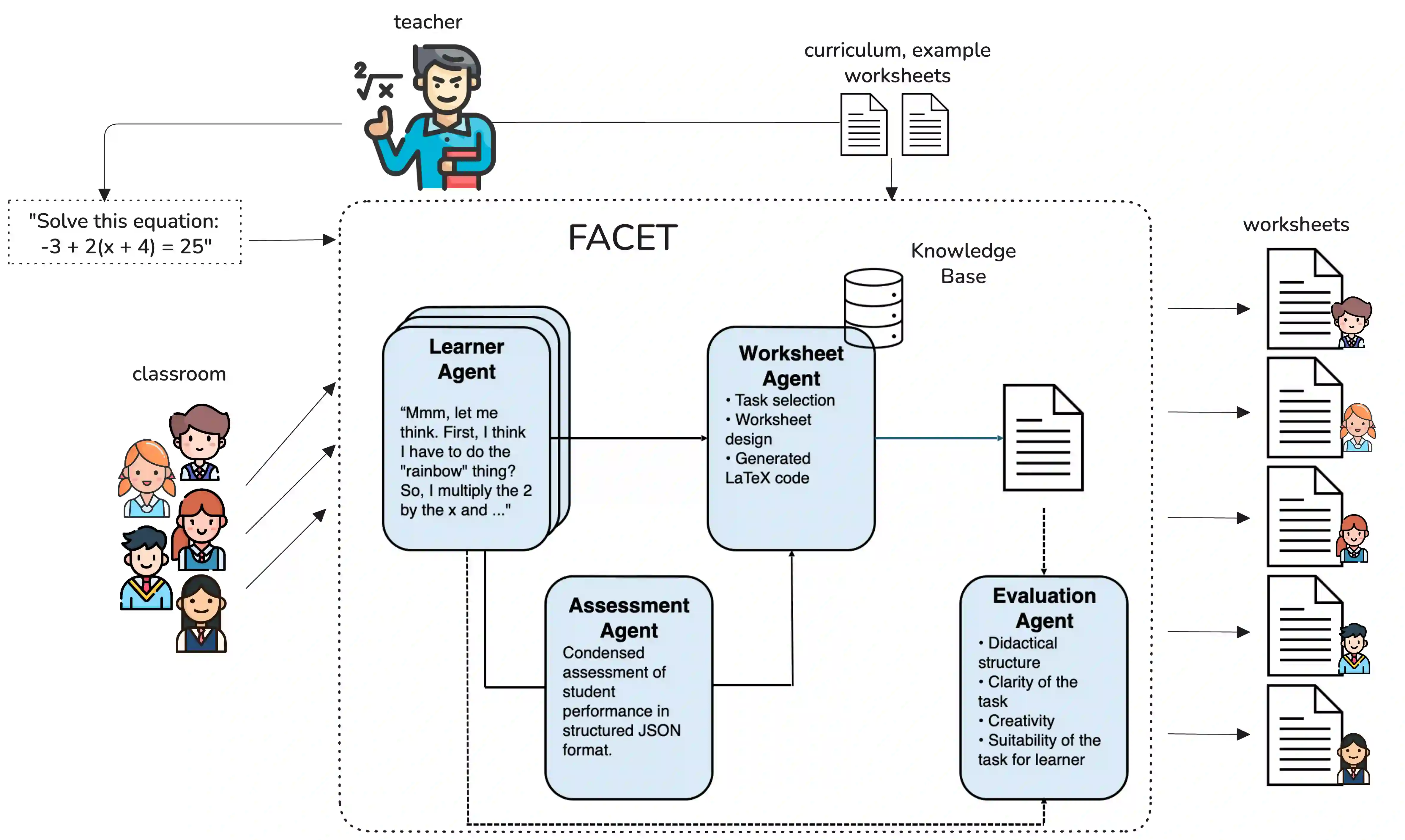
Classrooms are becoming increasingly heterogeneous, comprising learners with diverse performance and motivation levels, language proficiencies, and learning differences such as dyslexia and ADHD. While teachers recognize the need for differentiated instruction, growing workloads create substantial barriers, making differentiated instruction an ideal that is often unrealized in practice. Current AI educational tools, which promise differentiated materials, are predominantly student-facing and performance-centric, ignoring other aspects that shape learning outcomes. We introduce FACET, a teacher-facing multi-agent framework designed to address these gaps by supporting differentiation that accounts for motivation, performance, and learning differences. Developed with educational stakeholders from the outset, the framework coordinates four specialized agents, including learner simulation, diagnostic assessment, material generation, and evaluation within a teacher-in-the-loop design. School principals (N = 30) shaped system requirements through participatory workshops, while in-service K-12 teachers (N = 70) evaluated material quality. Mixed-methods evaluation demonstrates strong perceived value for inclusive differentiation. Practitioners emphasized both the urgent need arising from classroom heterogeneity and the importance of maintaining pedagogical autonomy as a prerequisite for adoption. We discuss implications for future school deployment and outline partnerships for longitudinal classroom implementation.
翻译:课堂环境正日益呈现异质性,包含不同学业表现与动机水平、语言熟练度以及学习差异(如阅读障碍与注意力缺陷多动障碍)的学习者。尽管教师认识到差异化教学的必要性,但日益增长的工作负荷构成了实质性障碍,使得差异化教学往往成为实践中难以达成的理想。当前承诺提供差异化材料的AI教育工具主要面向学生且以学业表现为中心,忽视了影响学习结果的其他维度。我们提出FACET——一个面向教师的多智能体框架,旨在通过支持涵盖动机、表现与学习差异的差异化教学来弥补这些不足。该框架从设计初期即与教育利益相关者协同开发,在教师参与循环的设计中协调四个专项智能体,包括学习者模拟、诊断性评估、材料生成与评估模块。学校管理者(N = 30)通过参与式研讨会确定了系统需求,在职K-12教师(N = 70)对材料质量进行了评估。混合方法评估表明,该系统在促进包容性差异化教学方面具有显著的感知价值。实践者既强调了课堂异质性带来的迫切需求,也指出保持教学自主权是系统采纳的重要前提。我们探讨了未来学校部署的实践意义,并规划了纵向课堂实施的合作路径。




相关内容


 微信扫码咨询专知VIP会员