

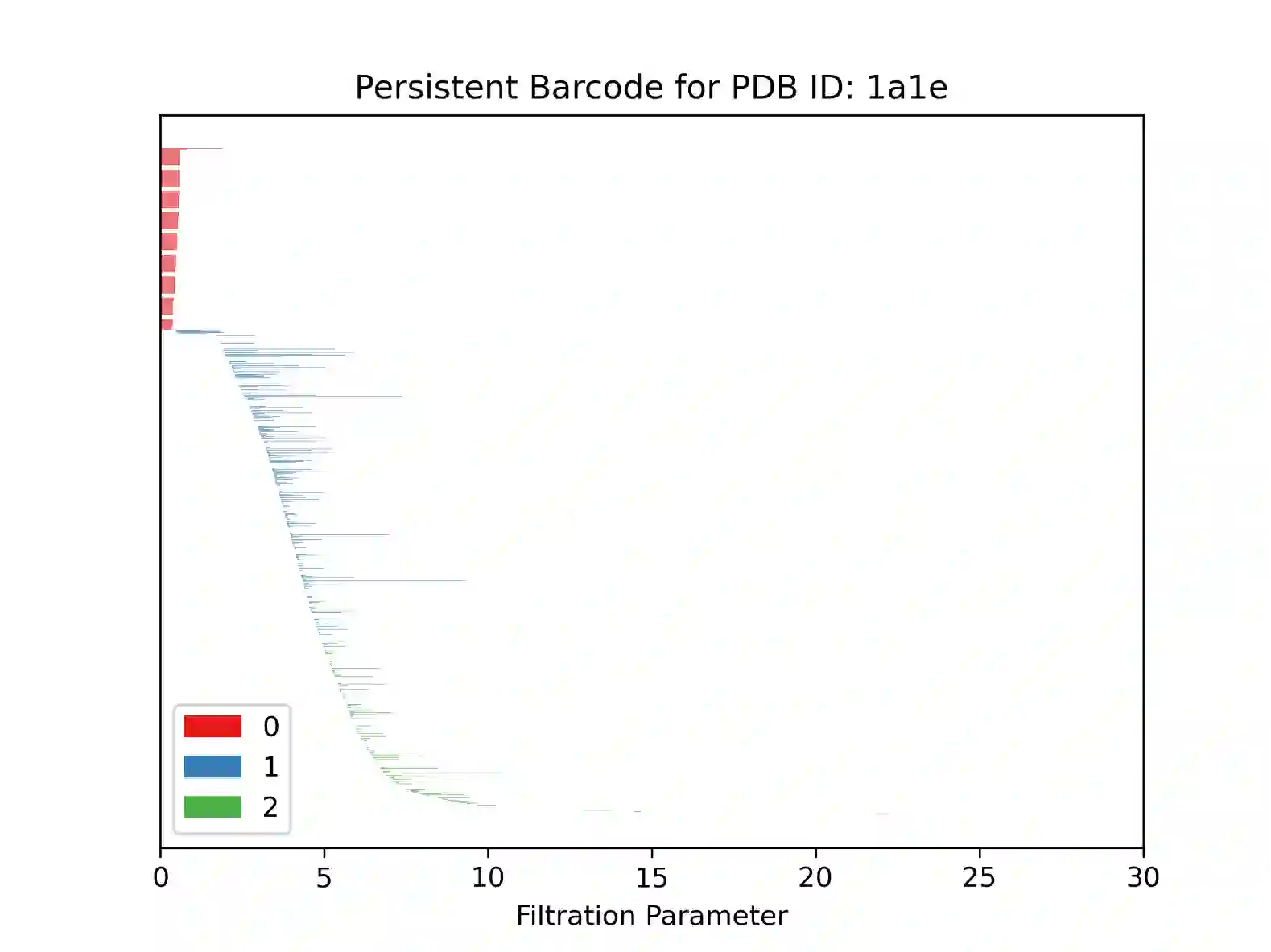
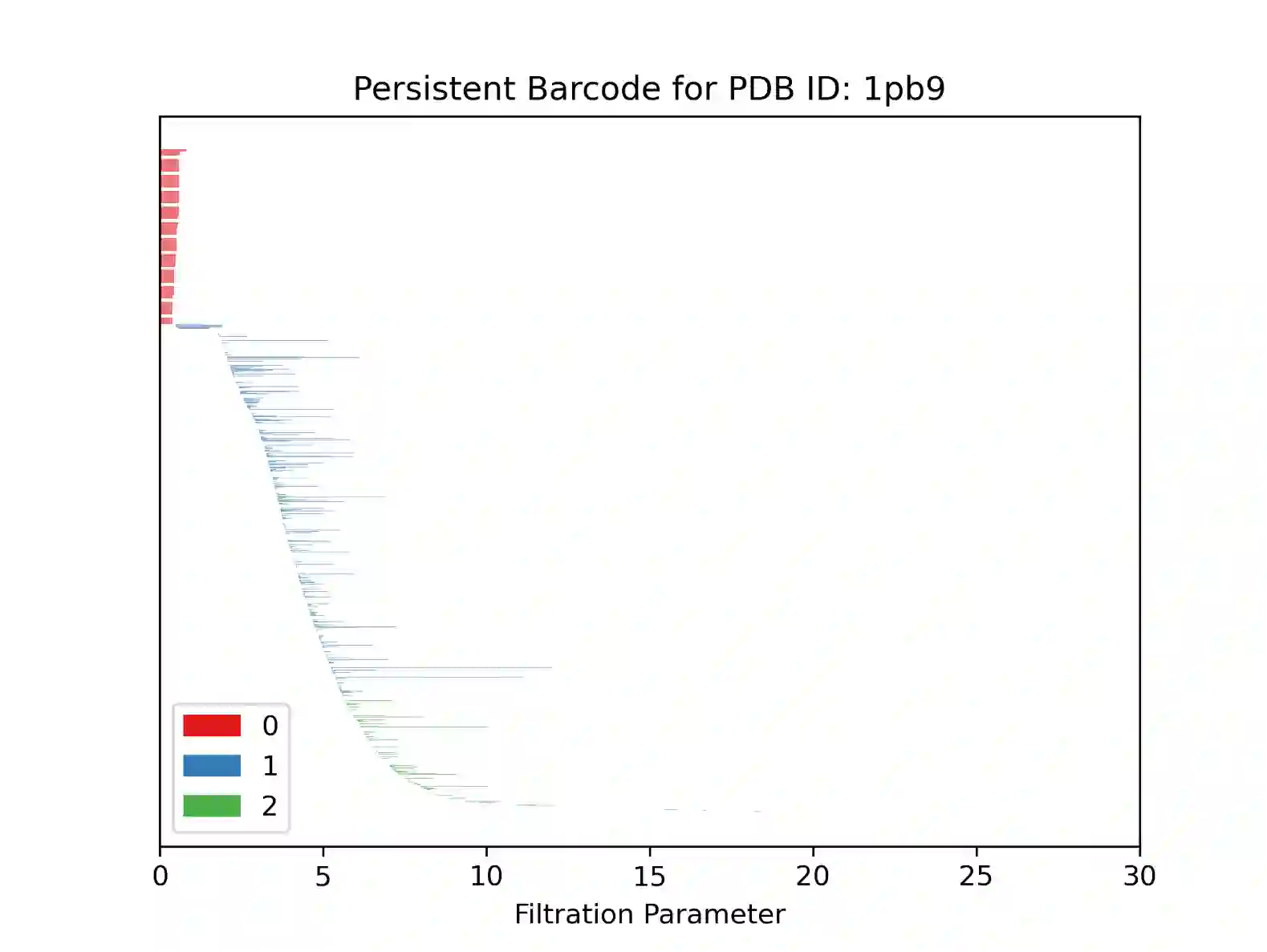
In this project, we present a deep neural network (DNN)-based biophysics model that uses multi-scale and uniform topological and electrostatic features to predict protein properties, such as Coulomb energies or solvation energies. The topological features are generated using element-specific persistent homology (ESPH) on a selection of heavy atoms or carbon atoms. The electrostatic features are generated using a novel Cartesian treecode, which adds underlying electrostatic interactions to further improve the model prediction. These features are uniform in number for proteins of varying sizes; therefore, the widely available protein structure databases can be used to train the network. These features are also multi-scale, allowing users to balance resolution and computational cost. The optimal model trained on more than 17,000 proteins for predicting Coulomb energy achieves MSE of approximately 0.024, MAPE of 0.073 and $R^2$ of 0.976. Meanwhile, the optimal model trained on more than 4,000 proteins for predicting solvation energy achieves MSE of approximately 0.064, MAPE of 0.081, and $R^2$ of 0.926, showing the efficiency and fidelity of these features in representing the protein structure and force field. The feature generation algorithms also have the potential to serve as general tools for assisting machine learning based prediction of protein properties and functions.
翻译:本项目提出了一种基于深度神经网络(DNN)的生物物理模型,该模型利用多尺度且数量统一的拓扑特征与静电特征来预测蛋白质性质,例如库仑能或溶剂化能。拓扑特征通过对选定重原子或碳原子应用元素特异性持续同调(ESPH)生成。静电特征则通过一种新颖的笛卡尔树码生成,该树码引入了底层静电相互作用以进一步提升模型预测性能。这些特征的数量对于不同大小的蛋白质是统一的,因此可利用广泛可得的蛋白质结构数据库来训练网络。这些特征同时也是多尺度的,允许用户在分辨率和计算成本之间进行权衡。在超过17,000个蛋白质上训练得到的、用于预测库仑能的最优模型,其均方误差(MSE)约为0.024,平均绝对百分比误差(MAPE)为0.073,决定系数$R^2$为0.976。同时,在超过4,000个蛋白质上训练得到的、用于预测溶剂化能的最优模型,其MSE约为0.064,MAPE为0.081,$R^2$为0.926,这显示了这些特征在表征蛋白质结构和力场方面的效率与保真度。这些特征生成算法也有潜力作为通用工具,辅助基于机器学习的蛋白质性质与功能预测。




相关内容



 微信扫码咨询专知VIP会员