

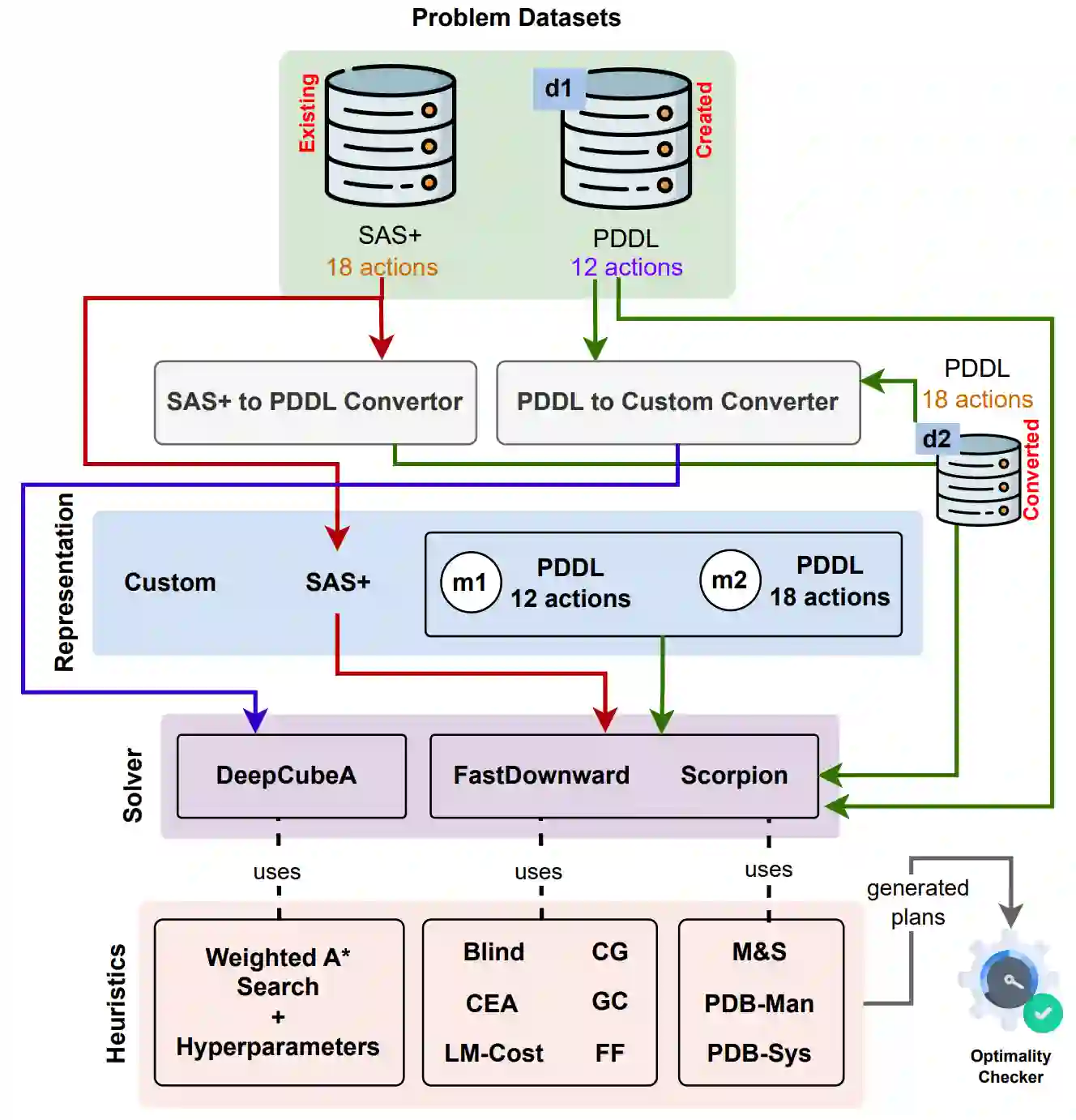
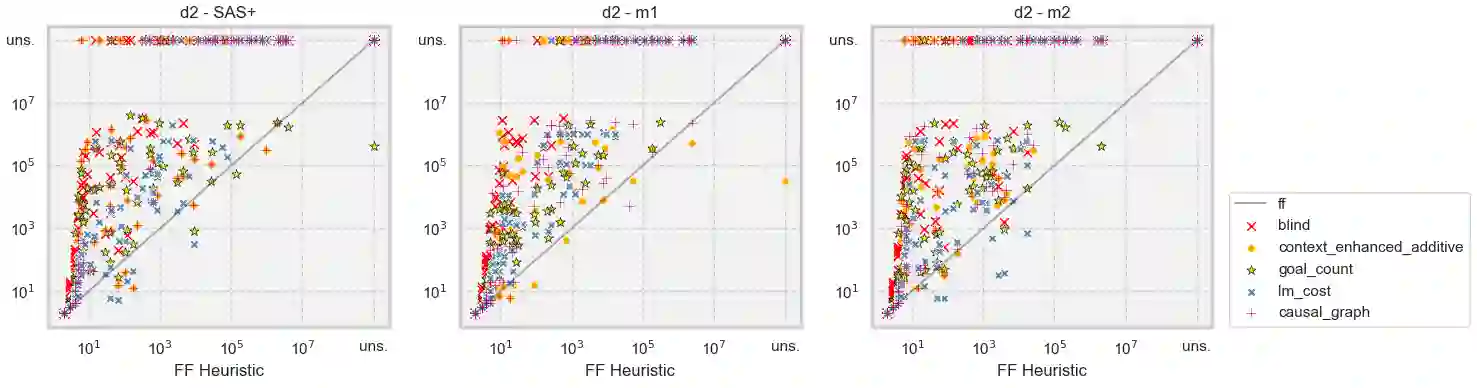
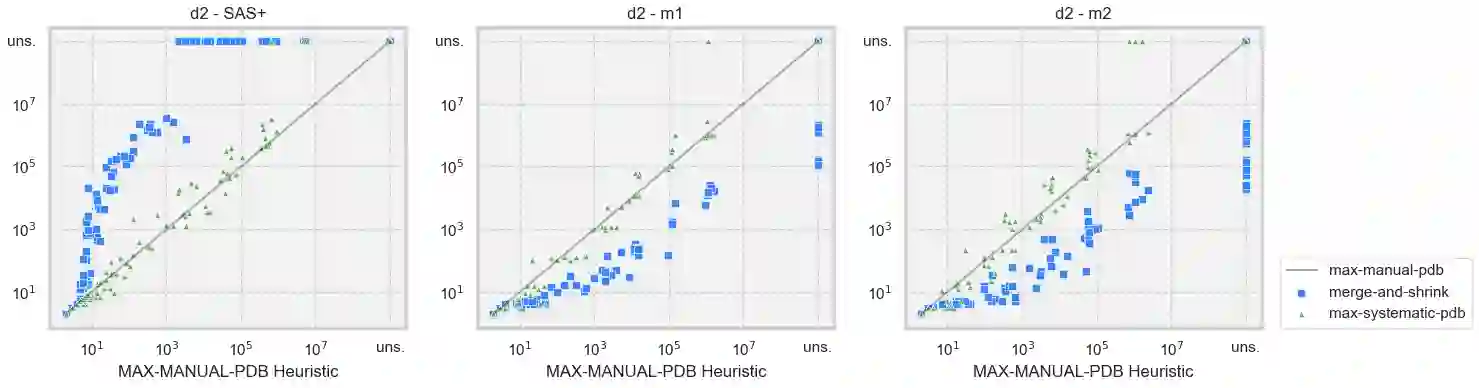
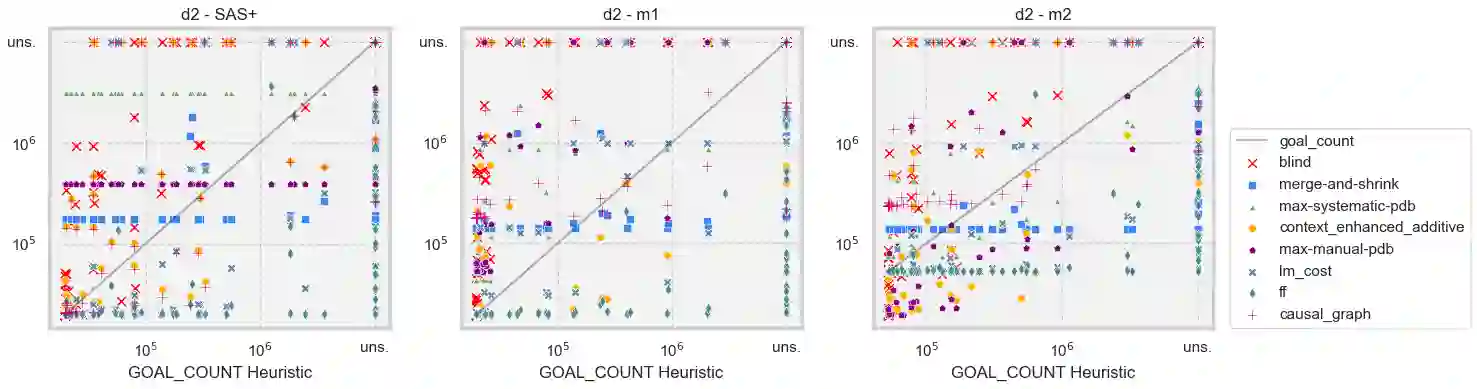
Rubik's Cube (RC) is a well-known and computationally challenging puzzle that has motivated AI researchers to explore efficient alternative representations and problem-solving methods. The ideal situation for planning here is that a problem be solved optimally and efficiently represented in a standard notation using a general-purpose solver and heuristics. The fastest solver today for RC is DeepCubeA with a custom representation, and another approach is with Scorpion planner with State-Action-Space+ (SAS+) representation. In this paper, we present the first RC representation in the popular PDDL language so that the domain becomes more accessible to PDDL planners, competitions, and knowledge engineering tools, and is more human-readable. We then bridge across existing approaches and compare performance. We find that in one comparable experiment, DeepCubeA solves all problems with varying complexities, albeit only 18\% are optimal plans. For the same problem set, Scorpion with SAS+ representation and pattern database heuristics solves 61.50\% problems, while FastDownward with PDDL representation and FF heuristic solves 56.50\% problems, out of which all the plans generated were optimal. Our study provides valuable insights into the trade-offs between representational choice and plan optimality that can help researchers design future strategies for challenging domains combining general-purpose solving methods (planning, reinforcement learning), heuristics, and representations (standard or custom).
翻译:魔方(RC)是一个广为人知且计算上极具挑战性的谜题,它促使人工智能研究者探索高效的替代表示与问题求解方法。在此类规划问题中,理想情形是能够使用通用求解器与启发式方法,通过标准符号对问题进行最优且高效的表示。当前最快的魔方求解器采用自定义表示的DeepCubeA,另一种方法则是基于状态-动作-空间+(SAS+)表示的Scorpion规划器。本文首次提出魔方在流行PDDL语言中的表示,使得该领域更易被PDDL规划器、竞赛及知识工程工具所采用,同时提升人类可读性。接着,我们桥接现有方法并比较其性能。在一组可对比实验中我们发现:DeepCubeA能求解所有不同复杂度的实例,但其中仅18%为最优规划;针对同一问题集,采用SAS+表示与模式数据库启发式方法的Scorpion求解了61.50%的问题,而采用PDDL表示与FF启发式的FastDownward求解了56.50%的问题——且后者生成的所有规划均为最优。我们的研究揭示了表示选择与规划最优性之间的权衡关系,可为研究者设计面向复杂领域的未来策略提供重要见解,这些策略将结合通用求解方法(规划、强化学习)、启发式方法与(标准或自定义)表示。




相关内容




 微信扫码咨询专知VIP会员