

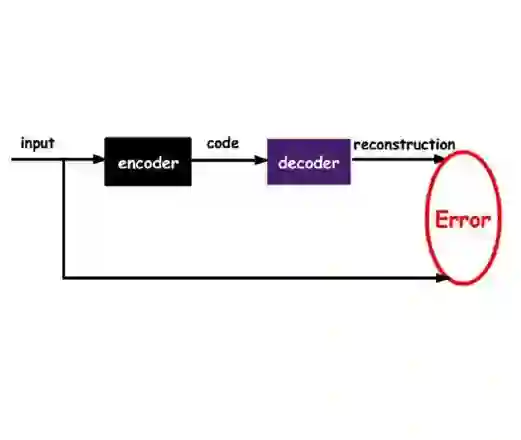
Phytoplankton parasites are largely understudied microbial components with a potentially significant ecological impact on phytoplankton bloom dynamics. To better understand their impact, we need improved detection methods to integrate phytoplankton parasite interactions in monitoring aquatic ecosystems. Automated imaging devices usually produce high amount of phytoplankton image data, while the occurrence of anomalous phytoplankton data is rare. Thus, we propose an unsupervised anomaly detection system based on the similarity of the original and autoencoder-reconstructed samples. With this approach, we were able to reach an overall F1 score of 0.75 in nine phytoplankton species, which could be further improved by species-specific fine-tuning. The proposed unsupervised approach was further compared with the supervised Faster R-CNN based object detector. With this supervised approach and the model trained on plankton species and anomalies, we were able to reach the highest F1 score of 0.86. However, the unsupervised approach is expected to be more universal as it can detect also unknown anomalies and it does not require any annotated anomalous data that may not be always available in sufficient quantities. Although other studies have dealt with plankton anomaly detection in terms of non-plankton particles, or air bubble detection, our paper is according to our best knowledge the first one which focuses on automated anomaly detection considering putative phytoplankton parasites or infections.
翻译:浮游植物寄生虫是一类研究不足的微生物组分,对浮游植物水华动态具有潜在的重大生态影响。为深入理解其作用,我们需要改进检测方法,将浮游植物寄生虫相互作用纳入水生生态系统监测体系。自动化成像设备通常产生大量浮游植物图像数据,但异常浮游植物数据极为稀少。为此,我们提出一种基于原始样本与自编码器重建样本相似度的无监督异常检测系统。采用该方法,我们在九种浮游植物物种上实现了0.75的总体F1分数,通过物种特异性微调可进一步提升性能。我们将该无监督方法与基于Faster R-CNN的有监督目标检测器进行了比较。采用有监督方法及在浮游物种与异常数据上训练的模型,我们取得了最高0.86的F1分数。然而,无监督方法预期更具普适性,既能检测未知异常,又无需依赖标注的异常数据——这类数据往往难以获得充足数量。尽管已有研究涉及非浮游颗粒物或气泡检测等浮游生物异常识别,但据我们所知,本文是首个聚焦于浮游植物潜在寄生虫或感染自动化检测的研究。




相关内容


 微信扫码咨询专知VIP会员