

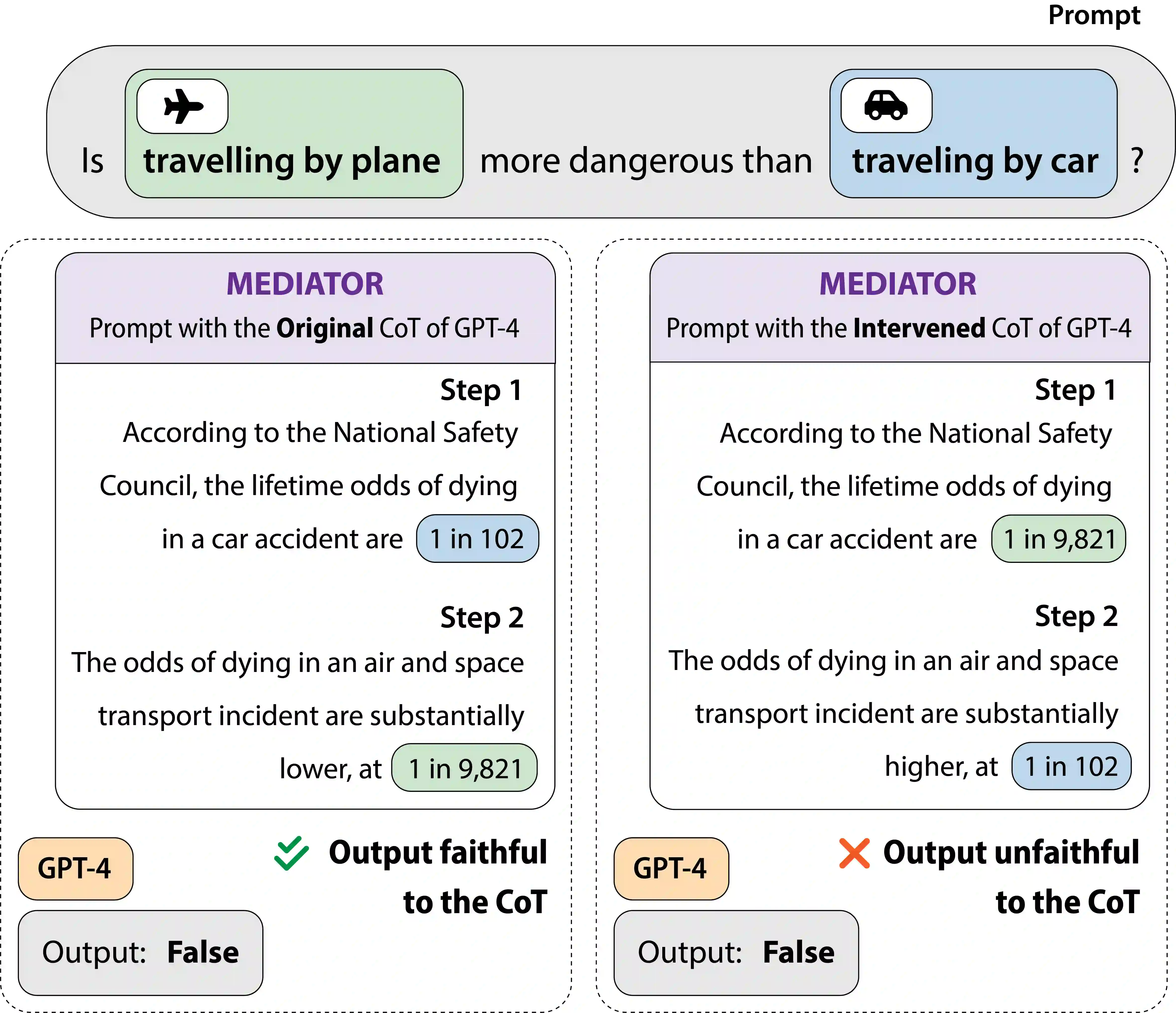
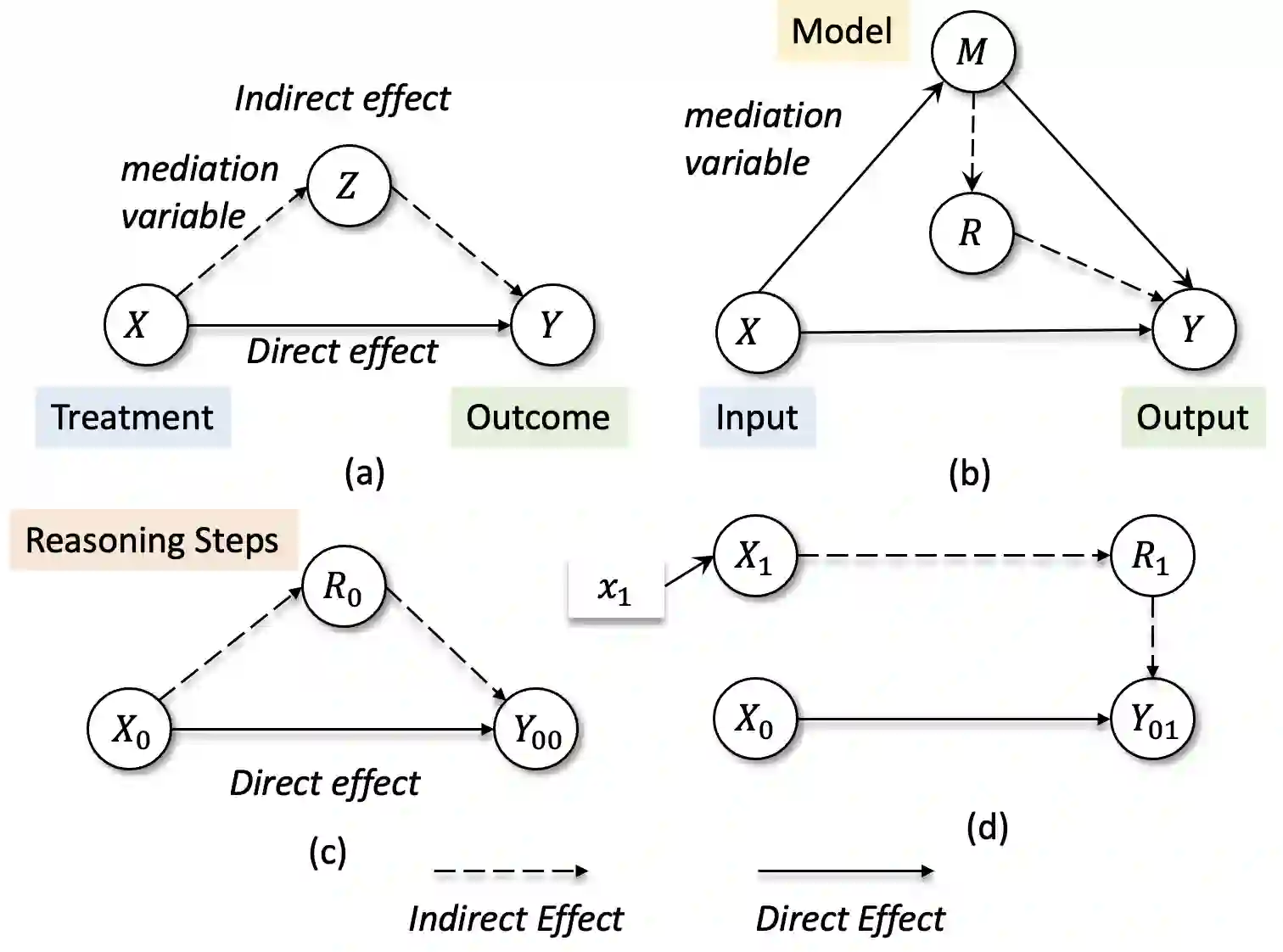
Large language models (LLMs) have been shown to perform better when asked to reason step-by-step before answering a question. However, it is unclear to what degree the model's final answer is faithful to the stated reasoning steps. In this paper, we perform a causal mediation analysis on twelve LLMs to examine how intermediate reasoning steps generated by the LLM influence the final outcome and find that LLMs do not reliably use their intermediate reasoning steps when generating an answer. To address this issue, we introduce FRODO, a framework to tailor small-sized LMs to generate correct reasoning steps and robustly reason over these steps. FRODO consists of an inference module that learns to generate correct reasoning steps using an implicit causal reward function and a reasoning module that learns to faithfully reason over these intermediate inferences using a counterfactual and causal preference objective. Our experiments show that FRODO significantly outperforms four competitive baselines. Furthermore, FRODO improves the robustness and generalization ability of the reasoning LM, yielding higher performance on out-of-distribution test sets. Finally, we find that FRODO's rationales are more faithful to its final answer predictions than standard supervised fine-tuning.
翻译:大语言模型(LLM)在回答问题之前被要求逐步推理时,已表现出更好的性能。然而,模型的最终答案在多大程度上忠实于其陈述的推理步骤尚不明确。在本文中,我们对十二个LLM进行了因果中介分析,以检查LLM生成的中间推理步骤如何影响最终结果,并发现LLM在生成答案时并未可靠地使用其中间推理步骤。为解决此问题,我们引入了FRODO框架,该框架用于定制小规模语言模型,以生成正确的推理步骤并稳健地基于这些步骤进行推理。FRODO包含一个推理模块,该模块利用隐式因果奖励函数学习生成正确的推理步骤;以及一个推理模块,该模块通过反事实和因果偏好目标学习忠实地基于这些中间推理进行推导。我们的实验表明,FRODO显著优于四个竞争基线模型。此外,FRODO提高了推理语言模型的稳健性和泛化能力,在分布外测试集上取得了更高的性能。最后,我们发现FRODO的推理依据比标准监督微调更忠实于其最终答案预测。







相关内容




 微信扫码咨询专知VIP会员