

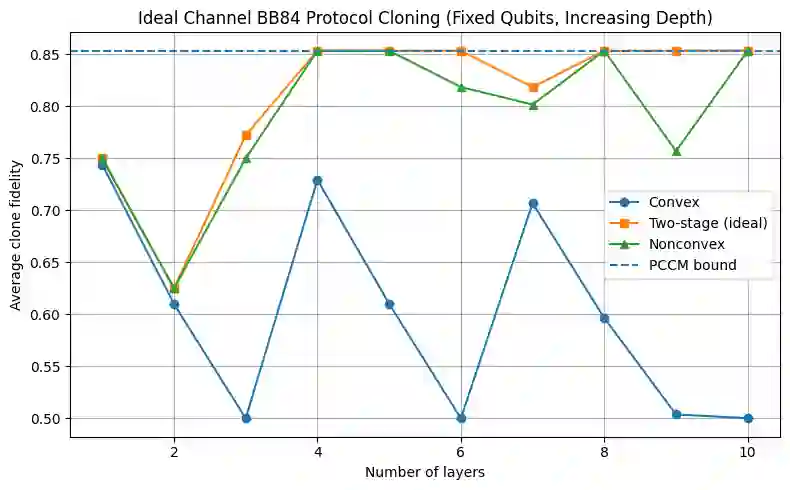
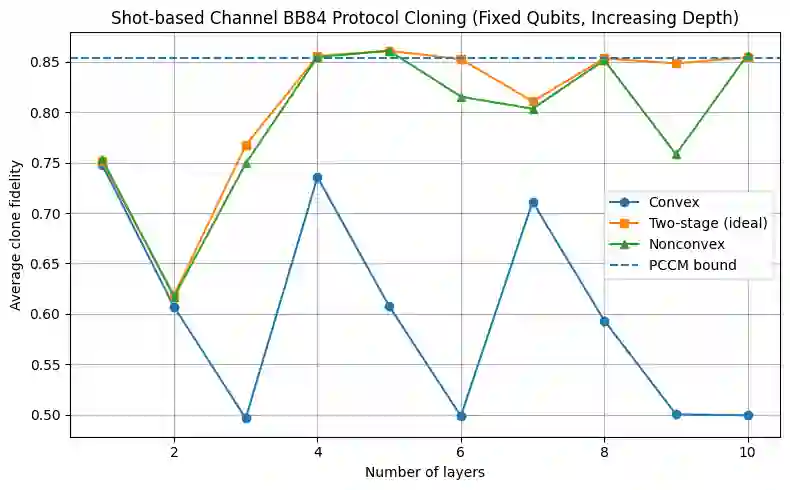
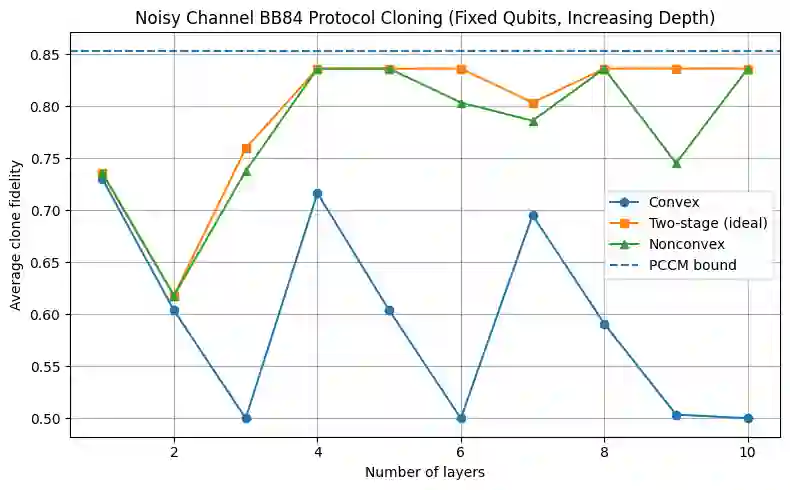
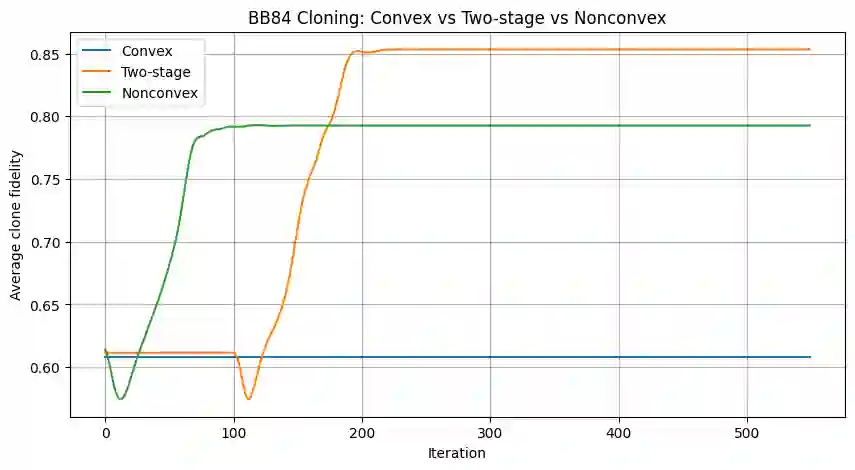
Variational Quantum Algorithms are a vital part of quantum computing. It is a blend of quantum and classical methods for tackling tough problems in machine learning, chemistry, and combinatorial optimization. Yet as these algorithms scale up, they cannot escape the barren-plateau phenomenon. As systems grow, gradients can vanish so quickly that training deep or randomly initialized circuits becomes nearly impossible. To overcome the barren plateau problem, we introduce a two-stage optimization framework. First comes the convex initialization stage. Here, we shape the quantum energy landscape, the Hilmaton landscape, into a smooth, low-energy basin. This step makes gradients easier to spot and keeps noise from derailing the process. Once we have gotten a stable gradient flow, we move to the second stage: nonconvex refinement. In this phase, we let the algorithm wander through different energy minima, making the model more expressive. We show that our proposed algorithm theoretically reduces the dependence on the condition number of the underlying quantum least squares approximate matrix via Riemannian manifold optimization. Finally, we used our two-stage solution to perform quantum cryptanalysis of quantum key distribution protocol (i.e., BB84) to determine the optimal cloning strategies. The simulation results showed that our proposed two-stage solution outperforms its random initialization counterpart.
翻译:变分量子算法是量子计算的重要组成部分。它融合了量子与经典方法,用于解决机器学习、化学和组合优化中的难题。然而随着算法规模扩大,它们无法避免贫瘠高原现象。当系统扩展时,梯度可能迅速消失,导致深度或随机初始化电路的训练几乎无法进行。为克服贫瘠高原问题,我们提出了一种两阶段优化框架。首先是凸初始化阶段:通过将量子能量景观(希尔伯特景观)塑造成平滑的低能盆地,使梯度更易识别并防止噪声干扰过程。获得稳定梯度流后,进入第二阶段:非凸优化阶段。该阶段允许算法探索不同能量极小值,从而增强模型表达能力。我们证明,所提算法通过黎曼流形优化,理论上降低了对底层量子最小二乘近似矩阵条件数的依赖。最后,我们应用该两阶段方案对量子密钥分发协议(即BB84)进行量子密码分析,以确定最优克隆策略。仿真结果表明,所提出的两阶段方案显著优于随机初始化方法。




相关内容




 微信扫码咨询专知VIP会员