

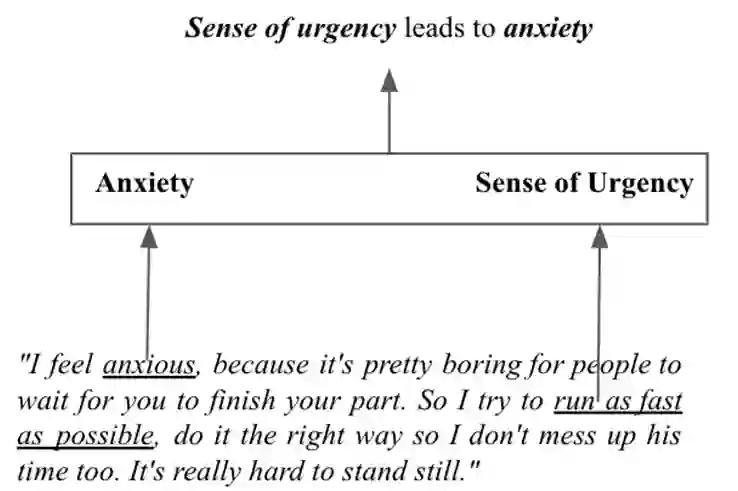
Context: Task interdependence is a work design factor that expresses the mutual dependency between tasks that compose a whole work. In software development, task interdependencies are created by the technical dependencies between the components of the software system and by how the development tasks are allocated to individuals in a teamwork context. Despite its importance for individual and team effectiveness, we still do not have studies about how software engineers perceive task interdependence in practice. Goal: To understand the perceptions of software engineers about the interdependence in their work and how these perceptions interact with other human and technical factors in the development process. Method: We performed an exploratory qualitative case study of a single software development team in a Brazilian software company that developed solutions for the financial market. We interviewed all 10 team members and used standard coding techniques from qualitative research to code, categorize, and synthesize data. Results: Individuals are consistent in their understanding of task interdependence and how it happens in practice. However, there are asymmetries between the individual perceptions in an interdependence relationship, which seem to exacerbate expressed feelings of anxiety and dissatisfaction. Conclusion: Our results suggest that the perception of task interdependence in software development is often not symmetrical with potential negative effects on emotional states that are related to motivation and satisfaction in the workplace.
翻译:背景:任务相互依赖性是工作设计中的一个因素,它表达了构成完整工作的各项任务之间的相互依存关系。在软件开发中,任务相互依赖性由软件系统组件之间的技术依赖关系以及开发任务在团队协作环境中如何分配给个人共同产生。尽管其对个人和团队效能至关重要,但目前尚缺乏关于软件工程师在实践中如何认知任务相互依赖性的研究。目标:理解软件工程师对其工作中相互依赖性的认知,以及这些认知如何与开发过程中其他人为因素和技术因素相互作用。方法:我们对一家为金融市场开发解决方案的巴西软件公司中的单个软件开发团队进行了探索性定性案例研究。我们访谈了所有10名团队成员,并采用了定性研究中的标准编码技术对数据进行编码、分类和综合。结果:个体对于任务相互依赖性的概念及其实际发生方式持有一致的理解。然而,在相互依赖关系中,个体认知之间存在不对称性,这似乎加剧了焦虑和不满情绪的表达。结论:我们的结果表明,软件开发中任务相互依赖性的认知往往不对称,可能对与工作场所动力和满意度相关的情绪状态产生负面影响。





相关内容




 微信扫码咨询专知VIP会员