

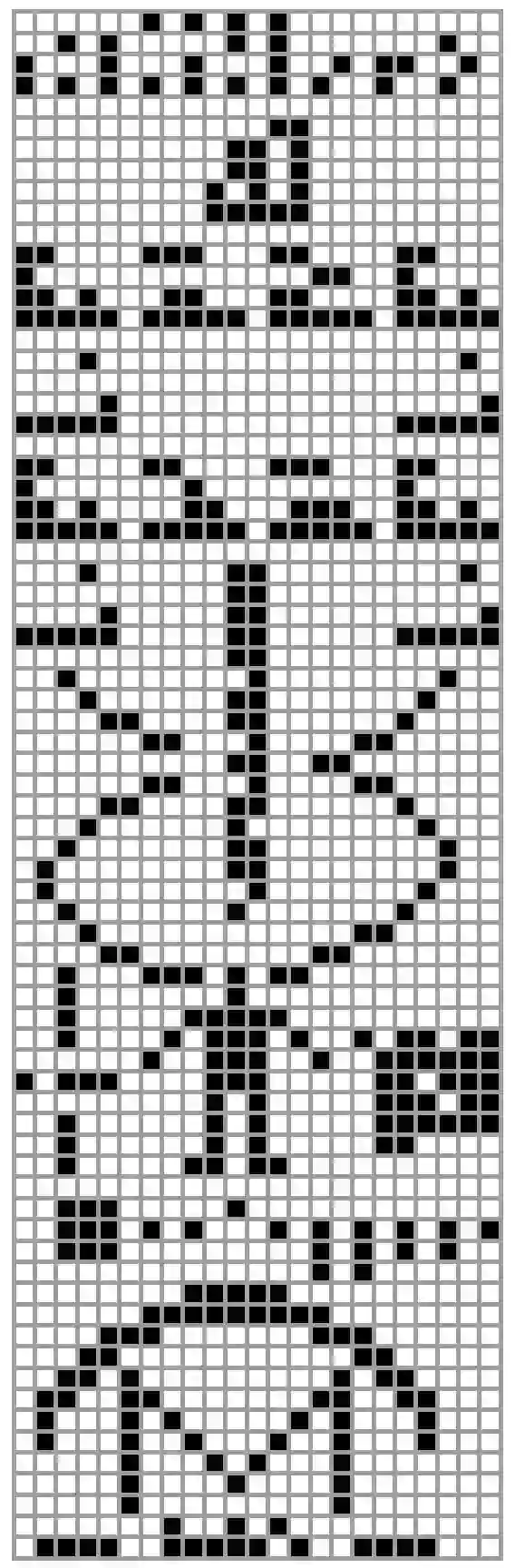
We introduce a general-purpose univariate signal deconvolution method based on the principles of an approach to Artificial General Intelligence. This approach is based on a generative model that combines information theory and algorithmic probability that required a large calculation of an estimation of a `universal distribution' to build a general-purpose model of models independent of probability distributions. This was used to investigate how non-random data may encode information about the physical properties such as dimension and length scales in which a signal or message may have been originally encoded, embedded, or generated. This multidimensional space reconstruction method is based on information theory and algorithmic probability, and it is agnostic, but not independent, with respect to the chosen computable or semi-computable approximation method or encoding-decoding scheme. The results presented in this paper are useful for applications in coding theory, particularly in zero-knowledge one-way communication channels, such as in deciphering messages sent by generating sources of unknown nature for which no prior knowledge is available. We argue that this can have strong potential for cryptography, signal processing, causal deconvolution, life, and techno signature detection.
翻译:我们提出了一种通用的单变量信号解卷积方法,该方法基于通用人工智能方法的原理。该方法基于一个结合信息论与算法概率的生成模型,该模型需要大量计算来估计“通用分布”,从而构建一个独立于概率分布的通用模型集合。该模型被用于研究非随机数据如何编码信号或消息最初可能被编码、嵌入或生成时所处物理特性(如维度与尺度)的信息。这种多维空间重建方法基于信息论与算法概率,对于所选择的可计算或半可计算近似方法或编解码方案保持不可知性(但非独立性)。本文成果对编码理论具有应用价值,尤其在零知识单向通信信道中,例如破译由未知性质的生成源(且无任何先验知识)发送的消息。我们认为,该方法在密码学、信号处理、因果解卷积、生命信号及技术信号检测方面具有巨大潜力。




相关内容


 微信扫码咨询专知VIP会员