

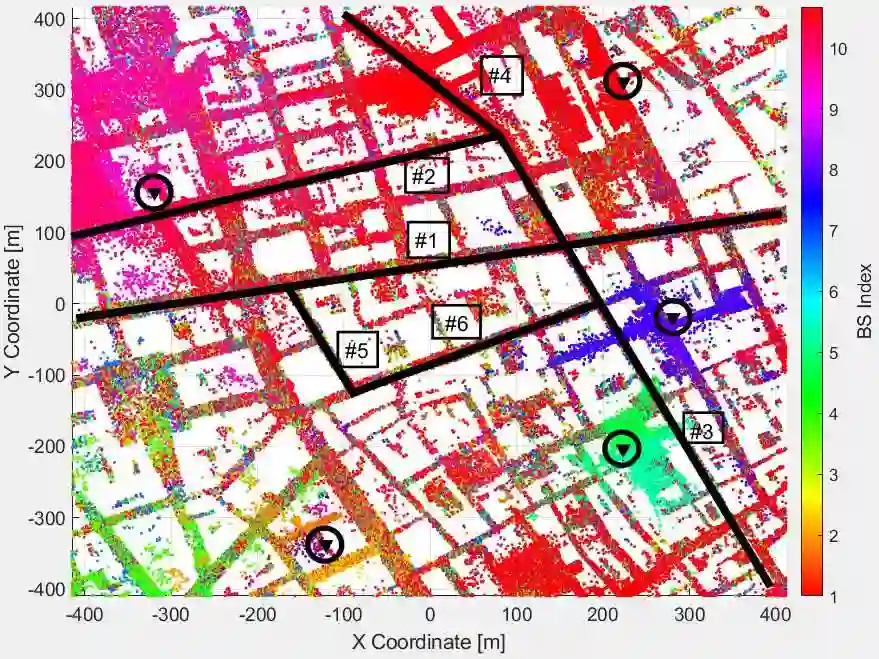
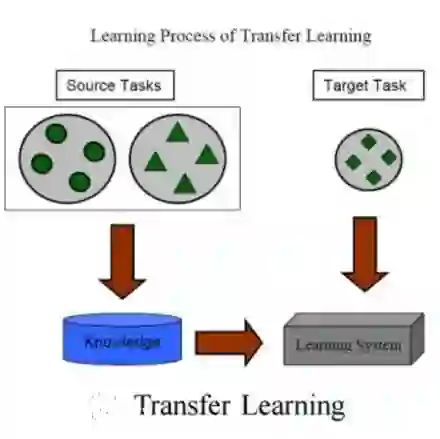
Mobility management in dense cellular networks is challenging due to varying user speeds and deployment conditions. Traditional 3GPP handover (HO) schemes, relying on fixed A3-offset and time-to-trigger (TTT) parameters, struggle to balance radio link failures (RLFs) and ping-pongs. We propose a data-driven HO optimization framework based on high-dimensional Bayesian optimization (HD-BO) and enhanced with transfer learning to reduce training time and improve generalization across different user speeds. Evaluations on a real-world deployment show that HD-BO outperforms 3GPP set-1 and set-5 benchmarks, while transfer learning enables rapid adaptation without loss in performance. This highlights the potential of data-driven, site-specific mobility management in large-scale networks.
翻译:在密集蜂窝网络中,由于用户速度和部署条件的动态变化,移动性管理面临严峻挑战。传统的3GPP切换方案依赖固定的A3偏移量和触发时间参数,难以在无线链路故障与乒乓效应之间取得平衡。本文提出一种基于高维贝叶斯优化的数据驱动切换优化框架,并引入迁移学习机制以缩短训练时间、提升不同用户速度场景下的泛化能力。在实际部署场景中的评估表明,该高维贝叶斯优化方法在性能上优于3GPP标准方案集-1与集-5基准,而迁移学习的应用实现了在保持性能的前提下快速适应新场景。这凸显了数据驱动的站点定制化移动性管理在大规模网络中的应用潜力。




相关内容



 微信扫码咨询专知VIP会员