

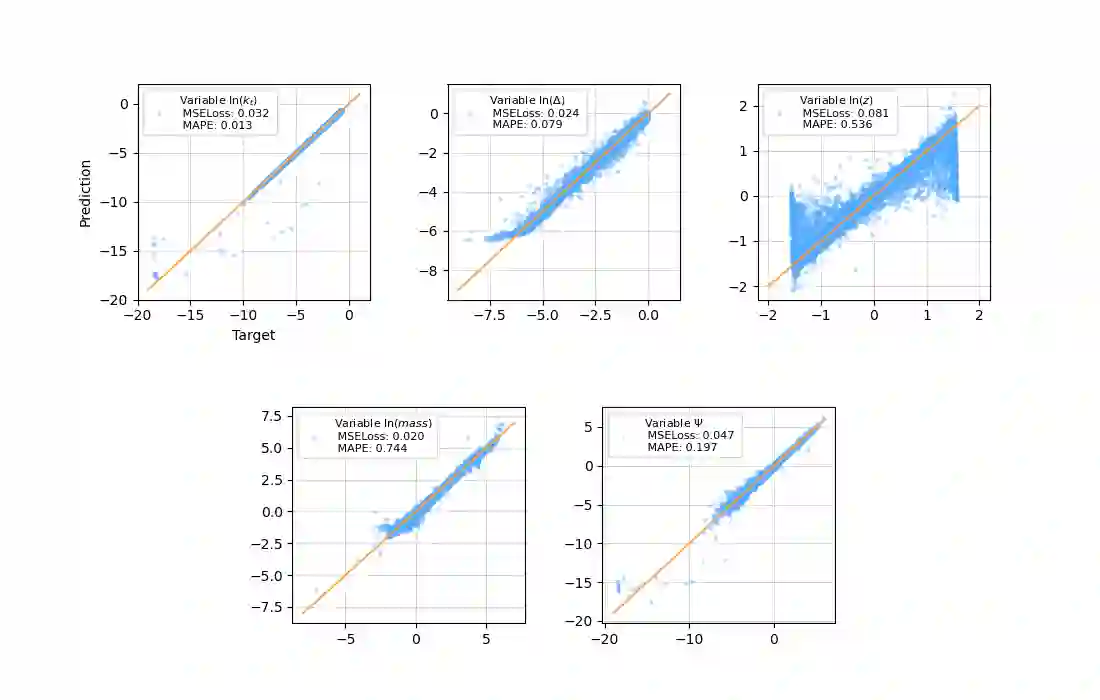
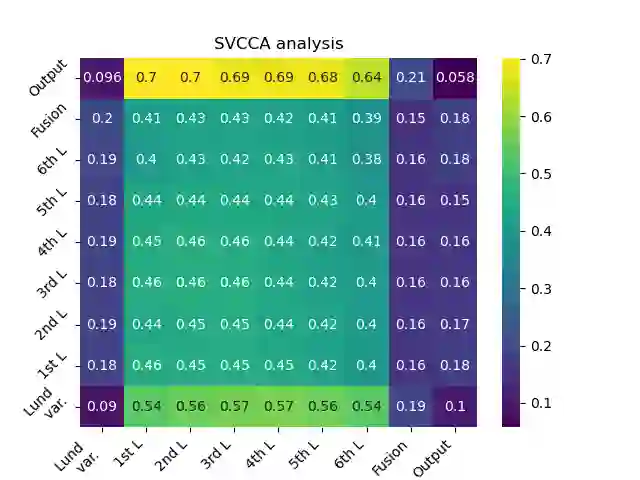
Machine learning has played a pivotal role in advancing physics, with deep learning notably contributing to solving complex classification problems such as jet tagging in the field of jet physics. In this experiment, we aim to harness the full potential of neural networks while acknowledging that, at times, we may lose sight of the underlying physics governing these models. Nevertheless, we demonstrate that we can achieve remarkable results obscuring physics knowledge and relying completely on the model's outcome. We introduce JetLOV, a composite comprising two models: a straightforward multilayer perceptron (MLP) and the well-established LundNet. Our study reveals that we can attain comparable jet tagging performance without relying on the pre-computed LundNet variables. Instead, we allow the network to autonomously learn an entirely new set of variables, devoid of a priori knowledge of the underlying physics. These findings hold promise, particularly in addressing the issue of model dependence, which can be mitigated through generalization and training on diverse data sets.
翻译:机器学习在推动物理学发展方面发挥了关键作用,其中深度学习尤为显著地促进了喷注物理领域中诸如喷注标记等复杂分类问题的解决。本实验旨在充分挖掘神经网络的潜力,同时承认我们有时可能忽略控制这些模型的底层物理机制。尽管如此,我们证明,通过弱化物理知识并完全依赖模型输出,仍能取得显著成果。我们提出了JetLOV,一个由两个模型组成的复合结构:简单的多层感知器(MLP)和成熟的LundNet。研究表明,无需依赖预计算的LundNet变量,我们即可获得可比的喷注标记性能。相反,我们让网络自主习得一套全新的变量,而不需要预先了解底层物理知识。这些发现具有前景,尤其有助于解决模型依赖性问题——这一问题可通过泛化及在多数据集上的训练得到缓解。




相关内容





 微信扫码咨询专知VIP会员