

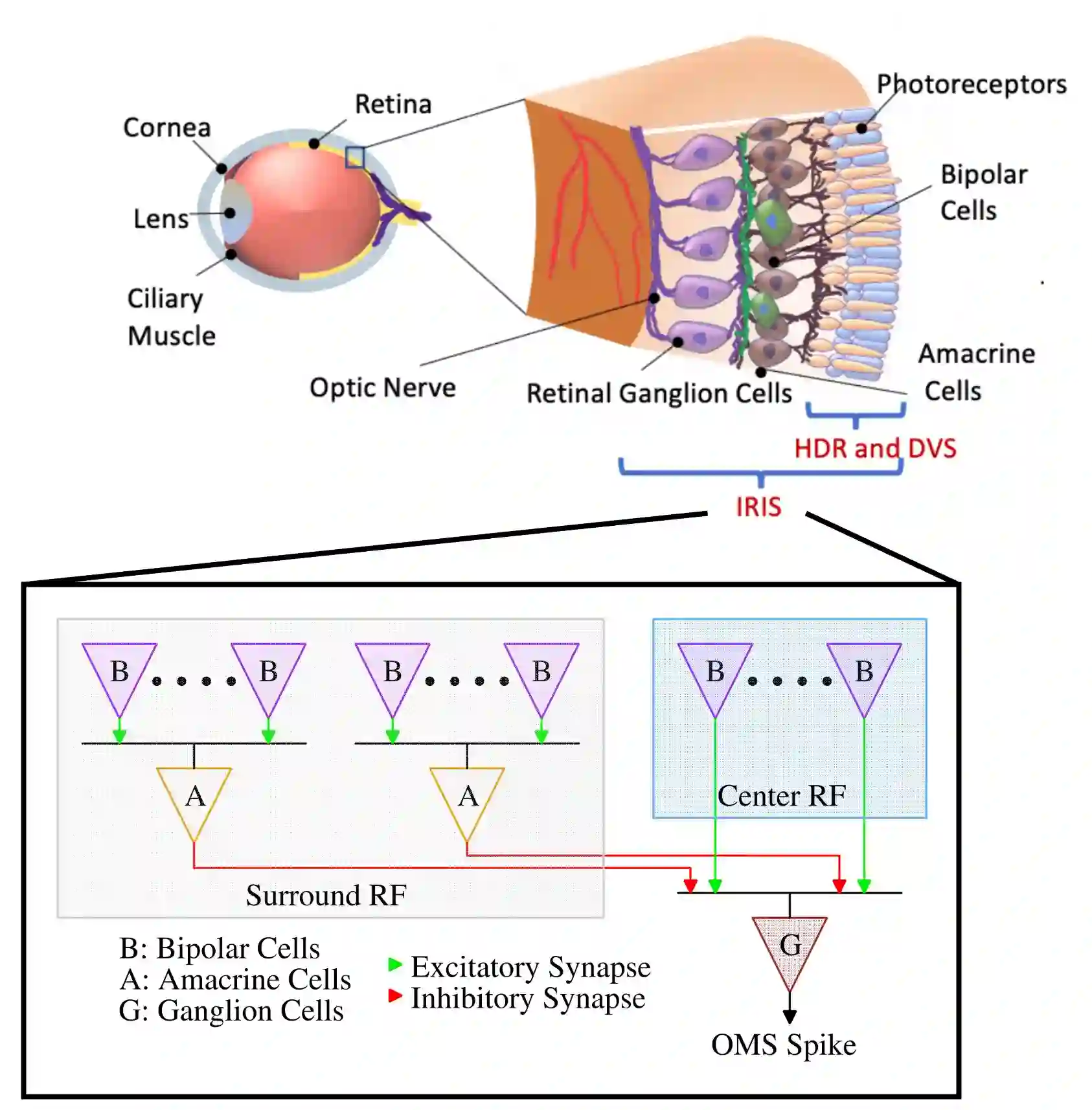
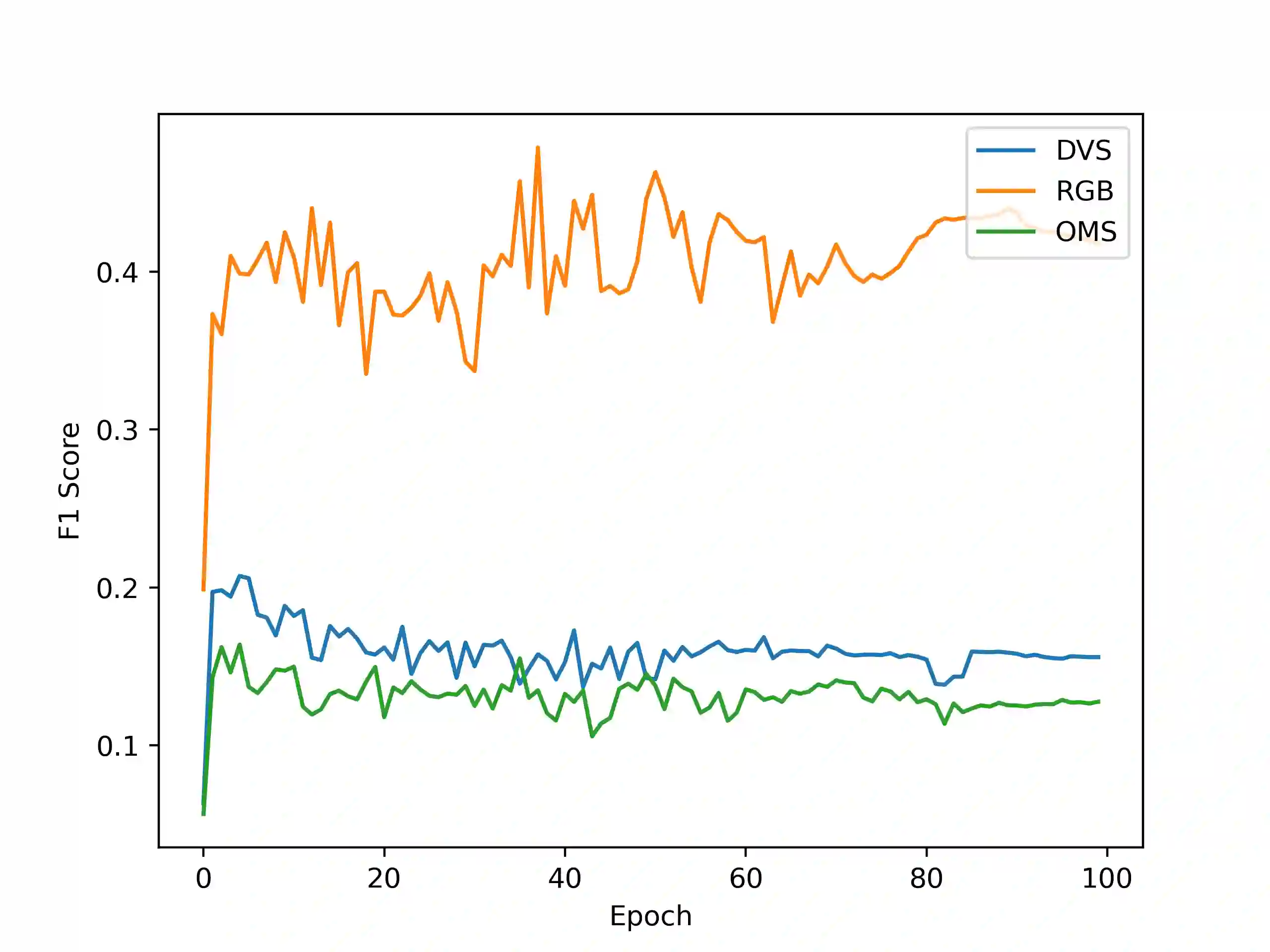
Neuromorphic (event-based) image sensors draw inspiration from the human-retina to create an electronic device that can process visual stimuli in a way that closely resembles its biological counterpart. These sensors process information significantly different than the traditional RGB sensors. Specifically, the sensory information generated by event-based image sensors are orders of magnitude sparser compared to that of RGB sensors. The first generation of neuromorphic image sensors, Dynamic Vision Sensor (DVS), are inspired by the computations confined to the photoreceptors and the first retinal synapse. In this work, we highlight the capability of the second generation of neuromorphic image sensors, Integrated Retinal Functionality in CMOS Image Sensors (IRIS), which aims to mimic full retinal computations from photoreceptors to output of the retina (retinal ganglion cells) for targeted feature-extraction. The feature of choice in this work is Object Motion Sensitivity (OMS) that is processed locally in the IRIS sensor. We study the capability of OMS in solving the ego-motion problem of the event-based cameras. Our results show that OMS can accomplish standard computer vision tasks with similar efficiency to conventional RGB and DVS solutions but offers drastic bandwidth reduction. This cuts the wireless and computing power budgets and opens up vast opportunities in high-speed, robust, energy-efficient, and low-bandwidth real-time decision making.
翻译:神经形态(事件驱动)图像传感器受人类视网膜启发,构建出能够以高度模拟生物对应方式处理视觉刺激的电子器件。该类传感器处理信息的方式与传统RGB传感器存在显著差异——事件驱动图像传感器产生的感知信息量级较RGB传感器稀疏数个数量级。第一代神经形态图像传感器——动态视觉传感器(DVS)——受限于感光细胞和第一级视网膜突触的计算机制。本研究聚焦第二代神经形态图像传感器——CMOS图像传感器中集成视网膜功能(IRIS)——其旨在完整模拟从感光细胞到视网膜输出(视网膜神经节细胞)的视网膜计算过程,实现目标化的特征提取。本文选取的特征为物体运动敏感度(OMS),该特征在IRIS传感器内局部处理完成。我们探究了OMS在解决事件相机自运动问题中的能力,结果表明OMS能够以与传统RGB和DVS方案相近的效率完成标准计算机视觉任务,同时实现带宽的急剧降低。这一特性在削减无线传输与计算功耗预算的同时,为高速、鲁棒、节能、低带宽的实时决策开辟了广阔前景。






相关内容


 微信扫码咨询专知VIP会员