

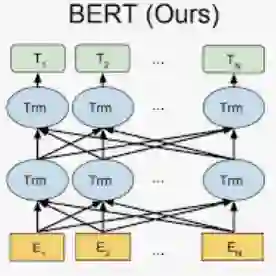
Detecting protein-protein interactions (PPIs) is crucial for understanding genetic mechanisms, disease pathogenesis, and drug design. However, with the fast-paced growth of biomedical literature, there is a growing need for automated and accurate extraction of PPIs to facilitate scientific knowledge discovery. Pre-trained language models, such as generative pre-trained transformer (GPT) and bidirectional encoder representations from transformers (BERT), have shown promising results in natural language processing (NLP) tasks. We evaluated the PPI identification performance of various GPT and BERT models using a manually curated benchmark corpus of 164 PPIs in 77 sentences from learning language in logic (LLL). BERT-based models achieved the best overall performance, with PubMedBERT achieving the highest precision (85.17%) and F1-score (86.47%) and BioM-ALBERT achieving the highest recall (93.83%). Despite not being explicitly trained for biomedical texts, GPT-4 achieved comparable performance to the best BERT models with 83.34% precision, 76.57% recall, and 79.18% F1-score. These findings suggest that GPT models can effectively detect PPIs from text data and have the potential for use in biomedical literature mining tasks.
翻译:检测蛋白质-蛋白质相互作用(PPIs)对于理解遗传机制、疾病发病机制和药物设计至关重要。然而,随着生物医学文献的快速增长,自动化且准确地提取PPIs以促进科学知识发现的需求日益增加。预训练语言模型,如生成式预训练Transformer(GPT)和双向编码器表示Transformer(BERT),已在自然语言处理(NLP)任务中展现出良好效果。我们使用从学习逻辑语言(LLL)中手动整理的包含77个句子中164个PPIs的基准语料库,评估了多种GPT和BERT模型的PPI识别性能。基于BERT的模型实现了最佳整体性能,其中PubMedBERT获得了最高精确率(85.17%)和F1分数(86.47%),BioM-ALBERT获得了最高召回率(93.83%)。尽管未针对生物医学文本进行显式训练,GPT-4达到了与最佳BERT模型相当的性能,其精确率为83.34%,召回率为76.57%,F1分数为79.18%。这些发现表明,GPT模型能够有效从文本数据中检测PPIs,并具有用于生物医学文献挖掘任务的潜力。




相关内容


 微信扫码咨询专知VIP会员