

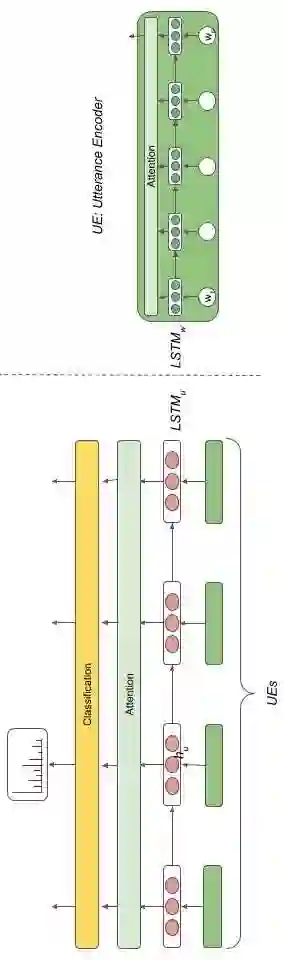
In conversational settings, individuals exhibit unique behaviors, rendering a one-size-fits-all approach insufficient for generating responses by dialogue agents. Although past studies have aimed to create personalized dialogue agents using speaker persona information, they have relied on the assumption that the speaker's persona is already provided. However, this assumption is not always valid, especially when it comes to chatbots utilized in industries like banking, hotel reservations, and airline bookings. This research paper aims to fill this gap by exploring the task of Speaker Profiling in Conversations (SPC). The primary objective of SPC is to produce a summary of persona characteristics for each individual speaker present in a dialogue. To accomplish this, we have divided the task into three subtasks: persona discovery, persona-type identification, and persona-value extraction. Given a dialogue, the first subtask aims to identify all utterances that contain persona information. Subsequently, the second task evaluates these utterances to identify the type of persona information they contain, while the third subtask identifies the specific persona values for each identified type. To address the task of SPC, we have curated a new dataset named SPICE, which comes with specific labels. We have evaluated various baselines on this dataset and benchmarked it with a new neural model, SPOT, which we introduce in this paper. Furthermore, we present a comprehensive analysis of SPOT, examining the limitations of individual modules both quantitatively and qualitatively.
翻译:在对话场景中,个体表现出独特的行为特征,使得千篇一律的方法不足以生成对话智能体的应答。尽管过去的研究尝试利用说话者人格信息构建个性化对话智能体,但这些方法均基于"说话者人格信息已预先提供"的假设。然而这一假设在实际应用中往往不成立,尤其在银行业务、酒店预订和机票预订等场景使用的聊天机器人中。本研究旨在填补这一空白,探索对话中的说话者画像(SPC)任务。SPC的核心目标是为对话中的每个说话者生成人格特征的摘要。为此,我们将该任务分解为三个子任务:人格发现、人格类型识别和人格值提取。给定一段对话,第一个子任务旨在识别所有包含人格信息的语句;第二个子任务评估这些语句以识别其中包含的人格信息类型;第三个子任务则针对每种识别出的人格类型,提取具体的人格值。为应对SPC任务,我们构建了一个带有特定标注的新数据集SPICE,并在该数据集上评估了多个基线模型,同时引入本文提出的新型神经模型SPOT作为基准。此外,我们对SPOT进行了全面分析,从定量和定性两个维度考察了各模块的局限性。







相关内容


 微信扫码咨询专知VIP会员