

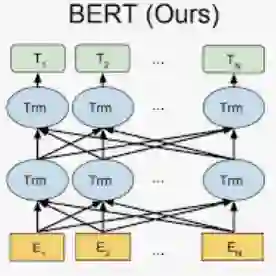
Although software developers of mHealth apps are responsible for protecting patient data and adhering to strict privacy and security requirements, many of them lack awareness of HIPAA regulations and struggle to distinguish between HIPAA rules categories. Therefore, providing guidance of HIPAA rules patterns classification is essential for developing secured applications for Google Play Store. In this work, we identified the limitations of traditional Word2Vec embeddings in processing code patterns. To address this, we adopt multilingual BERT (Bidirectional Encoder Representations from Transformers) which offers contextualized embeddings to the attributes of dataset to overcome the issues. Therefore, we applied this BERT to our dataset for embedding code patterns and then uses these embedded code to various machine learning approaches. Our results demonstrate that the models significantly enhances classification performance, with Logistic Regression achieving a remarkable accuracy of 99.95\%. Additionally, we obtained high accuracy from Support Vector Machine (99.79\%), Random Forest (99.73\%), and Naive Bayes (95.93\%), outperforming existing approaches. This work underscores the effectiveness and showcases its potential for secure application development.
翻译:尽管移动健康应用软件开发者有责任保护患者数据并遵守严格的隐私安全要求,但其中许多人缺乏对HIPAA法规的认识,难以区分HIPAA规则类别。因此,为Google Play Store开发安全应用程序时,提供HIPAA规则模式的分类指导至关重要。本研究指出了传统Word2Vec嵌入在处理代码模式时的局限性。为解决此问题,我们采用多语言BERT(基于Transformer的双向编码器表示)为数据集属性提供上下文嵌入,从而克服了传统方法的缺陷。因此,我们将BERT应用于数据集以实现代码模式嵌入,随后将这些嵌入代码应用于多种机器学习方法。实验结果表明,所提模型显著提升了分类性能,其中逻辑回归达到了99.95%的卓越准确率。此外,支持向量机(99.79%)、随机森林(99.73%)和朴素贝叶斯(95.93%)均取得了高准确率,其性能超越了现有方法。本研究验证了该方法的有效性,并展示了其在安全应用程序开发中的潜力。




相关内容




 微信扫码咨询专知VIP会员