

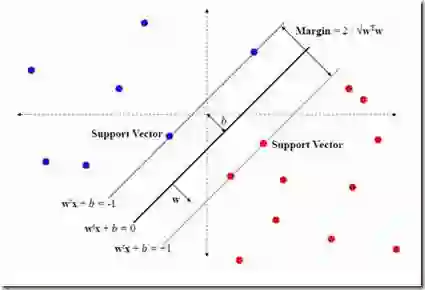
Background: The reproducibility of machine-learning models in prostate cancer detection across different MRI vendors remains a significant challenge. Methods: This study investigates Support Vector Machines (SVM) and Random Forest (RF) models trained on radiomic features extracted from T2-weighted MRI images using Pyradiomics and MRCradiomics libraries. Feature selection was performed using the maximum relevance minimum redundancy (MRMR) technique. We aimed to enhance clinical decision support through multimodal learning and feature fusion. Results: Our SVM model, utilizing combined features from Pyradiomics and MRCradiomics, achieved an AUC of 0.74 on the Multi-Improd dataset (Siemens scanner) but decreased to 0.60 on the Philips test set. The RF model showed similar trends, with notable robustness for models using Pyradiomics features alone (AUC of 0.78 on Philips). Conclusions: These findings demonstrate the potential of multimodal feature integration to improve the robustness and generalizability of machine-learning models for clinical decision support in prostate cancer detection. This study marks a significant step towards developing reliable AI-driven diagnostic tools that maintain efficacy across various imaging platforms.
翻译:背景:机器学习模型在不同MRI厂商间的前列腺癌检测可复现性仍面临重大挑战。方法:本研究采用Pyradiomics和MRCradiomics库从T2加权MRI图像中提取影像组学特征,并基于此训练支持向量机(SVM)与随机森林(RF)模型。特征选择采用最大相关最小冗余(MRMR)技术,旨在通过多模态学习与特征融合增强临床决策支持。结果:我们结合Pyradiomics与MRCradiomics特征的SVM模型在Multi-Improd数据集(西门子扫描仪)上获得0.74的AUC值,但在飞利浦测试集上降至0.60。RF模型呈现相似趋势,而仅使用Pyradiomics特征的模型在飞利浦数据上表现出显著稳健性(AUC达0.78)。结论:这些发现证明多模态特征融合可提升前列腺癌检测中机器学习模型的稳健性与泛化能力,为开发跨影像平台保持效能的可靠AI驱动诊断工具迈出重要一步。




相关内容




 微信扫码咨询专知VIP会员