

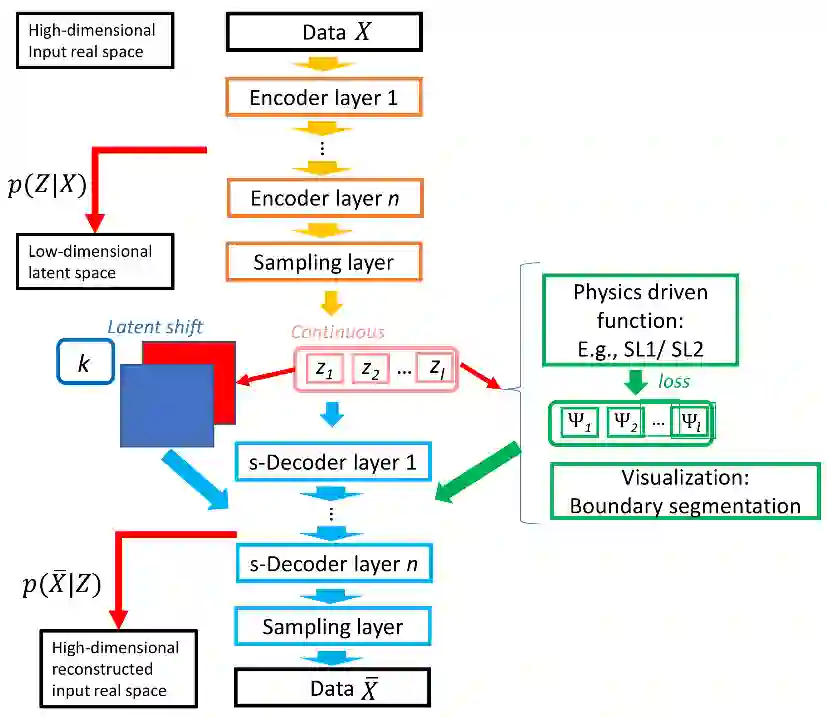
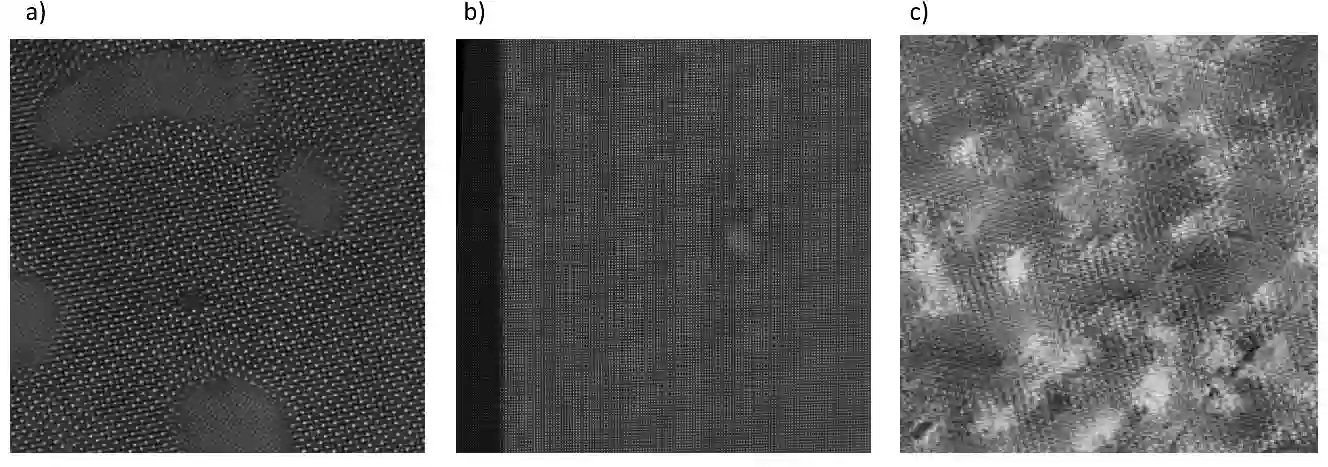
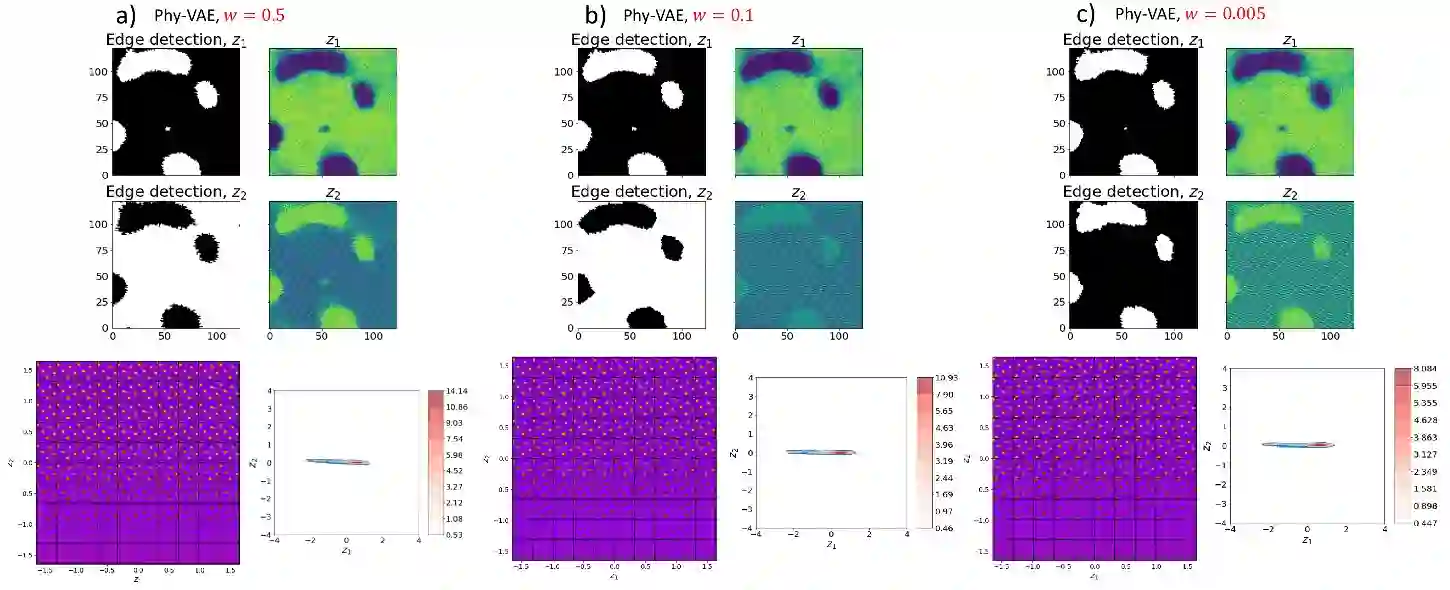
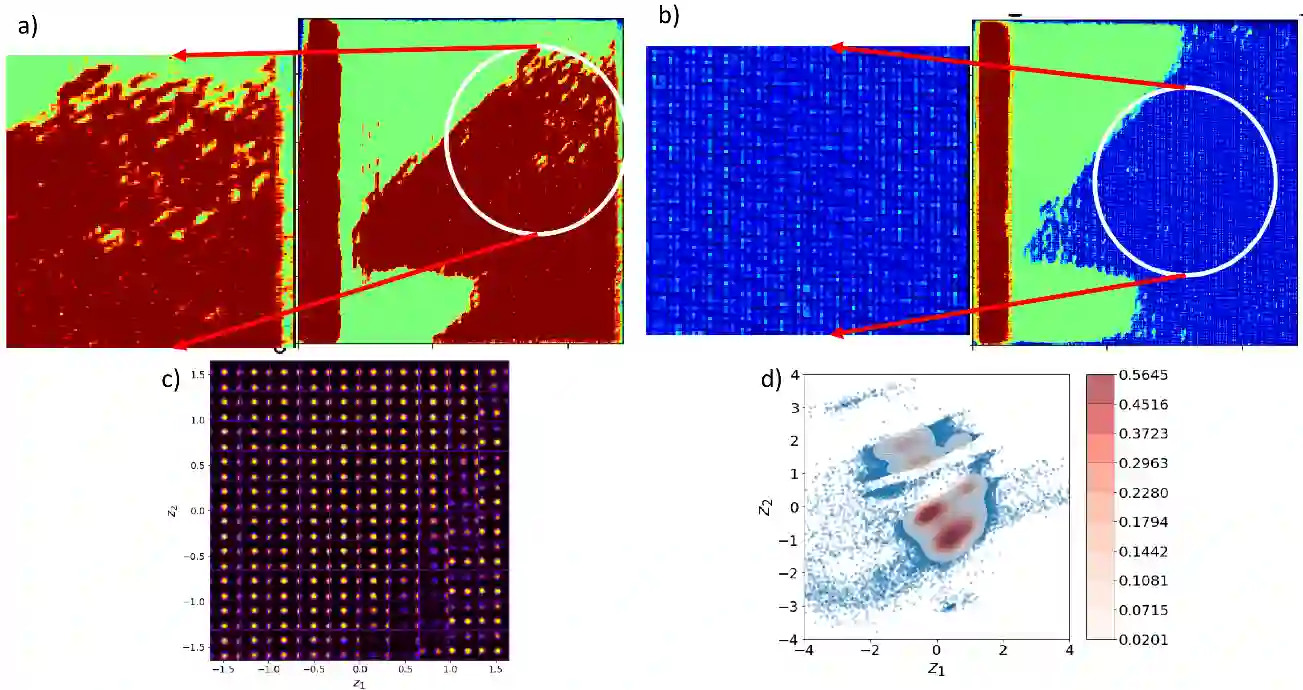
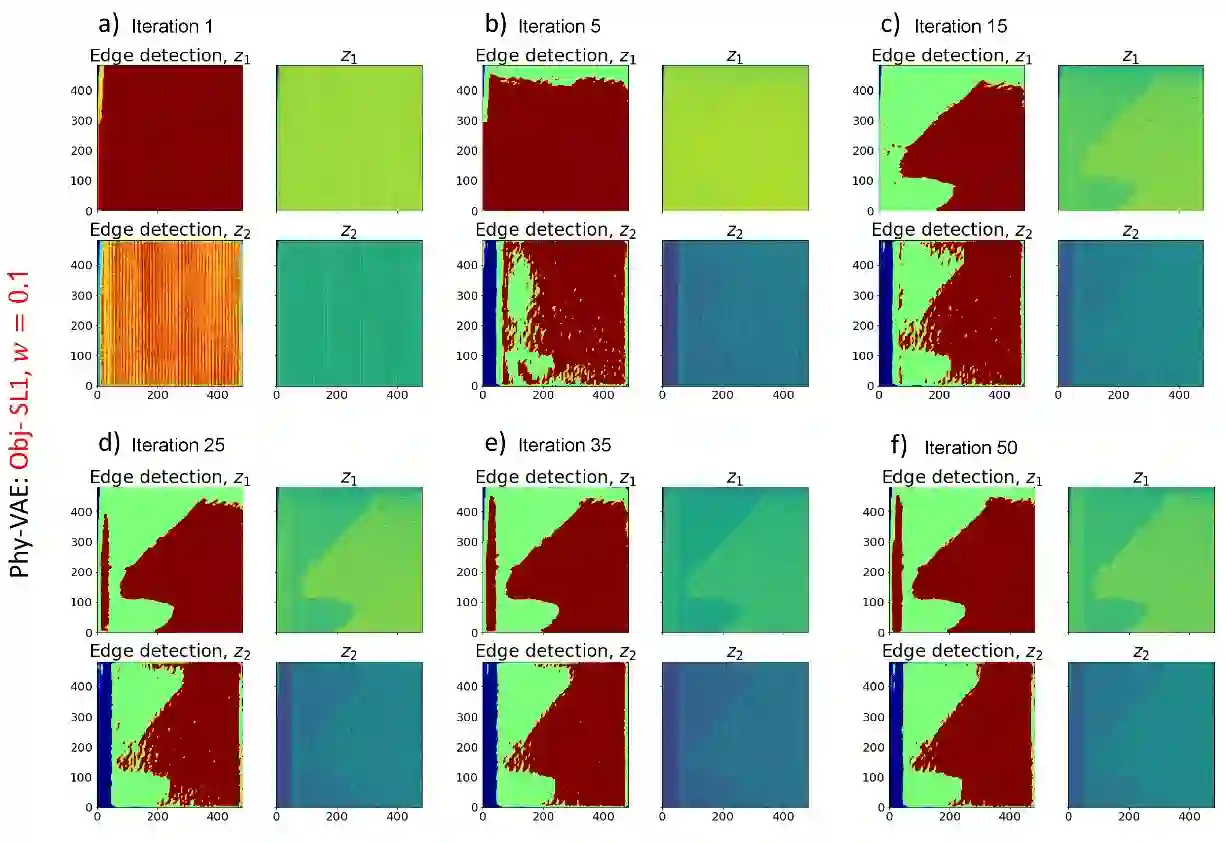
Electron and scanning probe microscopy produce vast amounts of data in the form of images or hyperspectral data, such as EELS or 4D STEM, that contain information on a wide range of structural, physical, and chemical properties of materials. To extract valuable insights from these data, it is crucial to identify physically separate regions in the data, such as phases, ferroic variants, and boundaries between them. In order to derive an easily interpretable feature analysis, combining with well-defined boundaries in a principled and unsupervised manner, here we present a physics augmented machine learning method which combines the capability of Variational Autoencoders to disentangle factors of variability within the data and the physics driven loss function that seeks to minimize the total length of the discontinuities in images corresponding to latent representations. Our method is applied to various materials, including NiO-LSMO, BiFeO3, and graphene. The results demonstrate the effectiveness of our approach in extracting meaningful information from large volumes of imaging data. The fully notebook containing implementation of the code and analysis workflow is available at https://github.com/arpanbiswas52/PaperNotebooks
翻译:电子和扫描探针显微技术以图像或高光谱数据(如EELS或4D STEM)的形式产生海量数据,这些数据蕴含着材料结构、物理和化学性质的广泛信息。为了从这些数据中提取有价值的见解,关键在于识别数据中物理上分离的区域,例如相、铁电变体及其之间的边界。为了以原则性且无监督的方式推导出易于解释的特征分析,并与定义清晰的边界相结合,我们在此提出一种物理增强的机器学习方法。该方法结合了变分自编码器解耦数据中可变性因素的能力,以及基于物理驱动的损失函数,该函数旨在最小化与潜在表示对应的图像中不连续性的总长度。我们的方法应用于多种材料,包括NiO-LSMO、BiFeO3和石墨烯。结果表明,我们的方法在从大量成像数据中提取有意义信息方面具有有效性。包含代码实现与工作流分析的完整笔记本可在 https://github.com/arpanbiswas52/PaperNotebooks 获取。




相关内容





 微信扫码咨询专知VIP会员