

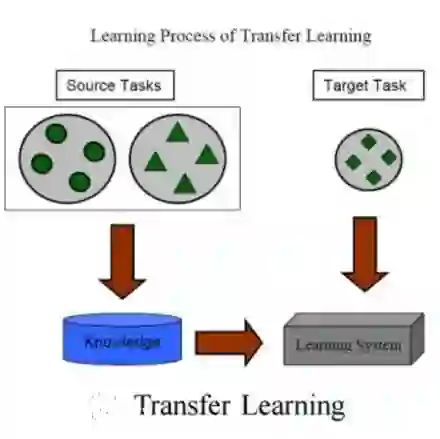
The coronavirus disease 2019 (COVID-19) has led to a global pandemic of significant severity. In addition to its high level of contagiousness, COVID-19 can have a heterogeneous clinical course, ranging from asymptomatic carriers to severe and potentially life-threatening health complications. Many patients have to revisit the emergency room (ER) within a short time after discharge, which significantly increases the workload for medical staff. Early identification of such patients is crucial for helping physicians focus on treating life-threatening cases. In this study, we obtained Electronic Health Records (EHRs) of 3,210 encounters from 13 affiliated ERs within the University of Pittsburgh Medical Center between March 2020 and January 2021. We leveraged a Natural Language Processing technique, ScispaCy, to extract clinical concepts and used the 1001 most frequent concepts to develop 7-day revisit models for COVID-19 patients in ERs. The research data we collected from 13 ERs may have distributional differences that could affect the model development. To address this issue, we employed a classic deep transfer learning method called the Domain Adversarial Neural Network (DANN) and evaluated different modeling strategies, including the Multi-DANN algorithm, the Single-DANN algorithm, and three baseline methods. Results showed that the Multi-DANN models outperformed the Single-DANN models and baseline models in predicting revisits of COVID-19 patients to the ER within 7 days after discharge. Notably, the Multi-DANN strategy effectively addressed the heterogeneity among multiple source domains and improved the adaptation of source data to the target domain. Moreover, the high performance of Multi-DANN models indicates that EHRs are informative for developing a prediction model to identify COVID-19 patients who are very likely to revisit an ER within 7 days after discharge.
翻译:2019冠状病毒病(COVID-19)引发了严重的全球大流行。除高度传染性外,COVID-19的临床病程具有异质性,范围涵盖无症状携带者至可能危及生命的重症并发症。许多患者在出院后短期内需再次就诊急诊室,这显著增加了医务人员的负担。早期识别此类患者,对于帮助医生重点关注危及生命的病例至关重要。本研究获取了2020年3月至2021年1月间匹兹堡大学医学中心13家附属急诊室的3210次就诊电子健康记录。我们利用自然语言处理技术ScispaPy提取临床概念,并采用1001个最频繁概念开发COVID-19患者急诊7天再就诊模型。由于从13家急诊室收集的研究数据存在分布差异,可能影响模型开发,我们采用经典深度迁移学习方法——领域对抗神经网络,并评估了多种建模策略,包括Multi-DANN算法、Single-DANN算法及三种基线方法。结果表明,Multi-DANN模型在预测COVID-19患者出院后7天内急诊再就诊方面优于Single-DANN模型和基线模型。值得注意的是,Multi-DANN策略有效解决了多源领域间的异质性,提升了源数据对目标领域的适应能力。此外,Multi-DANN模型的高性能表明,电子健康记录为开发预测模型以识别出院后7天内极可能急诊再就诊的COVID-19患者提供了有效信息。




相关内容


 微信扫码咨询专知VIP会员