

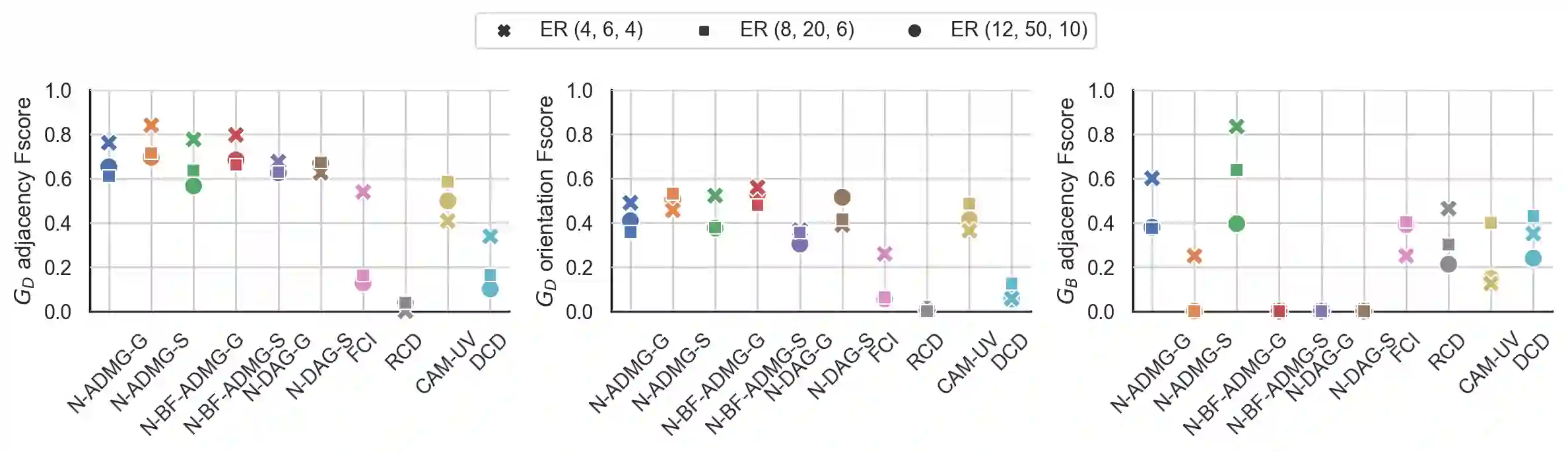
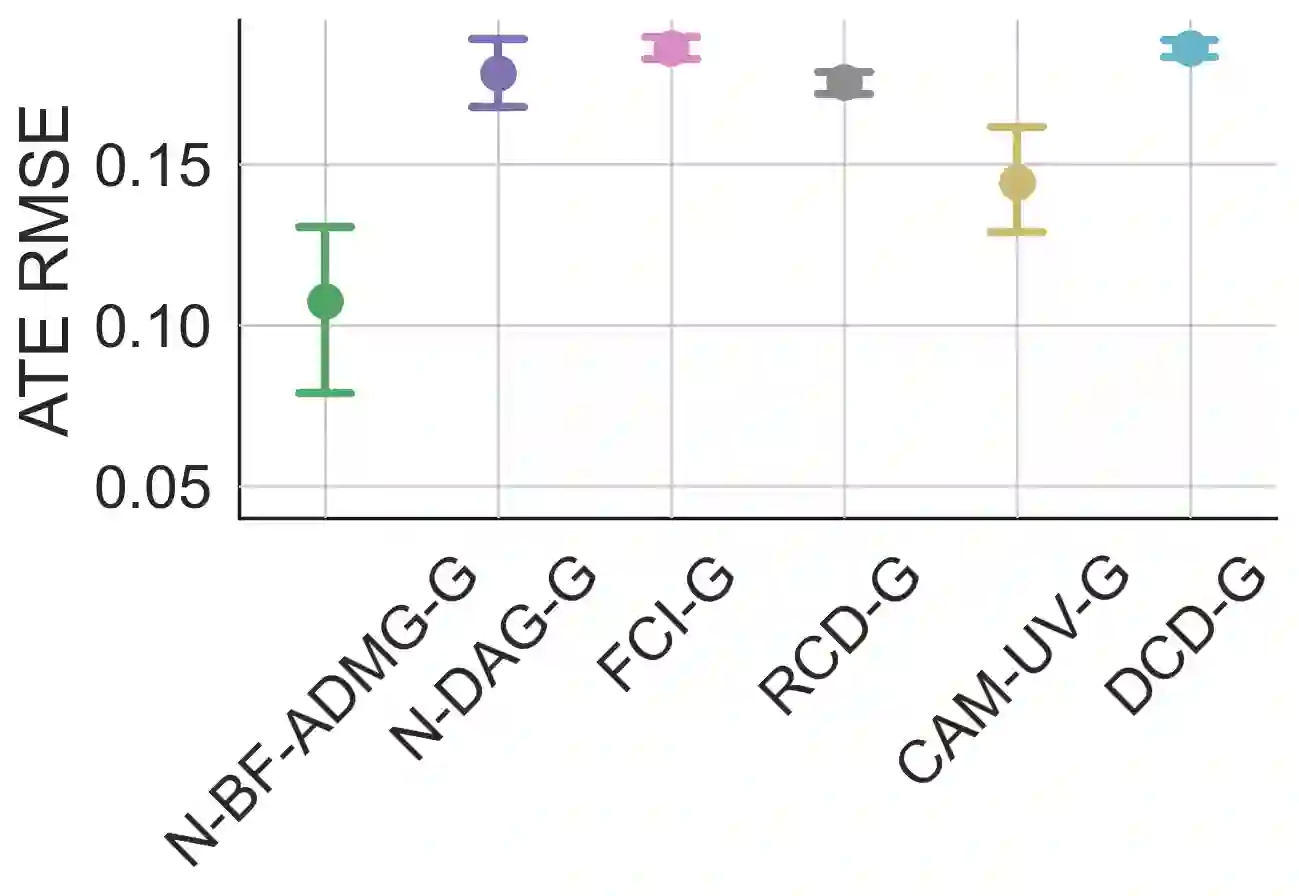
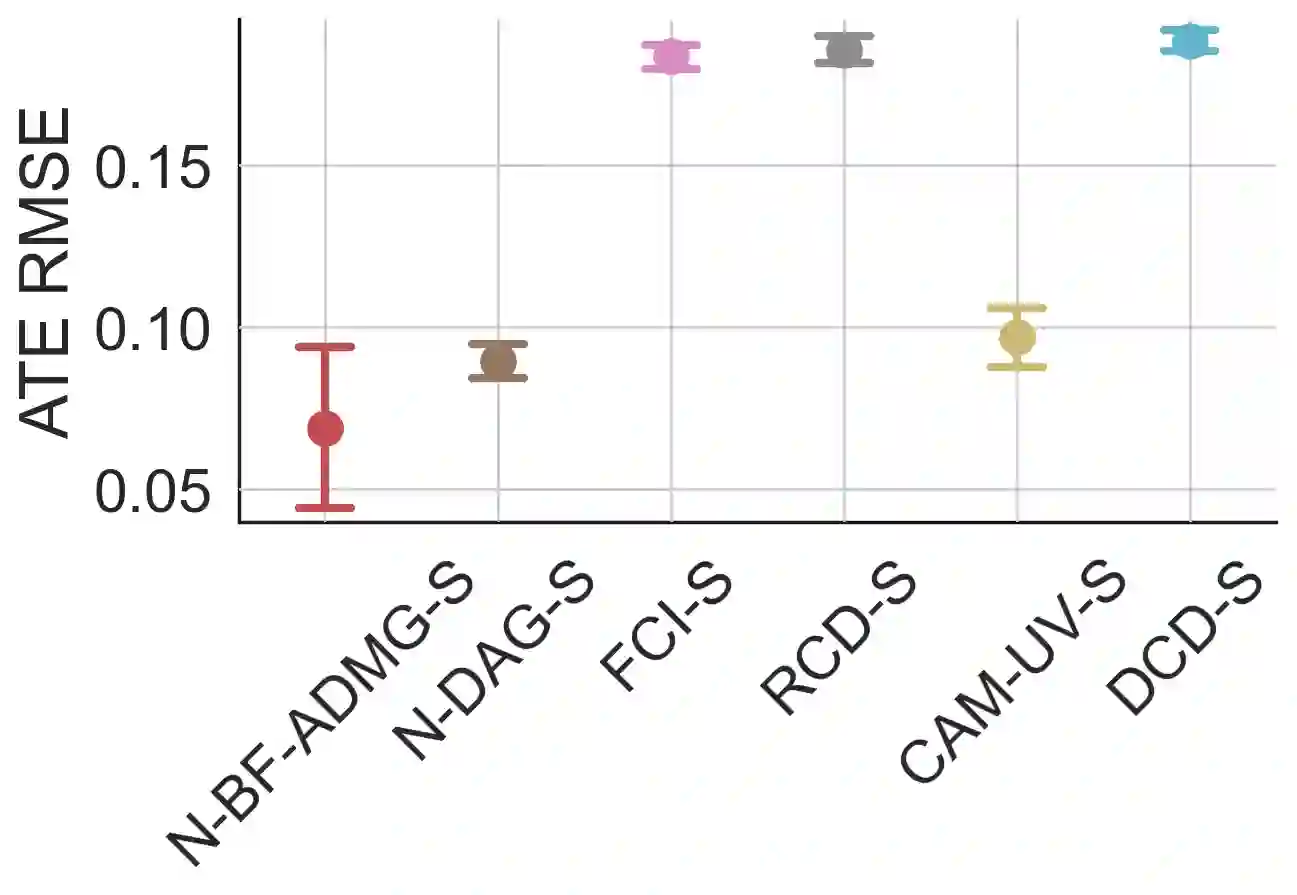
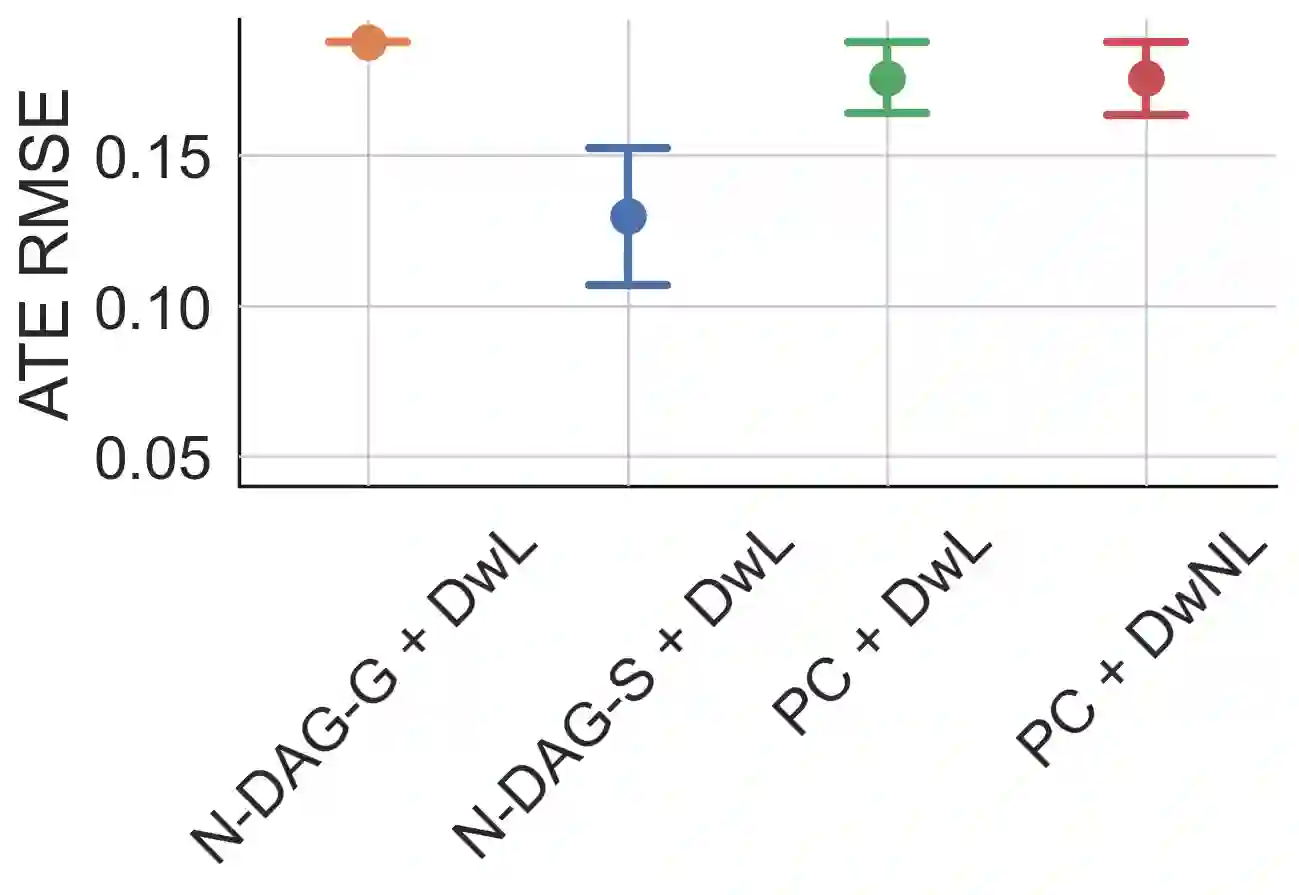
Latent confounding has been a long-standing obstacle for causal reasoning from observational data. One popular approach is to model the data using acyclic directed mixed graphs (ADMGs), which describe ancestral relations between variables using directed and bidirected edges. However, existing methods using ADMGs are based on either linear functional assumptions or a discrete search that is complicated to use and lacks computational tractability for large datasets. In this work, we further extend the existing body of work and develop a novel gradient-based approach to learning an ADMG with non-linear functional relations from observational data. We first show that the presence of latent confounding is identifiable under the assumptions of bow-free ADMGs with non-linear additive noise models. With this insight, we propose a novel neural causal model based on autoregressive flows for ADMG learning. This not only enables us to determine complex causal structural relationships behind the data in the presence of latent confounding, but also estimate their functional relationships (hence treatment effects) simultaneously. We further validate our approach via experiments on both synthetic and real-world datasets, and demonstrate the competitive performance against relevant baselines.
翻译:潜在混杂因素一直是利用观测数据进行因果推理的长期障碍。一种主流方法是通过有向无环混合图(ADMGs)对数据进行建模,利用有向边和双向边描述变量间的祖先关系。然而,现有基于ADMG的方法要么依赖于线性函数假设,要么采用离散搜索策略,既难以使用又缺乏对大规模数据集的计算可行性。本研究进一步拓展了现有工作,提出了一种基于梯度的方法,从观测数据中学习具有非线性函数关系的ADMG。我们首先证明,在无弓形ADMG结合非线性加性噪声模型的假设下,潜在混杂因素的可识别性成立。基于这一发现,我们提出了一种基于自回归流的神经因果模型用于ADMG学习。该模型不仅能确定潜在混杂因素下数据背后复杂的因果结构关系,还能同时估计其函数关系(从而估计处理效应)。我们进一步在合成数据集和真实数据集上验证了该方法,并展示了其相较于相关基准方法的竞争性表现。




相关内容



 微信扫码咨询专知VIP会员