

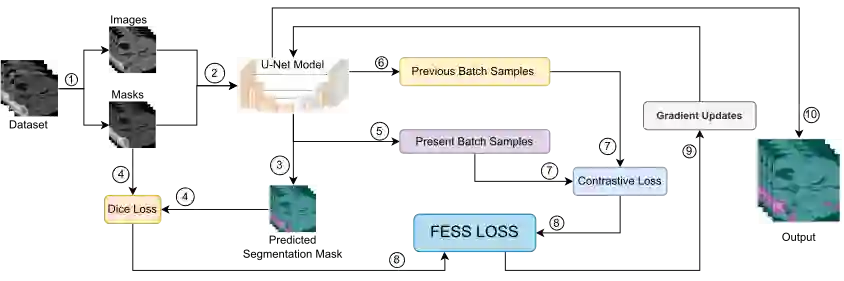
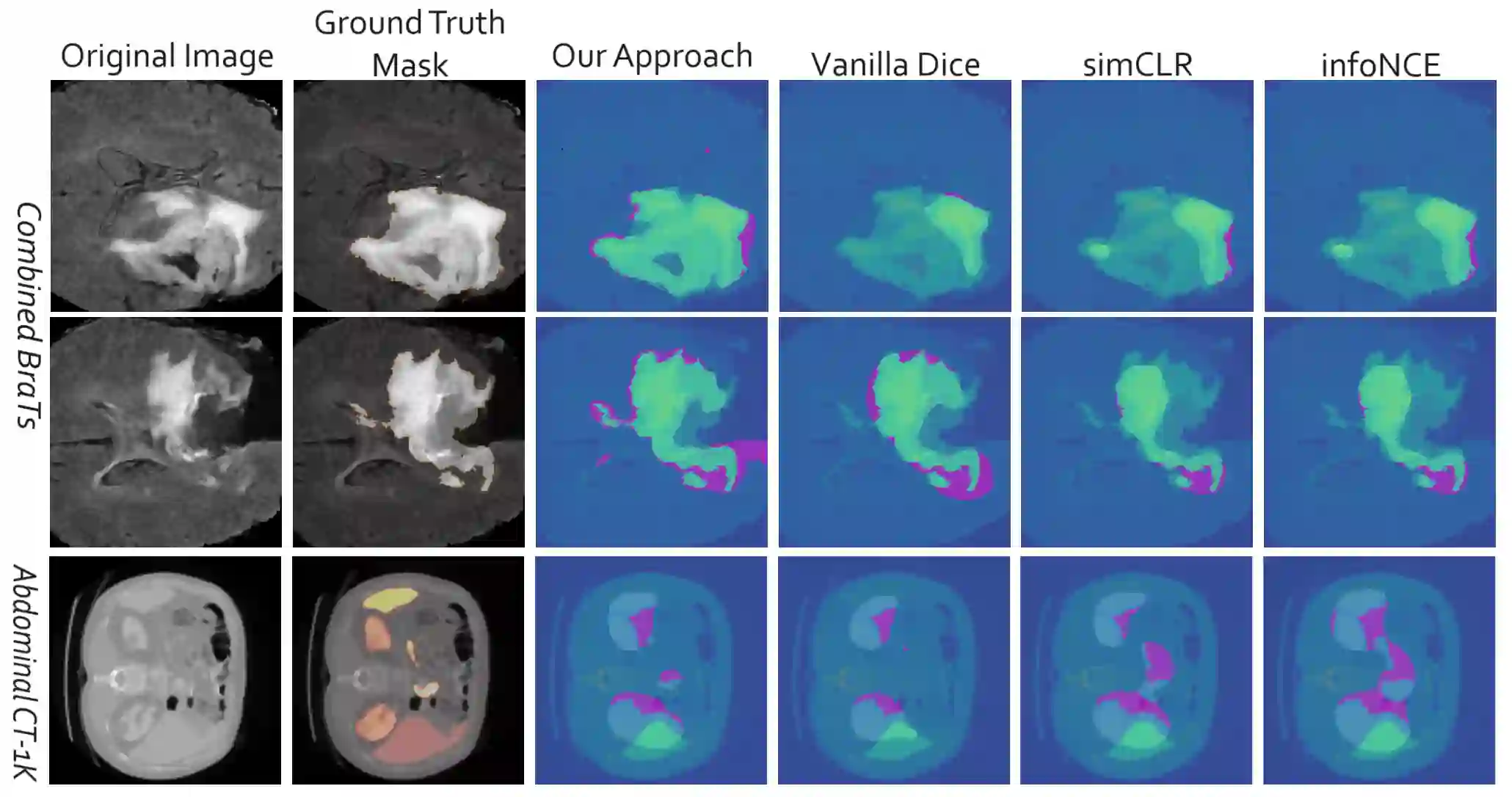
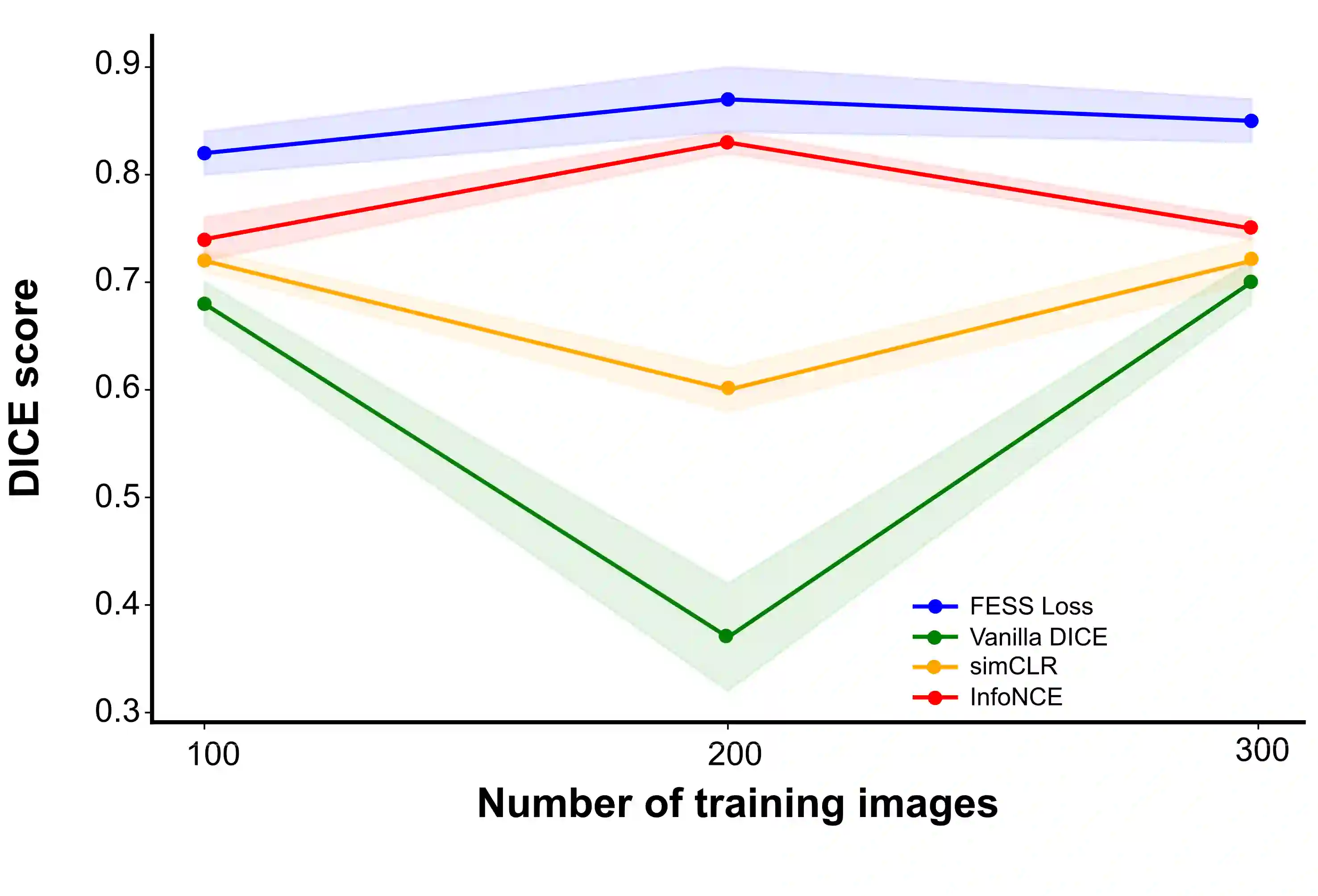
Medical image segmentation is a critical process in the field of medical imaging, playing a pivotal role in diagnosis, treatment, and research. It involves partitioning of an image into multiple regions, representing distinct anatomical or pathological structures. Conventional methods often grapple with the challenge of balancing spatial precision and comprehensive feature representation due to their reliance on traditional loss functions. To overcome this, we propose Feature-Enhanced Spatial Segmentation Loss (FESS Loss), that integrates the benefits of contrastive learning (which extracts intricate features, particularly in the nuanced domain of medical imaging) with the spatial accuracy inherent in the Dice loss. The objective is to augment both spatial precision and feature-based representation in the segmentation of medical images. FESS Loss signifies a notable advancement, offering a more accurate and refined segmentation process, ultimately contributing to heightened precision in the analysis of medical images. Further, FESS loss demonstrates superior performance in limited annotated data availability scenarios often present in the medical domain.
翻译:医学图像分割是医学成像领域的关键过程,在诊断、治疗和研究中发挥着核心作用。它涉及将图像划分为多个区域,代表不同的解剖或病理结构。传统方法由于依赖经典损失函数,常在平衡空间精度与全面特征表示方面面临挑战。为克服这一问题,我们提出特征增强的空间分割损失(FESS Loss),该损失函数整合了对比学习(能够提取复杂特征,尤其在医学成像的细微领域中)的优势与Dice损失固有的空间准确性。其目标是在医学图像分割中同时增强空间精度和基于特征的表征能力。FESS Loss标志着显著进步,提供了更精确和精细的分割过程,最终助力提升医学图像分析的精密度。此外,在医学领域常见的标注数据有限场景下,FESS Loss表现出更优性能。




相关内容




 微信扫码咨询专知VIP会员