

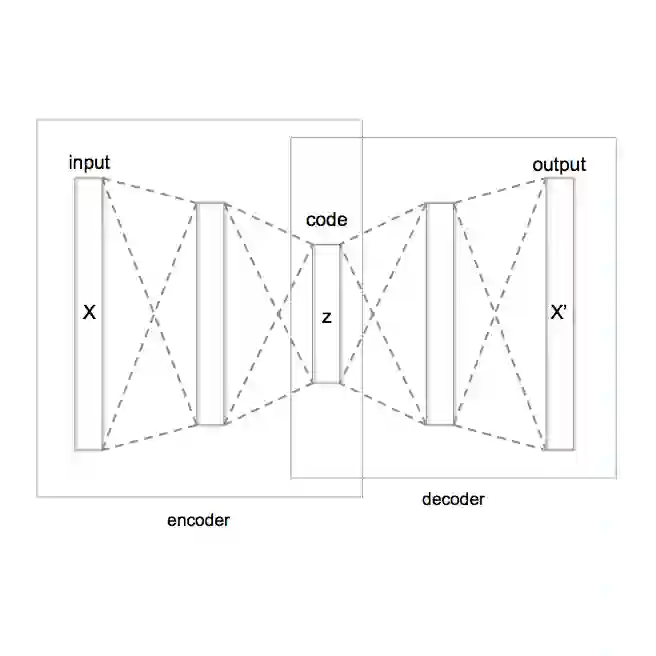
Planar path synthesis requires mechanisms whose coupler curves match a prescribed trajectory; the mapping from curve to linkage is inherently one-to-many across four-, six-, and eight-bar topologies. We address this design problem with simulation-grounded evaluation on a curated corpus of over one million mechanisms, reporting Chamfer distance and dynamic time warping after forward kinematics and geometric alignment. We formulate synthesis as conditional autoregressive sequence modeling: joint coordinates are uniformly quantized to tokens and generated by a decoder-only transformer with a variational-autoencoder (VAE) latent of the target curve and an explicit mechanism-type token. Training combines token cross-entropy with a Gaussian-smoothed bin auxiliary loss that respects ordinal structure among bins. At inference, a bounded latent-noise schedule decodes all mechanism types at each noise level; we retain the top five candidates by geometric error, yielding diverse accurate families without dataset lookup. On held-out tests, aggregate mean Chamfer distance is $0.0132$ and mean dynamic time warping is $0.153$; a latent $k$-nearest-neighbor baseline that conditions on training-set neighbor latents in VAE space achieves matched-topology mean Chamfer distance $0.0071$ and mean dynamic time warping $0.117$ using the same decoder.
翻译:平面路径综合需要连杆机构的耦合曲线与给定轨迹相匹配;从曲线到连杆机构的映射在四杆、六杆和八杆拓扑结构中本质上是多对一的。我们通过对超过一百万个机构的精选语料库进行基于仿真的评估来解决这一设计问题,报告了前向运动学和几何对齐后的Chamfer距离与动态时间弯曲距离。我们将综合问题建模为条件自回归序列建模:关节坐标被均匀量化为标记,并由一个解码器仅变压器生成,该变压器结合目标曲线的变分自编码器(VAE)潜变量和显式的机构类型标记。训练结合了标记交叉熵损失和一个高斯平滑的箱辅助损失,以尊重箱间的序数结构。在推理时,一个有界潜变量噪声调度在每个噪声水平下解码所有机构类型;我们按几何误差保留前五名候选方案,从而无需数据集查找即可获得多样化的精确机构族。在保留测试集上,总体平均Chamfer距离为$0.0132$,平均动态时间弯曲距离为$0.153$;一个以训练集邻居潜变量(在VAE空间中)为条件的潜变量$k$近邻基线,使用相同的解码器实现了匹配拓扑下的平均Chamfer距离$0.0071$和平均动态时间弯曲距离$0.117$。




相关内容


 微信扫码咨询专知VIP会员