

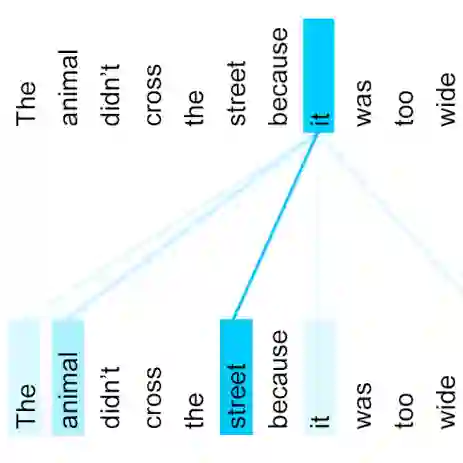
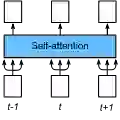
Transformer architectures have dramatically advanced representation learning and inference in deep models through self-attention mechanisms. In parallel,associative memory (AM) frameworks map representations onto energy landscapes, offering interpretable retrieval mechanisms. However, their continuous-time inference dynamics lack the biological plausibility of classical Continuous Attractor Neural Networks (CANNs). To bridge this gap, we propose Controlled Dynamics Attractor Transformer (CDAT), which couples a mixture von Mises-Fisher (Mo-vMF) attention energy with a Hopfield refinement energy, while augmenting energy descent with a CANN-inspired excitation-inhibition modulation. CDAT instantiates a topology-constrained dynamical system whose couplings encode relational structure among tokens, thereby linking attractor-style dynamics to modern energy-based attention. We further provide a constructive dissipation analysis to formally establish their controlled inference dynamics. Benefiting from these robust and structured dynamics, CDAT achieves state-of-the-art performance across multiple benchmarks in graph anomaly detection and graph classification.
翻译:Transformer架构通过自注意力机制极大推动了深度模型中的表示学习与推理发展。与此同时,联想记忆框架将表示映射到能量景观上,提供了可解释的检索机制。然而,其连续时间推理动力学缺乏经典连续吸引子神经网络所具有的生物合理性。为弥合这一差距,我们提出了受控动态吸引子变压器(CDAT),该模型将混合von Mises-Fisher注意力能量与Hopfield精炼能量相结合,并通过源于CANN的兴奋-抑制调制来增强能量下降过程。CDAT实例化了一个拓扑约束的动力学系统,其耦合编码了token间的关联结构,从而将吸引子型动力学与现代基于能量的注意力机制联系起来。我们进一步通过构造性耗散分析,正式建立了其受控推理动力学。得益于这些鲁棒且结构化的动力学特性,CDAT在图异常检测与图分类等多个基准任务上达到了当前最优性能。




相关内容


 微信扫码咨询专知VIP会员