

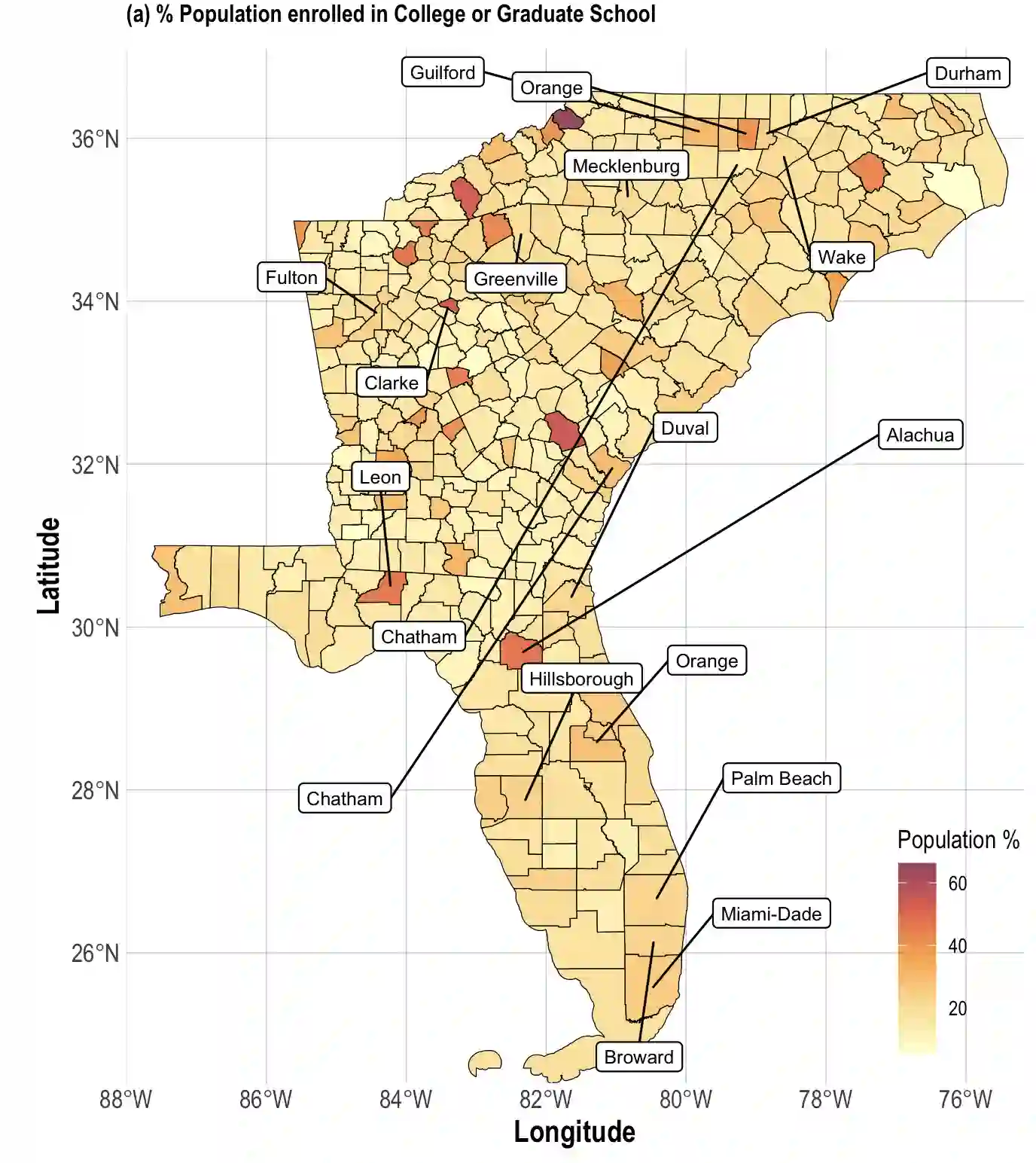
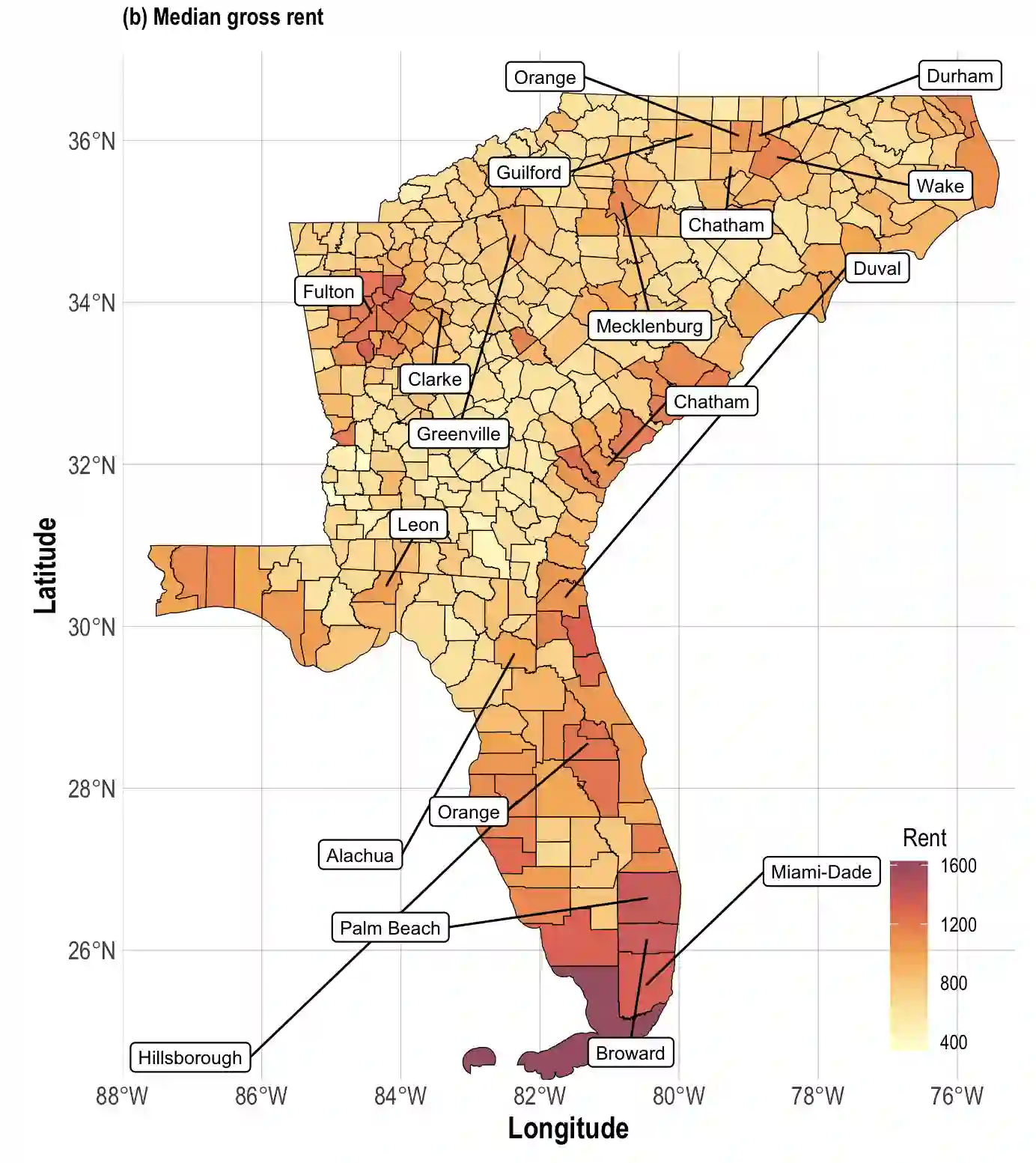
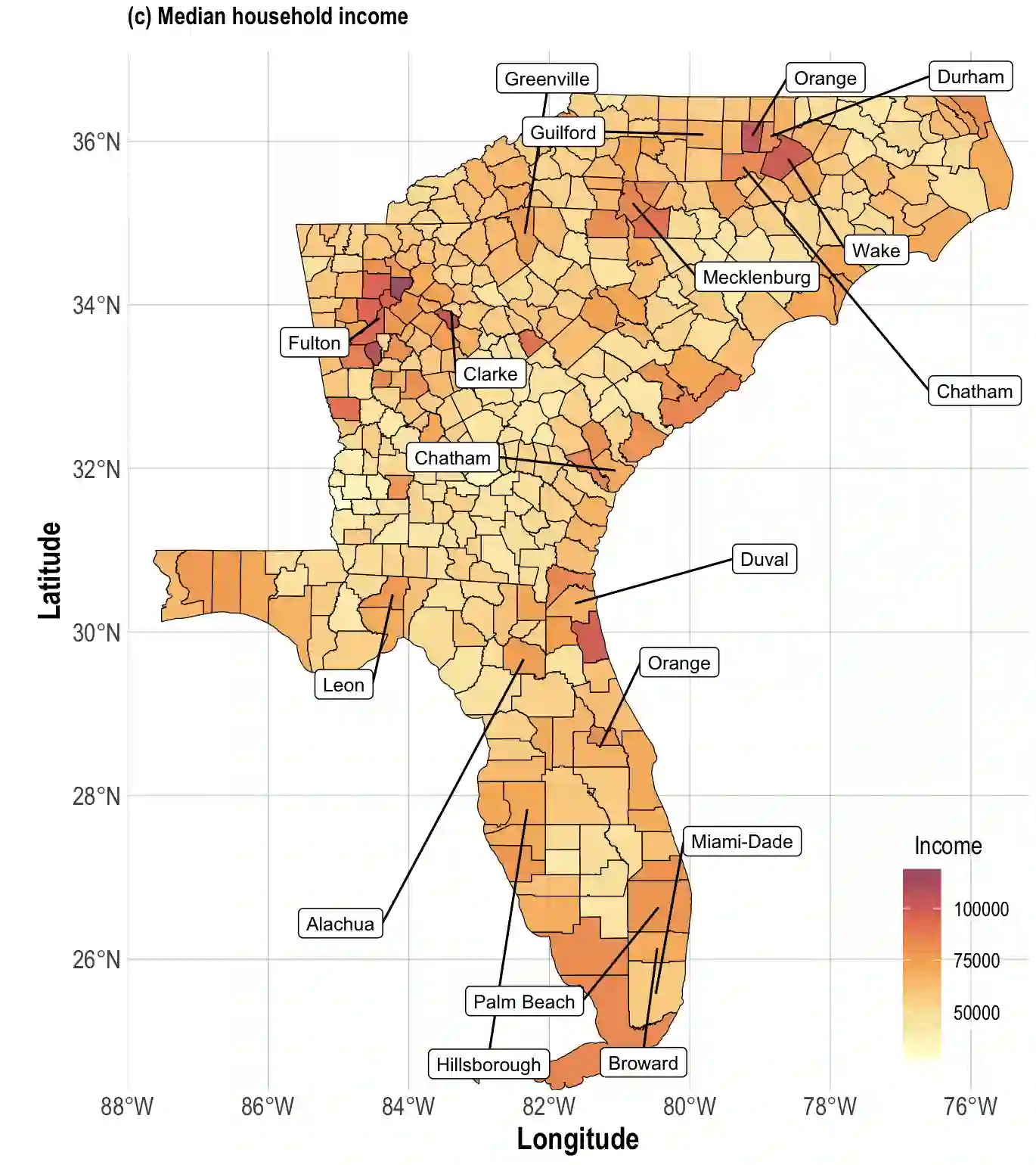
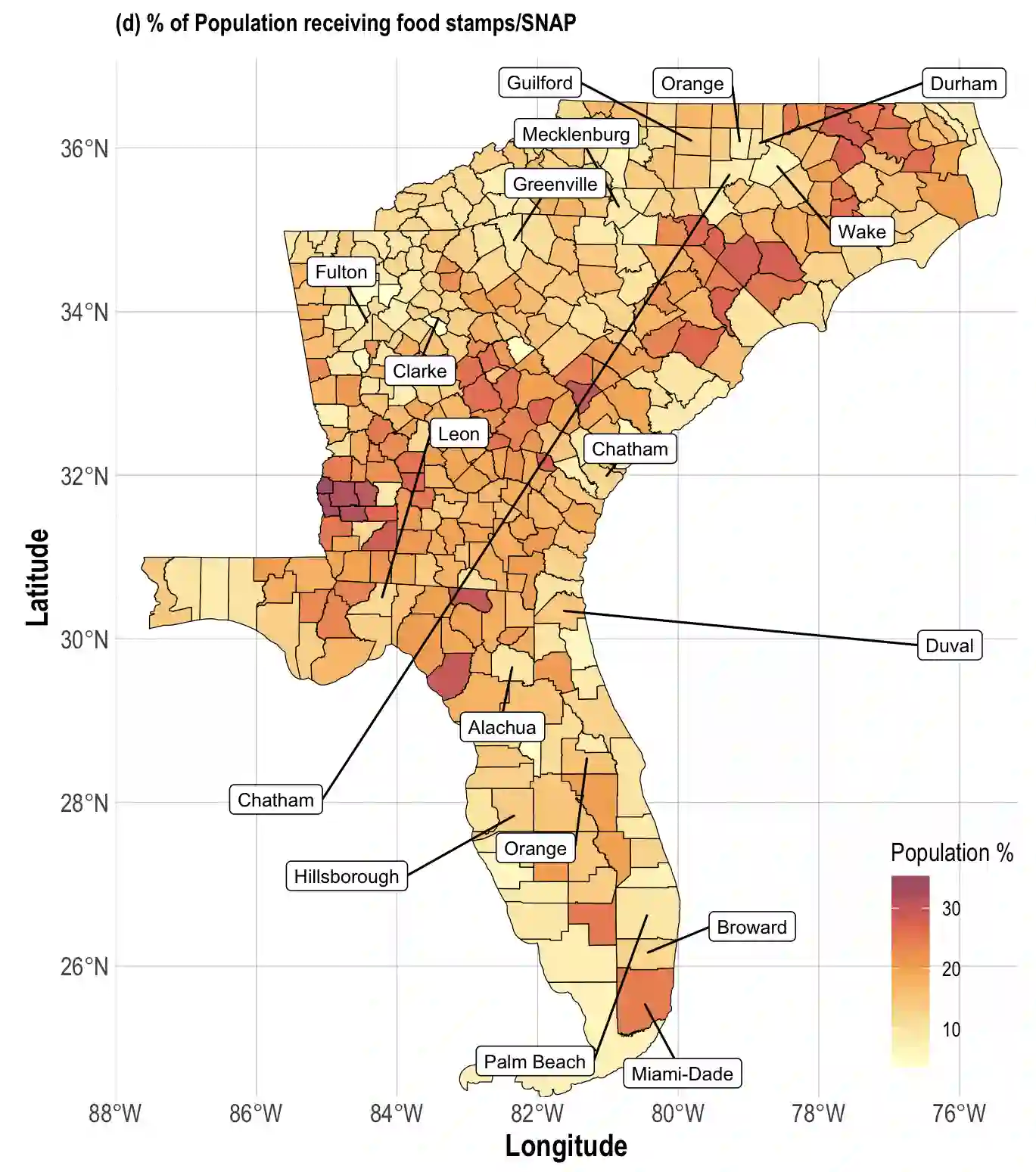
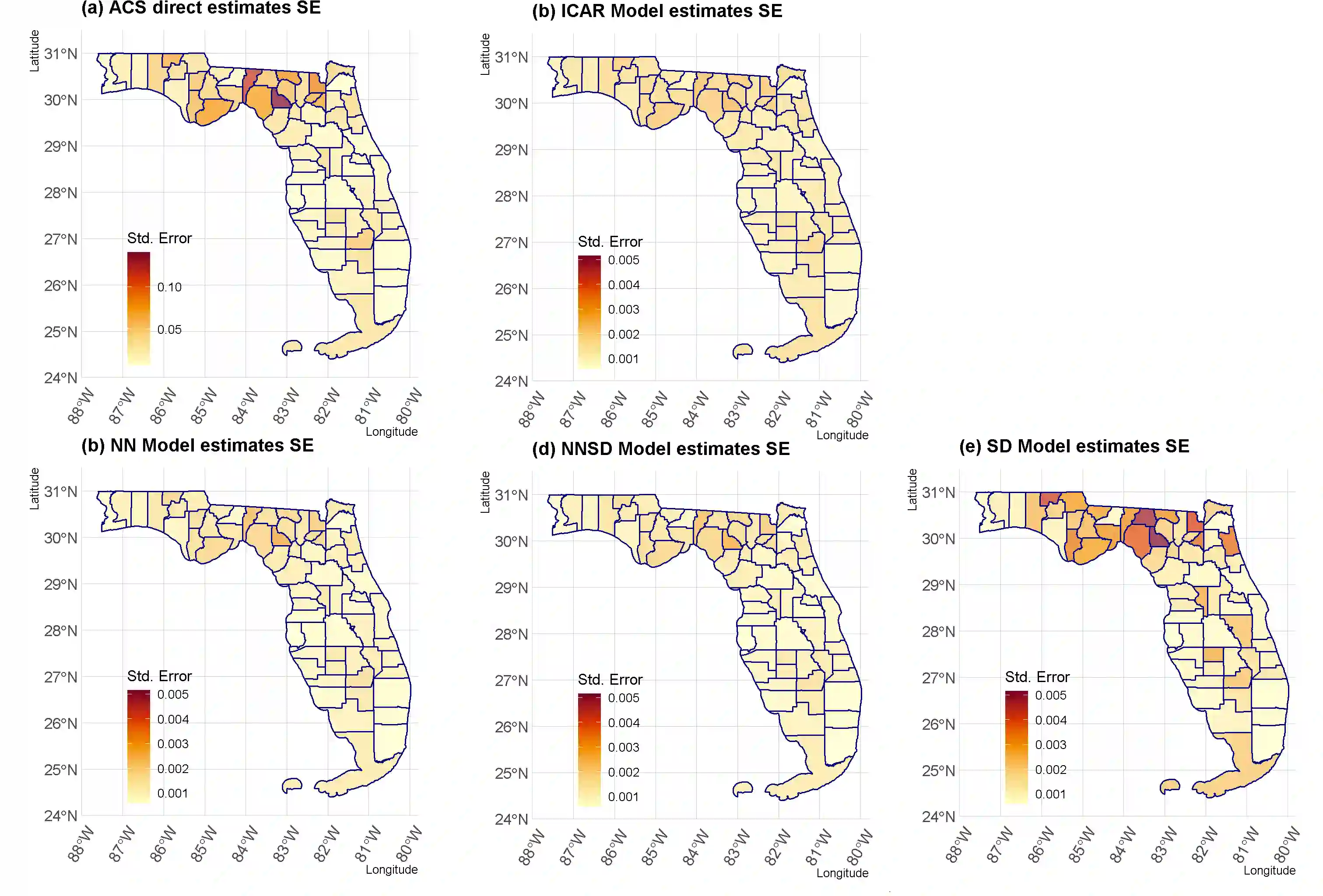
Many models for spatial and spatio-temporal data assume that "near things are more related than distant things," which is known as the first law of geography. While geography may be important, it may not be all-important, for at least two reasons. First, technology helps bridge distance, so that regions separated by large distances may be more similar than would be expected based on geographical distance. Second, geographical, political, and social divisions can make neighboring regions dissimilar. We develop a flexible Bayesian approach for learning from spatial data which units are close in an unobserved socio-demographic space and hence which units are similar. As a by-product, the Bayesian approach helps quantify the relative importance of socio-demographic space relative to geographical space. To demonstrate the proposed approach, we present simulations along with an application to county-level data on median household income in the U.S. state of Florida.
翻译:许多空间和时空数据模型假定“相近的事物比遥远的事物更相关”,这被称为地理学第一定律。尽管地理因素可能重要,但至少有两个原因使其并非绝对重要。首先,技术有助于弥合距离,使得相隔遥远地区的相似性可能高于基于地理距离的预期。其次,地理、政治和社会划分可能使相邻区域产生差异。我们开发了一种灵活的贝叶斯方法,从空间数据中学习哪些单元在未观测到的社会人口空间中接近,从而识别哪些单元相似。作为副产品,该贝叶斯方法有助于量化社会人口空间相对于地理空间的相对重要性。为展示所提出的方法,我们进行了模拟,并将其应用于美国佛罗里达州的县级家庭收入中位数数据。




相关内容



 微信扫码咨询专知VIP会员