

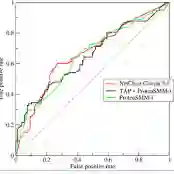
Introduction: The Oncotype DX (ODX) test is a commercially available molecular test for breast cancer assay that provides prognostic and predictive breast cancer recurrence information for hormone positive, HER2-negative patients. The aim of this study is to propose a novel methodology to assist physicians in their decision-making. Methods: A retrospective study between 2012 and 2020 with 333 cases that underwent an ODX assay from three hospitals in Bourgogne Franche-Comt{\'e} was conducted. Clinical and pathological reports were used to collect the data. A methodology based on distributional random forest was developed using 9 clinico-pathological characteristics. This methodology can be used particularly to identify the patients of the training cohort that share similarities with the new patient and to predict an estimate of the distribution of the ODX score. Results: The mean age of participants id 56.9 years old. We have correctly classified 92% of patients in low risk and 40.2% of patients in high risk. The overall accuracy is 79.3%. The proportion of low risk correct predicted value (PPV) is 82%. The percentage of high risk correct predicted value (NPV) is approximately 62.3%. The F1-score and the Area Under Curve (AUC) are of 0.87 and 0.759, respectively. Conclusion: The proposed methodology makes it possible to predict the distribution of the ODX score for a patient and provides an explanation of the predicted score. The use of the methodology with the pathologist's expertise on the different histological and immunohistochemical characteristics has a clinical impact to help oncologist in decision-making regarding breast cancer therapy.
翻译:摘要:引言:Oncotype DX(ODX)检测是一种商业化的乳腺癌分子检测方法,可为激素受体阳性、HER2阴性的患者提供预后和预测性乳腺癌复发信息。本研究旨在提出一种辅助医生决策的新方法。方法:纳入2012年至2020年间勃艮第-弗朗什-孔泰大区三家医院333例接受ODX检测患者的回顾性数据。通过临床和病理报告收集数据,利用9项临床病理特征开发基于分布随机森林的方法。该方法可识别训练队列中与新患者具有相似性的病例,并预测ODX评分的分布估计值。结果:参与者平均年龄为56.9岁。低风险患者正确分类率为92%,高风险患者正确分类率为40.2%,总体准确率为79.3%。低风险阳性预测值(PPV)为82%,高风险阴性预测值(NPV)约为62.3%。F1分数和曲线下面积(AUC)分别为0.87和0.759。结论:该方法可预测患者ODX评分的分布,并对预测结果提供可解释性。结合病理学家在不同组织学和免疫组化特征方面的专业知识,该方法在乳腺癌治疗决策中具有临床意义,可辅助肿瘤科医生进行判断。




相关内容



 微信扫码咨询专知VIP会员