

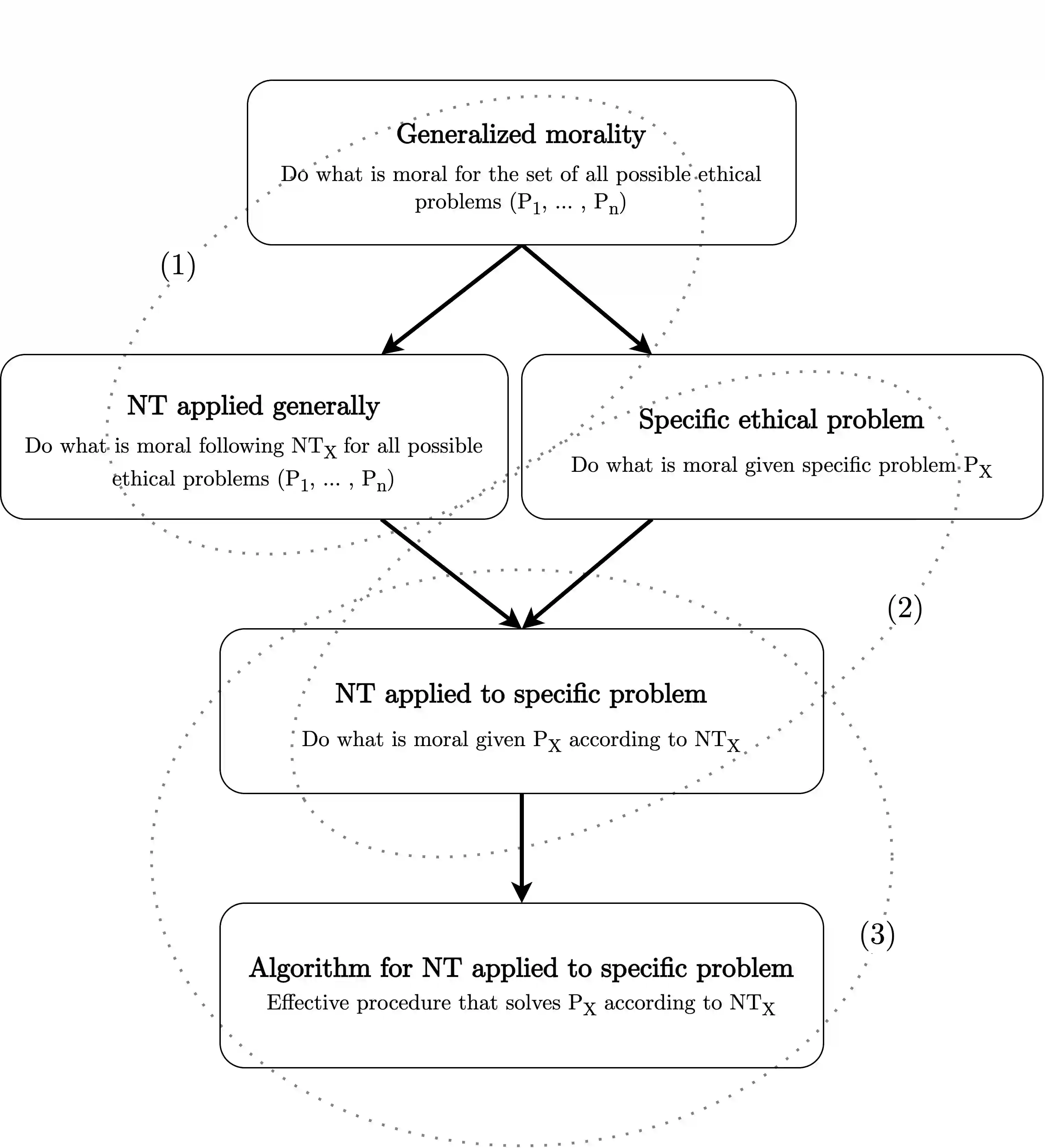
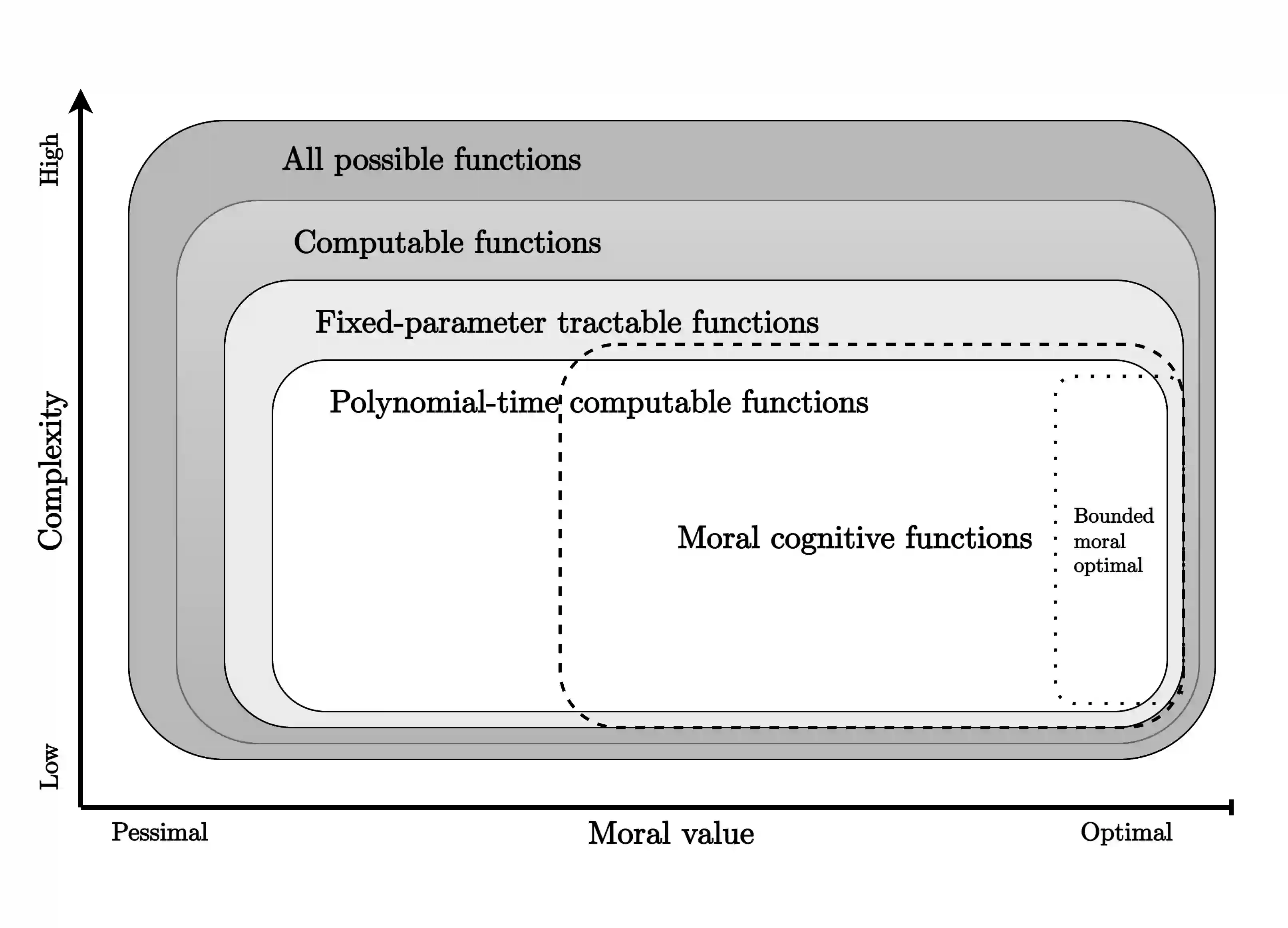
Why should moral philosophers, moral psychologists, and machine ethicists care about computational complexity? Debates on whether artificial intelligence (AI) can or should be used to solve problems in ethical domains have mainly been driven by what AI can or cannot do in terms of human capacities. In this paper, we tackle the problem from the other end by exploring what kind of moral machines are possible based on what computational systems can or cannot do. To do so, we analyze normative ethics through the lens of computational complexity. First, we introduce computational complexity for the uninitiated reader and discuss how the complexity of ethical problems can be framed within Marr's three levels of analysis. We then study a range of ethical problems based on consequentialism, deontology, and virtue ethics, with the aim of elucidating the complexity associated with the problems themselves (e.g., due to combinatorics, uncertainty, strategic dynamics), the computational methods employed (e.g., probability, logic, learning), and the available resources (e.g., time, knowledge, learning). The results indicate that most problems the normative frameworks pose lead to tractability issues in every category analyzed. Our investigation also provides several insights about the computational nature of normative ethics, including the differences between rule- and outcome-based moral strategies, and the implementation-variance with regard to moral resources. We then discuss the consequences complexity results have for the prospect of moral machines in virtue of the trade-off between optimality and efficiency. Finally, we elucidate how computational complexity can be used to inform both philosophical and cognitive-psychological research on human morality by advancing the Moral Tractability Thesis (MTT).
翻译:为何道德哲学家、道德心理学家和机器伦理学家应关注计算复杂性?关于人工智能(AI)能否或应否用于解决伦理领域问题的争论,主要聚焦于AI在人类能力范畴内的能力边界。本文从另一视角切入,通过探究基于计算系统能力边界可能实现的道德机器类型来回应这一问题。为此,我们以计算复杂性为透镜分析规范伦理学。首先,为未涉足该领域的读者介绍计算复杂性概念,并探讨如何将伦理问题的复杂性置于Marr的三个分析层次中进行框架化。随后,我们基于后果主义、道义论和美德伦理学范畴研究一系列伦理问题,旨在阐明问题本身(如组合爆炸、不确定性、策略动态)、所采用的计算方法(如概率、逻辑、学习)以及可用资源(如时间、知识、学习)带来的复杂性。结果表明,规范伦理学框架提出的大多数问题在其分析的每个类别中均导致可处理性问题。本研究还揭示了规范伦理学的计算性质,包括规则导向与结果导向道德策略的差异,以及道德资源对实现方式敏感的特性。在此基础上,我们探讨复杂性结果对道德机器前景的影响——权衡最优性与效率的关键。最后,我们阐释如何通过推进道德可处理性论题(MTT),使计算复杂性为人类道德性的哲学与认知心理学研究提供启发。




相关内容




 微信扫码咨询专知VIP会员