

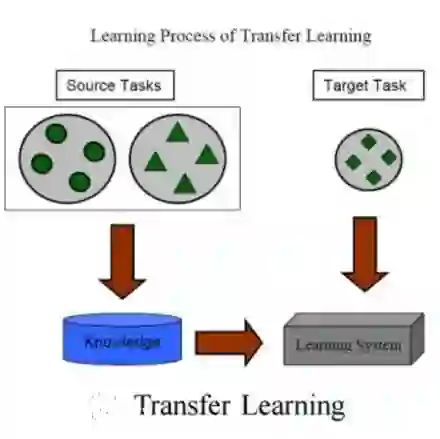
Deep learning has been successful in BCI decoding. However, it is very data-hungry and requires pooling data from multiple sources. EEG data from various sources decrease the decoding performance due to negative transfer. Recently, transfer learning for EEG decoding has been suggested as a remedy and become subject to recent BCI competitions (e.g. BEETL), but there are two complications in combining data from many subjects. First, privacy is not protected as highly personal brain data needs to be shared (and copied across increasingly tight information governance boundaries). Moreover, BCI data are collected from different sources and are often based on different BCI tasks, which has been thought to limit their reusability. Here, we demonstrate a federated deep transfer learning technique, the Multi-dataset Federated Separate-Common-Separate Network (MF-SCSN) based on our previous work of SCSN, which integrates privacy-preserving properties into deep transfer learning to utilise data sets with different tasks. This framework trains a BCI decoder using different source data sets obtained from different imagery tasks (e.g. some data sets with hands and feet, vs others with single hands and tongue, etc). Therefore, by introducing privacy-preserving transfer learning techniques, we unlock the reusability and scalability of existing BCI data sets. We evaluated our federated transfer learning method on the NeurIPS 2021 BEETL competition BCI task. The proposed architecture outperformed the baseline decoder by 3%. Moreover, compared with the baseline and other transfer learning algorithms, our method protects the privacy of the brain data from different data centres.
翻译:深度学习在脑机接口(BCI)解码中取得了成功,但其对数据量需求极高,需要汇集多个来源的数据。由于负迁移现象,不同来源的脑电图(EEG)数据会降低解码性能。近来,针对EEG解码的迁移学习被提出作为补救措施,并成为近期BCI竞赛(如BEETL)的主题,但在整合多个受试者数据时存在两个难点。首先,隐私无法得到保护,因为高度个人化的脑部数据需要被共享(并在日益严格的信息治理边界间进行复制)。此外,BCI数据采集自不同来源,且通常基于不同的BCI任务,这被认为限制了其可复用性。在此,我们提出一种联邦深度迁移学习技术——基于我们先前SCSN工作的多数据集联邦分离-共享-分离网络(MF-SCSN),该技术将隐私保护特性融入深度迁移学习,以利用包含不同任务的数据集。该框架利用来自不同想象任务(例如,部分数据集涉及手与脚,其他数据集涉及单手与舌头等)的多个源数据集训练BCI解码器。因此,通过引入隐私保护迁移学习技术,我们释放了现有BCI数据集的复用性与可扩展性。我们在NeurIPS 2021 BEETL竞赛的BCI任务上评估了所提出的联邦迁移学习方法。所提出的架构相比基线解码器性能提升了3%。此外,相较于基线及其他迁移学习算法,我们的方法保护了来自不同数据中心脑部数据的隐私。




相关内容



 微信扫码咨询专知VIP会员