

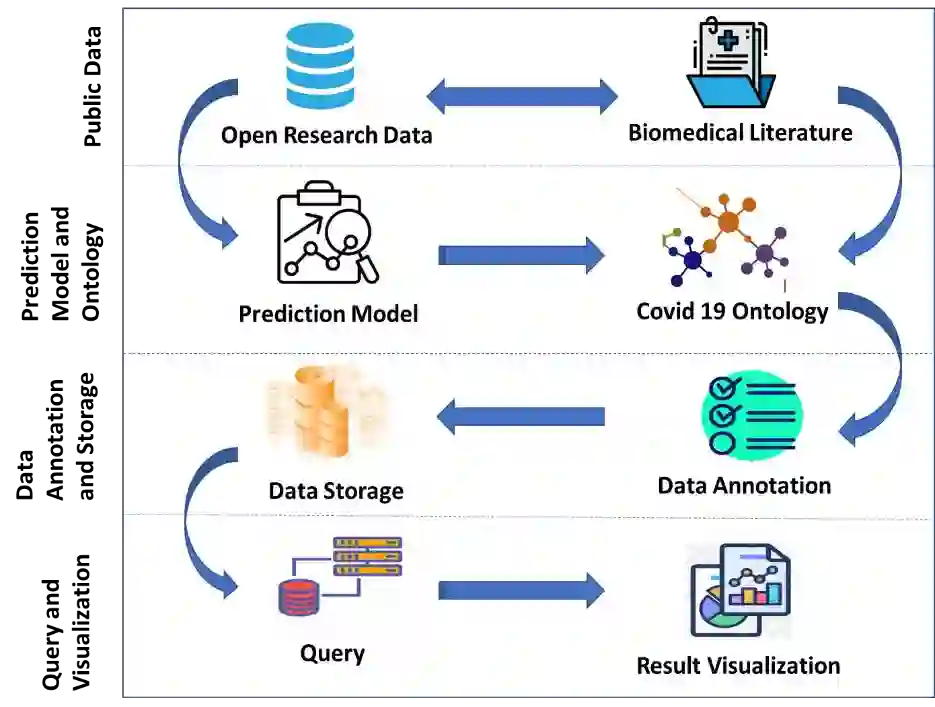
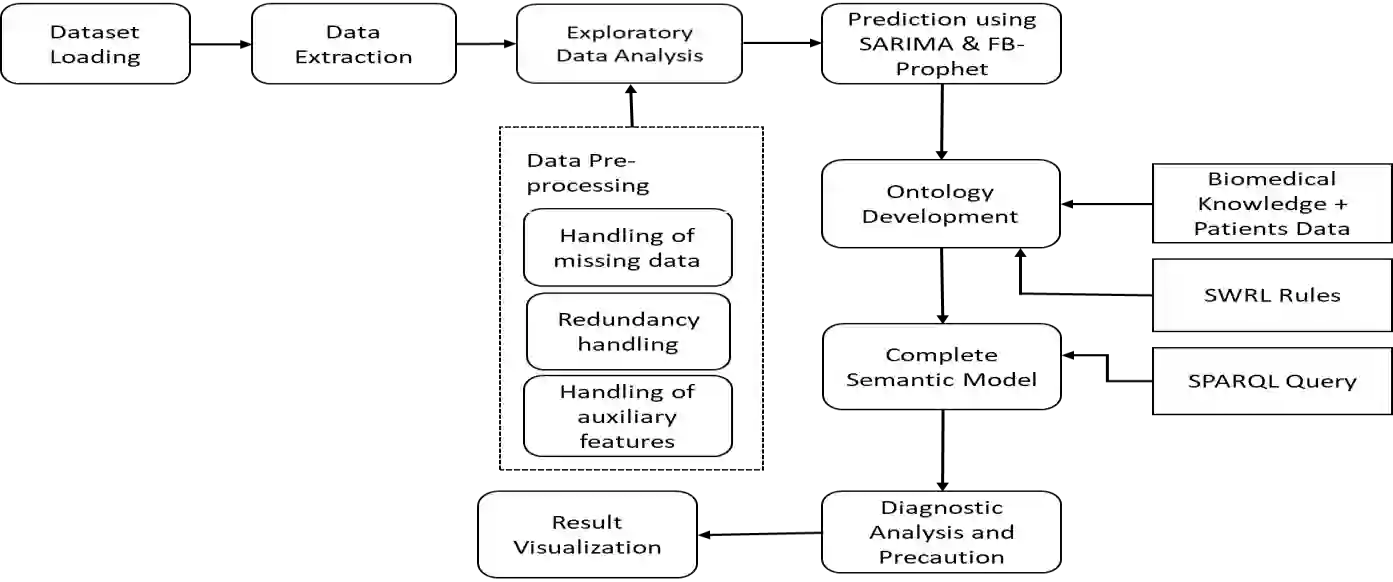
SARS-COV-19 is the most prominent issue which many countries face today. The frequent changes in infections, recovered and deaths represents the dynamic nature of this pandemic. It is very crucial to predict the spreading rate of this virus for accurate decision making against fighting with the situation of getting infected through the virus, tracking and controlling the virus transmission in the community. We develop a prediction model using statistical time series models such as SARIMA and FBProphet to monitor the daily active, recovered and death cases of COVID-19 accurately. Then with the help of various details across each individual patient (like height, weight, gender etc.), we designed a set of rules using Semantic Web Rule Language and some mathematical models for dealing with COVID19 infected cases on an individual basis. After combining all the models, a COVID-19 Ontology is developed and performs various queries using SPARQL query on designed Ontology which accumulate the risk factors, provide appropriate diagnosis, precautions and preventive suggestions for COVID Patients. After comparing the performance of SARIMA and FBProphet, it is observed that the SARIMA model performs better in forecasting of COVID cases. On individual basis COVID case prediction, approx. 497 individual samples have been tested and classified into five different levels of COVID classes such as Having COVID, No COVID, High Risk COVID case, Medium to High Risk case, and Control needed case.
翻译:SARS-COV-19是当今许多国家面临的最突出问题。感染、康复和死亡病例的频繁变化体现了这一大流行病的动态特征。准确预测病毒的传播速度对于制定精准决策以应对病毒感染、追踪和控制社区内病毒传播至关重要。我们构建了采用SARIMA和FBProphet等统计时间序列模型的预测系统,用于精确监测每日新冠肺炎活跃病例、康复病例和死亡病例。随后,基于每位患者的个体特征(如身高、体重、性别等),我们利用语义网规则语言和若干数学模型设计了一套规则,用于个体层面处理新冠肺炎感染病例。在整合所有模型后,我们构建了一个新冠肺炎本体,并通过SPARQL查询对本体执行各类查询,以汇总风险因素,并为新冠肺炎患者提供适当的诊断、预防措施及预防建议。通过对比SARIMA和FBProphet的性能表现,我们发现SARIMA模型在新冠肺炎病例预测中表现更优。在个体病例预测方面,约497个样本被测试并划分为五个新冠肺炎风险等级:患病、未患病、高风险、中高风险及需控制病例。




相关内容




 微信扫码咨询专知VIP会员