

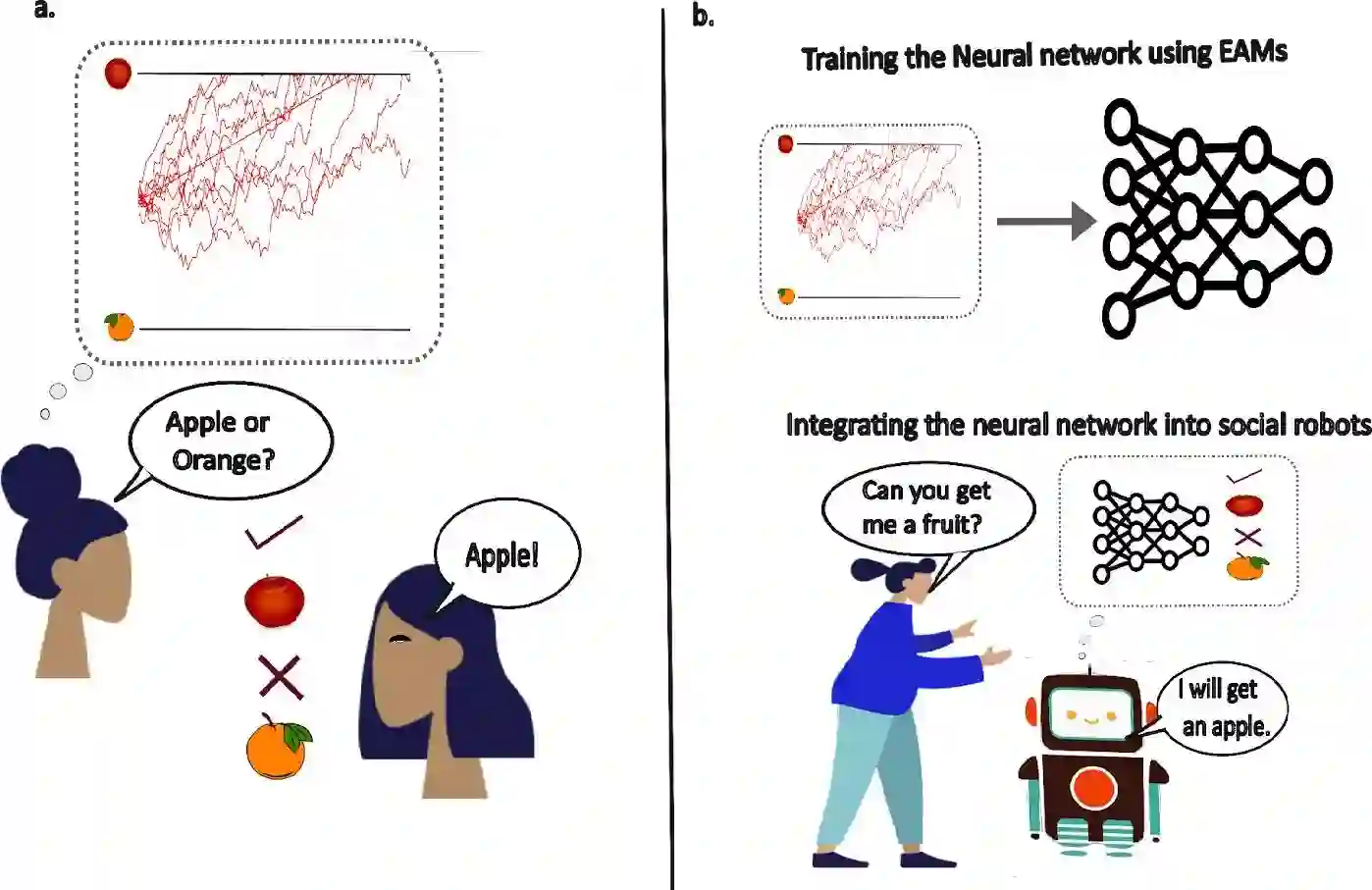
Over the past decades, cognitive neuroscientists and behavioral economists have recognized the value of describing the process of decision making in detail and modeling the emergence of decisions over time. For example, the time it takes to decide can reveal more about an agent's true hidden preferences than only the decision itself. Similarly, data that track the ongoing decision process such as eye movements or neural recordings contain critical information that can be exploited, even if no decision is made. Here, we argue that artificial intelligence (AI) research would benefit from a stronger focus on insights about how decisions emerge over time and incorporate related process data to improve AI predictions in general and human-AI interactions in particular. First, we introduce a highly established computational framework that assumes decisions to emerge from the noisy accumulation of evidence, and we present related empirical work in psychology, neuroscience, and economics. Next, we discuss to what extent current approaches in multi-agent AI do or do not incorporate process data and models of decision making. Finally, we outline how a more principled inclusion of the evidence-accumulation framework into the training and use of AI can help to improve human-AI interactions in the future.
翻译:过去几十年中,认知神经科学家和行为经济学家已深刻认识到:详细描述决策过程并建模其随时间演化的机制具有重要价值。例如,相较于仅观察最终决策,决策所需时间能更完整地揭示决策主体的真实潜在偏好。同样,追踪实时决策过程的数据(如眼动轨迹和神经信号)即便在未做出最终决策时,也蕴含着可加以利用的关键信息。本文主张,人工智能研究应更重视"决策如何随时间涌现"这一洞见,并通过整合相关过程数据来全面提升AI预测能力,尤其在人机交互领域。首先,我们介绍一个高度成熟的认知计算框架——该框架将决策建模为对证据的噪声累积过程,并系统梳理心理学、神经科学和经济学领域相关的实证研究。继而,我们探讨当前多智能体AI方法在多大程度上整合了决策过程数据与模型。最后,我们阐述如何将证据累积框架更系统地融入AI的训练与应用,从而为未来人机交互的优化提供新路径。




相关内容





 微信扫码咨询专知VIP会员