

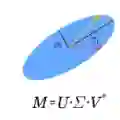
Learning to restore multiple image degradations within a single model is quite beneficial for real-world applications. Nevertheless, existing works typically concentrate on regarding each degradation independently, while their relationship has been less exploited to ensure the synergistic learning. To this end, we revisit the diverse degradations through the lens of singular value decomposition, with the observation that the decomposed singular vectors and singular values naturally undertake the different types of degradation information, dividing various restoration tasks into two groups,\ie, singular vector dominated and singular value dominated. The above analysis renders a more unified perspective to ascribe the diverse degradations, compared to previous task-level independent learning. The dedicated optimization of degraded singular vectors and singular values inherently utilizes the potential relationship among diverse restoration tasks, attributing to the Decomposition Ascribed Synergistic Learning (DASL). Specifically, DASL comprises two effective operators, namely, Singular VEctor Operator (SVEO) and Singular VAlue Operator (SVAO), to favor the decomposed optimization, which can be lightly integrated into existing convolutional image restoration backbone. Moreover, the congruous decomposition loss has been devised for auxiliary. Extensive experiments on blended five image restoration tasks demonstrate the effectiveness of our method, including image deraining, image dehazing, image denoising, image deblurring, and low-light image enhancement.
翻译:在单一模型中学习恢复多种图像退化对实际应用非常有益。然而,现有工作通常专注于独立处理每种退化,而较少挖掘它们之间的关系以确保协同学习。为此,我们通过奇异值分解的视角重新审视多样化的退化,观察到分解后的奇异向量和奇异值天然承载不同类型的退化信息,将各类恢复任务划分为两组,即奇异向量主导和奇异值主导。与以往任务级独立学习相比,上述分析为归因多样化退化提供了更统一的视角。对退化奇异向量和奇异值的专门优化内在利用了不同恢复任务之间的潜在关系,这归功于分解归因协同学习(DASL)。具体而言,DASL包含两个有效算子,即奇异向量算子(SVEO)和奇异值算子(SVAO),以促进分解优化,并可轻松集成到现有的卷积图像恢复主干网络中。此外,还设计了契合的分解损失作为辅助。在混合的五种图像恢复任务上的大量实验证明了我们方法的有效性,包括图像去雨、图像去雾、图像去噪、图像去模糊和低光照图像增强。




相关内容



 微信扫码咨询专知VIP会员