

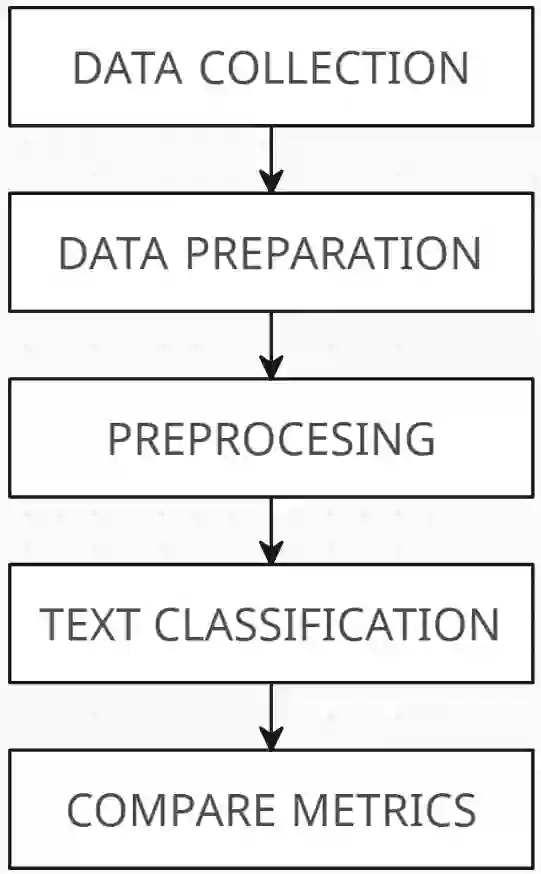
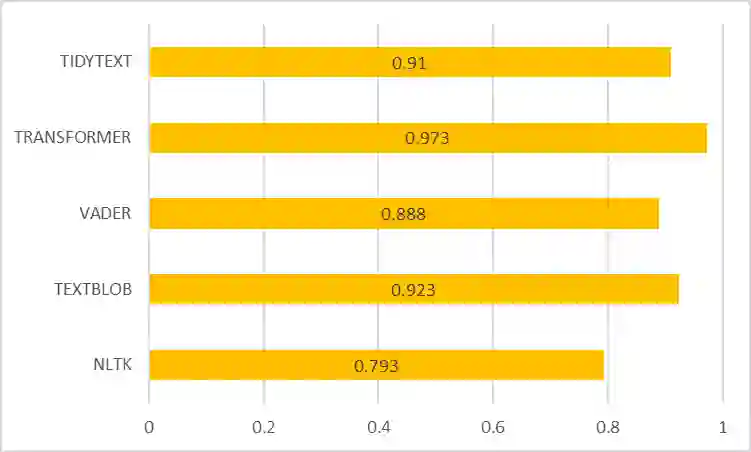
This study is main goal is to provide a comparative comparison of libraries using machine learning methods. Experts in natural language processing (NLP) are becoming more and more interested in sentiment analysis (SA) of text changes. The objective of employing NLP text analysis techniques is to recognize and categorize feelings related to twitter users utterances. In this examination, issues with SA and the libraries utilized are also looked at. provides a number of cooperative methods to classify emotional polarity. The Naive Bayes Classifier, Decision Tree Classifier, Maxent Classifier, Sklearn Classifier, Sklearn Classifier MultinomialNB, and other conjoint learning algorithms, according to recent research, are very effective. In the project will use Five Python and R libraries NLTK, TextBlob, Vader, Transformers (GPT and BERT pretrained), and Tidytext will be used in the study to apply sentiment analysis techniques. Four machine learning models Tree of Decisions (DT), Support Vector Machine (SVM), Naive Bayes (NB), and K-Nearest Neighbor (KNN) will also be used. To evaluate how well libraries for SA operate in the social network environment, comparative study was also carried out. The measures to assess the best algorithms in this experiment, which used a single data set for each method, were precision, recall, and F1 score. We conclude that the BERT transformer method with an Accuracy: 0.973 is recommended for sentiment analysis.
翻译:本研究的主要目标是对基于机器学习方法的情感分析库进行对比研究。自然语言处理领域的专家对文本情感分析的兴趣日益增长。运用自然语言处理文本分析技术的目的是识别和分类与推特用户言论相关的情感。本研究还探讨了情感分析中存在的问题以及所使用的库。研究提供了多种协作方法来对情感极性进行分类。根据最新研究,朴素贝叶斯分类器、决策树分类器、最大熵分类器、Sklearn分类器、Sklearn多项式朴素贝叶斯分类器以及其他联合学习算法非常有效。本研究将使用五个Python和R语言库——NLTK、TextBlob、Vader、Transformers(GPT和BERT预训练模型)以及Tidytext来应用情感分析技术。同时还将使用四种机器学习模型:决策树、支持向量机、朴素贝叶斯和K近邻。为了评估情感分析库在社交网络环境中的性能,本研究还进行了对比分析。评估最佳算法的指标包括精确率、召回率和F1分数,实验中每个方法使用单一数据集。我们得出结论,准确率达0.973的BERT变换器方法推荐用于情感分析。




相关内容


 微信扫码咨询专知VIP会员