

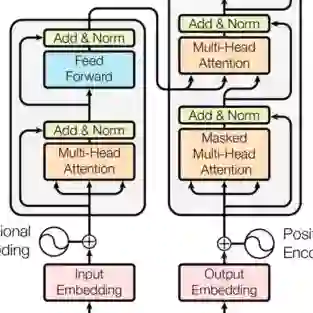
Accurate fault detection and localization in electrical distribution systems is crucial, especially with the increasing integration of distributed energy resources (DERs), which inject greater variability and complexity into grid operations. In this study, FaultXformer is proposed, a Transformer encoder-based architecture developed for automatic fault analysis using real-time current data obtained from phasor measurement unit (PMU). The approach utilizes time-series current data to initially extract rich temporal information in stage 1, which is crucial for identifying the fault type and precisely determining its location across multiple nodes. In Stage 2, these extracted features are processed to differentiate among distinct fault types and identify the respective fault location within the distribution system. Thus, this dual-stage transformer encoder pipeline enables high-fidelity representation learning, considerably boosting the performance of the work. The model was validated on a dataset generated from the IEEE 13-node test feeder, simulated with 20 separate fault locations and several DER integration scenarios, utilizing current measurements from four strategically located PMUs. To demonstrate robust performance evaluation, stratified 10-fold cross-validation is performed. FaultXformer achieved average accuracies of 98.76% in fault type classification and 98.92% in fault location identification across cross-validation, consistently surpassing conventional deep learning baselines convolutional neural network (CNN), recurrent neural network (RNN). long short-term memory (LSTM) by 1.70%, 34.95%, and 2.04% in classification accuracy and by 10.82%, 40.89%, and 6.27% in location accuracy, respectively. These results demonstrate the efficacy of the proposed model with significant DER penetration.
翻译:在配电系统中实现精确的故障检测与定位至关重要,尤其是在分布式能源(DERs)日益集成的背景下,其向电网运行注入了更大的可变性与复杂性。本研究提出FaultXformer,一种基于Transformer编码器的架构,利用从相量测量单元(PMU)获取的实时电流数据进行自动故障分析。该方法在阶段一利用时序电流数据初步提取丰富的时态信息,这对于识别故障类型并精确定位其在多节点中的位置至关重要。在阶段二,这些提取的特征被进一步处理,以区分不同的故障类型并确定其在配电系统中的具体故障位置。因此,这种双阶段Transformer编码器流水线实现了高保真度的表征学习,显著提升了工作性能。该模型在基于IEEE 13节点测试馈线生成的数据集上进行了验证,该数据集模拟了20个独立的故障位置及多种DER集成场景,并利用了四个战略部署的PMU的电流测量数据。为进行稳健的性能评估,采用了分层10折交叉验证。FaultXformer在交叉验证中实现了故障类型分类平均准确率98.76%和故障定位识别平均准确率98.92%,其分类准确率分别持续超越传统深度学习基线模型——卷积神经网络(CNN)、循环神经网络(RNN)和长短期记忆网络(LSTM)达1.70%、34.95%和2.04%,定位准确率分别超越10.82%、40.89%和6.27%。这些结果证明了所提模型在显著DER渗透率下的有效性。




相关内容


 微信扫码咨询专知VIP会员