

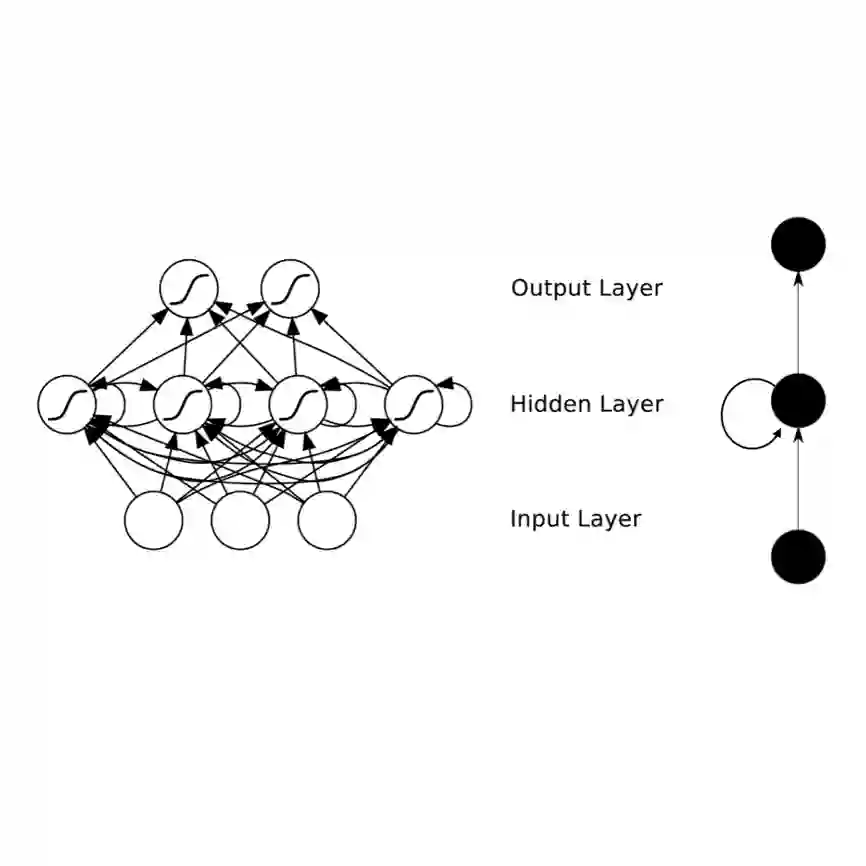
Machine learning is playing an increasing role in hydrology, supplementing or replacing physics-based models. One notable example is the use of recurrent neural networks (RNNs) for forecasting streamflow given observed precipitation and geographic characteristics. Training of such a model over the continental United States has demonstrated that a single set of model parameters can be used across independent catchments, and that RNNs can outperform physics-based models. In this work, we take a next step and study the performance of RNNs for river routing in land surface models (LSMs). Instead of observed precipitation, the LSM-RNN uses instantaneous runoff calculated from physics-based models as an input. We train the model with data from river basins spanning the globe and test it in streamflow hindcasts. The model demonstrates skill at generalization across basins (predicting streamflow in unseen catchments) and across time (predicting streamflow during years not used in training). We compare the predictions from the LSM-RNN to an existing physics-based model calibrated with a similar dataset and find that the LSM-RNN outperforms the physics-based model. Our results give further evidence that RNNs are effective for global streamflow prediction from runoff inputs and motivate the development of complete routing models that can capture nested sub-basis connections.
翻译:机器学习正愈发深入地应用于水文学领域,补充或替代基于物理过程的模型。一个典型例子是用循环神经网络,根据观测到的降水和地理特征预测径流量。在美国大陆范围内的模型训练表明,单一参数集可适用于独立流域,且循环神经网络性能优于物理模型。本研究进一步探索循环神经网络在陆面模式河流汇流模拟中的表现。与直接使用实测降水不同,陆面模式-循环神经网络采用基于物理过程模型计算的瞬时径流量作为输入。我们利用全球各河流域数据进行模型训练,并开展径流量后报测试。该模型展现出跨流域泛化能力(能预测未观测流域的径流)与跨时间泛化能力(能预测训练年份外的径流)。将陆面模式-循环神经网络预测结果与基于相似数据集校准的物理模型对比发现,前者表现更优。研究结果进一步证实循环神经网络能有效利用径流输入进行全球径流预测,为开发可捕获嵌套子流域联系的完整汇流模型提供了理论依据。




相关内容




 微信扫码咨询专知VIP会员