

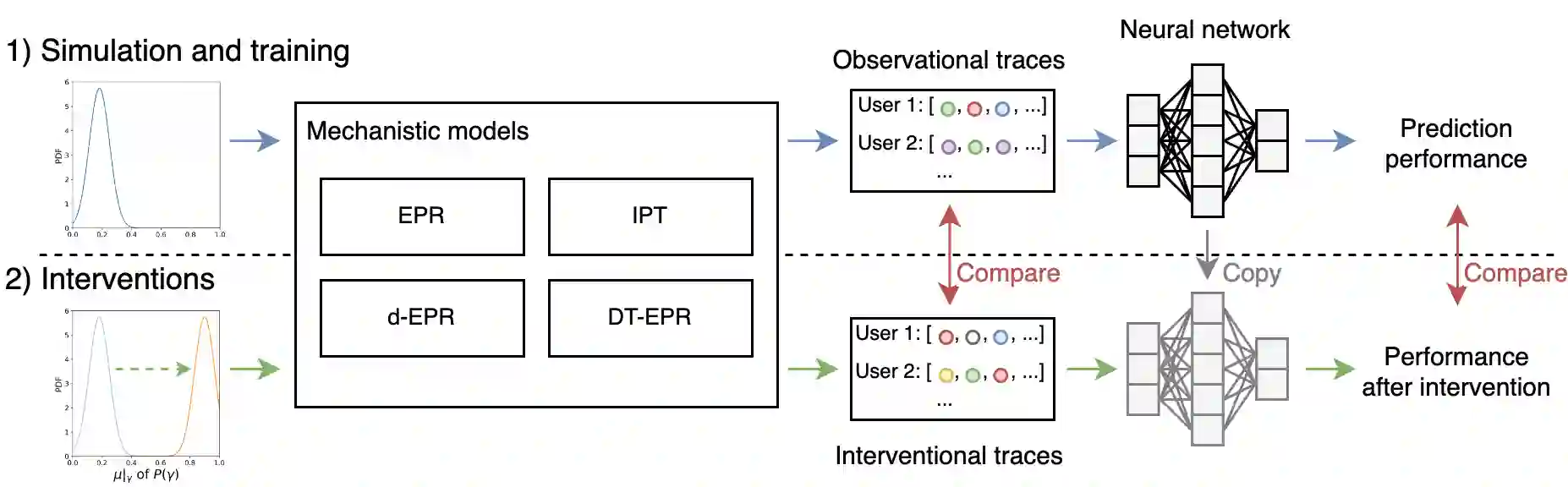
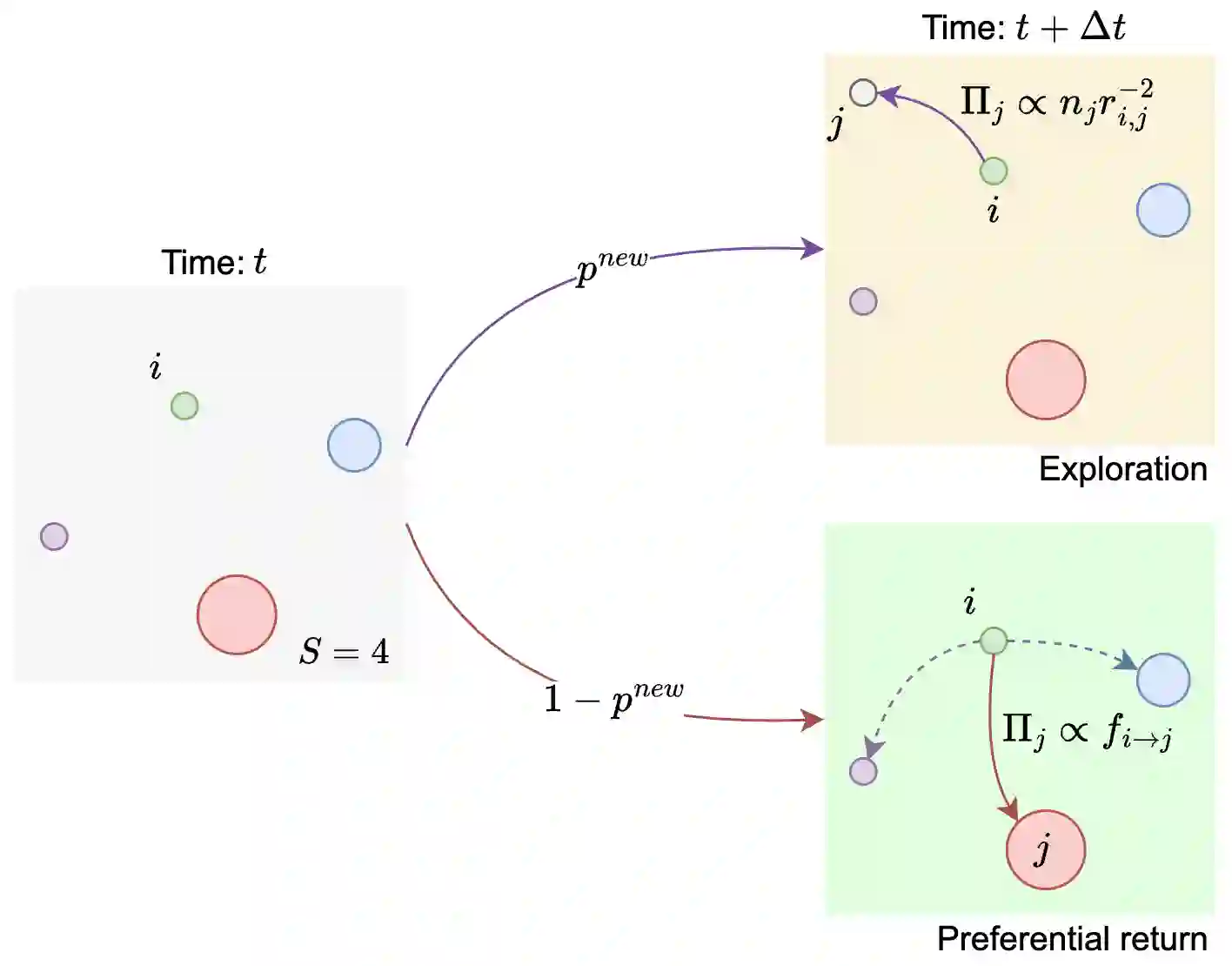
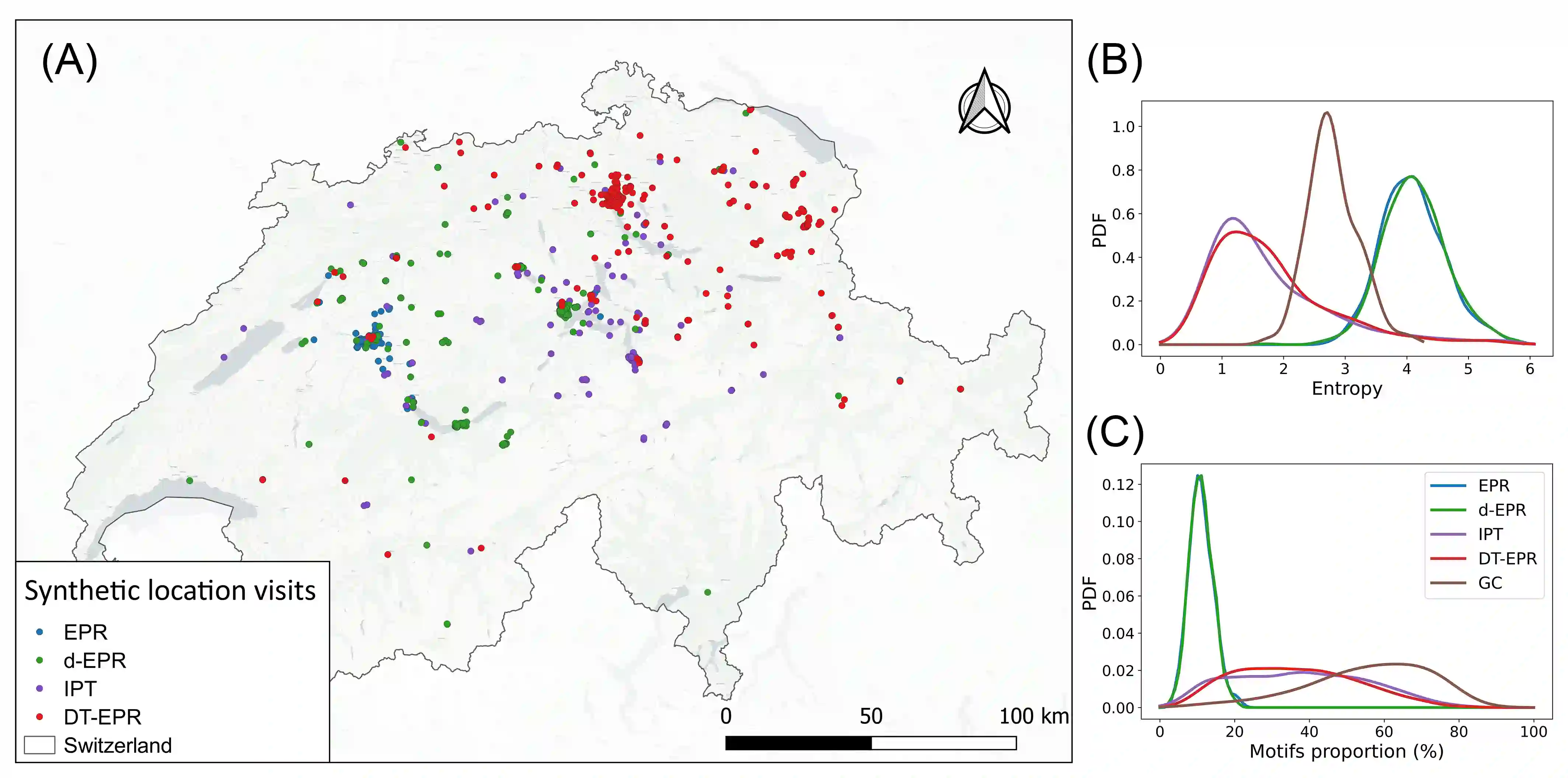
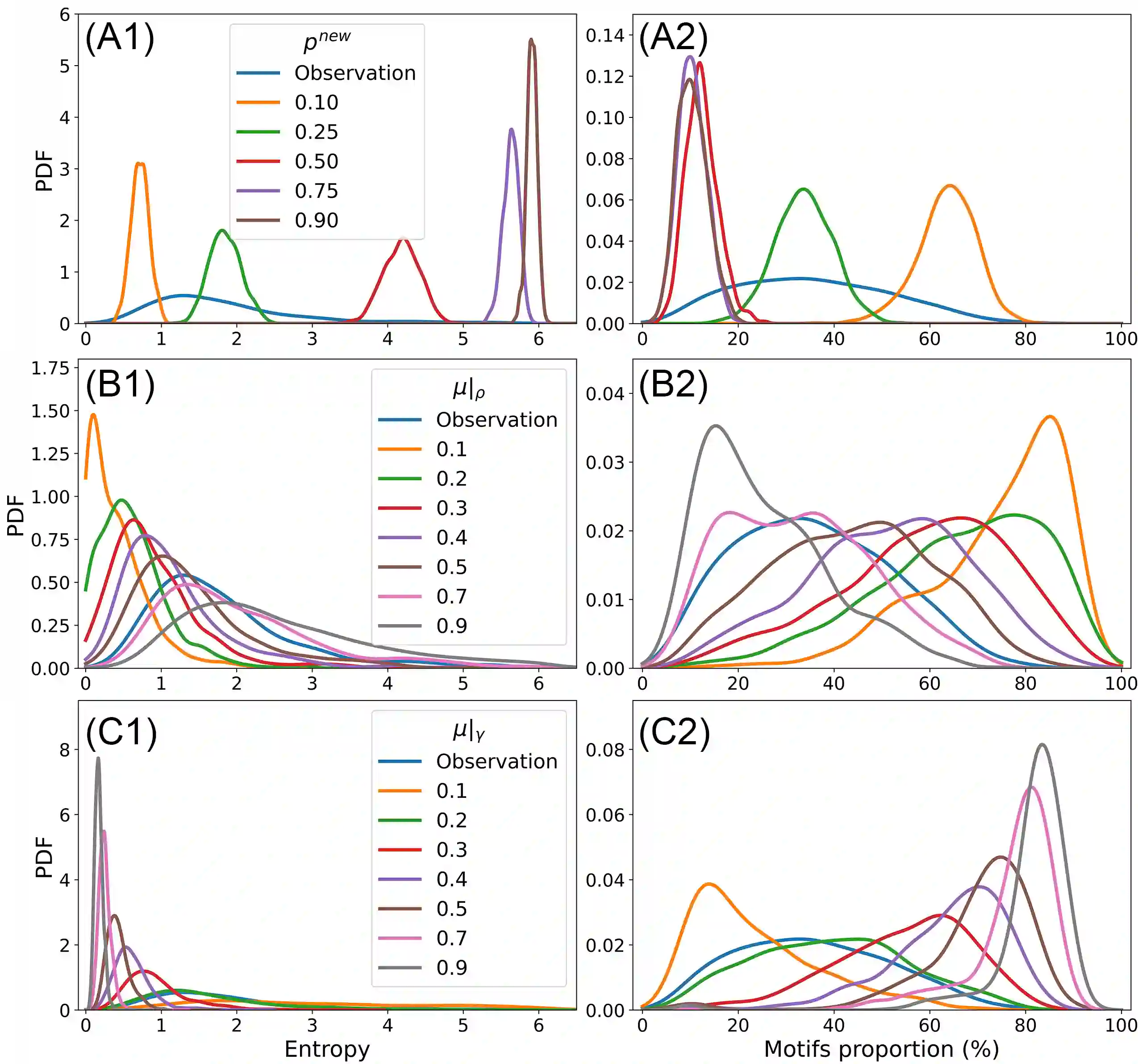
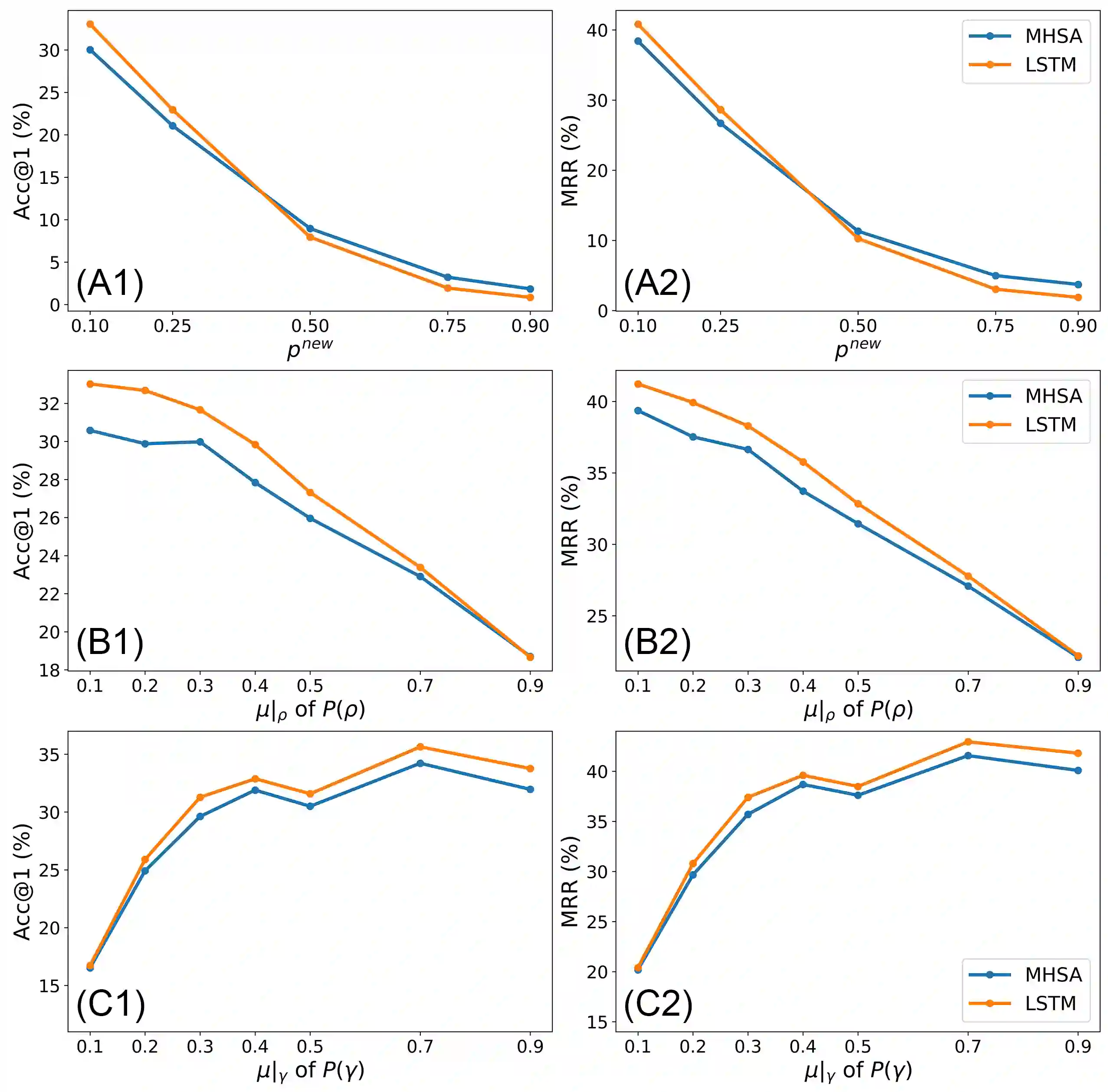
Deep neural networks are increasingly utilized in mobility prediction tasks, yet their intricate internal workings pose challenges for interpretability, especially in comprehending how various aspects of mobility behavior affect predictions. This study introduces a causal intervention framework to assess the impact of mobility-related factors on neural networks designed for next location prediction -- a task focusing on predicting the immediate next location of an individual. To achieve this, we employ individual mobility models to synthesize location visit sequences and control behavior dynamics by intervening in their data generation process. We evaluate the interventional location sequences using mobility metrics and input them into well-trained networks to analyze performance variations. The results demonstrate the effectiveness in producing location sequences with distinct mobility behaviors, thereby facilitating the simulation of diverse yet realistic spatial and temporal changes. These changes result in performance fluctuations in next location prediction networks, revealing impacts of critical mobility behavior factors, including sequential patterns in location transitions, proclivity for exploring new locations, and preferences in location choices at population and individual levels. The gained insights hold value for the real-world application of mobility prediction networks, and the framework is expected to promote the use of causal inference to enhance the interpretability and robustness of neural networks in mobility applications.
翻译:深度神经网络在移动预测任务中的应用日益广泛,然而其复杂的内部工作机制为可解释性带来了挑战,特别是在理解移动行为的各个方面如何影响预测结果方面。本研究引入一种因果干预框架,用于评估移动相关因素对下一位置预测神经网络的影响——该任务专注于预测个体的即时下一个位置。为实现这一目标,我们采用个体移动模型来合成位置访问序列,并通过干预其数据生成过程来控制行为动态。我们使用移动指标评估干预后的位置序列,并将其输入训练良好的网络中以分析性能变化。结果表明,该方法能有效生成具有不同移动行为特征的位置序列,从而促进对多样且现实的空间与时间变化的模拟。这些变化导致下一位置预测网络出现性能波动,揭示了关键移动行为因素的影响,包括位置转移中的序列模式、探索新地点的倾向性,以及在群体与个体层面对位置选择的偏好。所获得的见解对于移动预测网络的实际应用具有价值,且该框架有望推动利用因果推断来增强移动应用中神经网络的可解释性与鲁棒性。




相关内容



 微信扫码咨询专知VIP会员