

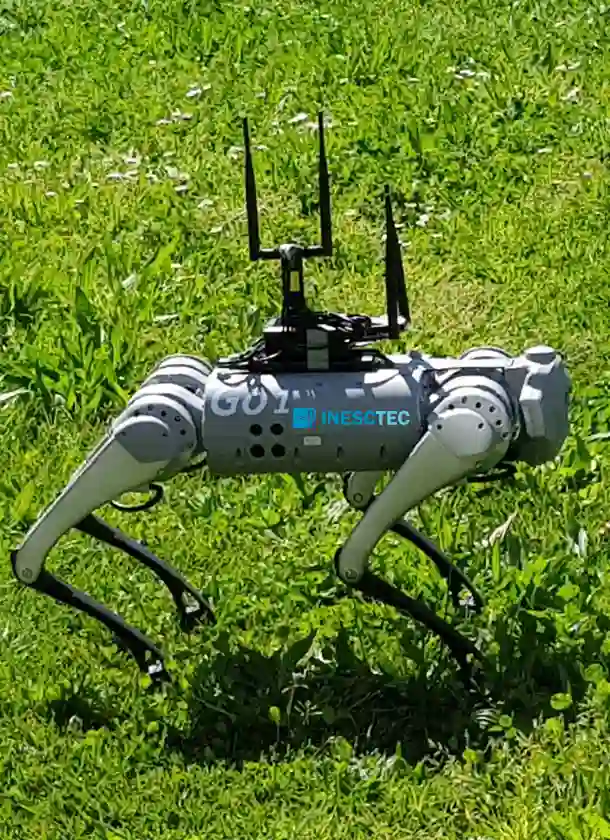
The emerging 6G paradigm and the proliferation of wireless devices require flexible network infrastructures capable of meeting the increasing Quality of Service (QoS) requirements. Mobile Robotic Platforms (MRPs) acting as mobile communications cells are a promising solution to provide on-demand wireless connectivity in dynamic networking scenarios. However, the energy consumption of MRPs is a challenge that must be considered, in order to maximize the availability of the wireless networks created. The main contribution of this paper is the experimental evaluation of the energy consumption of an MRP acting as a mobile communications cell. The evaluation considers different actions performed by a real MRP, showing that the energy consumption varies significantly with the type of action performed. The obtained results pave the way for optimizing the MRP movement in dynamic networking scenarios so that the wireless network's availability is maximized while minimizing the MRP's energy consumption.
翻译:新兴的6G范式与无线设备的激增要求网络基础设施具备灵活性,以满足日益增长的服务质量(QoS)需求。移动机器人平台(MRP)作为移动通信单元,是动态组网场景中按需提供无线连接的可行方案。然而,MRP的能耗问题必须加以考量,以最大化所构建无线网络的可用性。本文的主要贡献在于对充当移动通信单元的MRP进行能耗实验评估。该评估基于真实MRP执行的不同动作,结果表明能耗随动作类型显著变化。所得结果为优化动态组网场景中的MRP运动奠定了基础,从而在最小化MRP能耗的同时最大化无线网络可用性。








相关内容





 微信扫码咨询专知VIP会员