

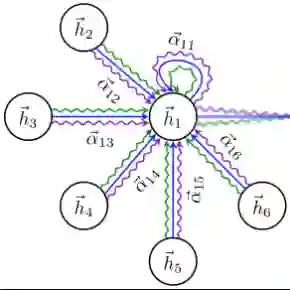
Classical structural-based visual localization methods offer high accuracy but face trade-offs in terms of storage, speed, and privacy. A recent innovation, keypoint scene coordinate regression (KSCR) named D2S addresses these issues by leveraging graph attention networks to enhance keypoint relationships and predict their 3D coordinates using a simple multilayer perceptron (MLP). Camera pose is then determined via PnP+RANSAC, using established 2D-3D correspondences. While KSCR achieves competitive results, rivaling state-of-the-art image-retrieval methods like HLoc across multiple benchmarks, its performance is hindered when data samples are limited due to the deep learning model's reliance on extensive data. This paper proposes a solution to this challenge by introducing a pipeline for keypoint descriptor synthesis using Neural Radiance Field (NeRF). By generating novel poses and feeding them into a trained NeRF model to create new views, our approach enhances the KSCR's generalization capabilities in data-scarce environments. The proposed system could significantly improve localization accuracy by up to 50\% and cost only a fraction of time for data synthesis. Furthermore, its modular design allows for the integration of multiple NeRFs, offering a versatile and efficient solution for visual localization. The implementation is publicly available at: https://github.com/ais-lab/DescriptorSynthesis4Feat2Map.
翻译:暂无翻译




相关内容




 微信扫码咨询专知VIP会员