

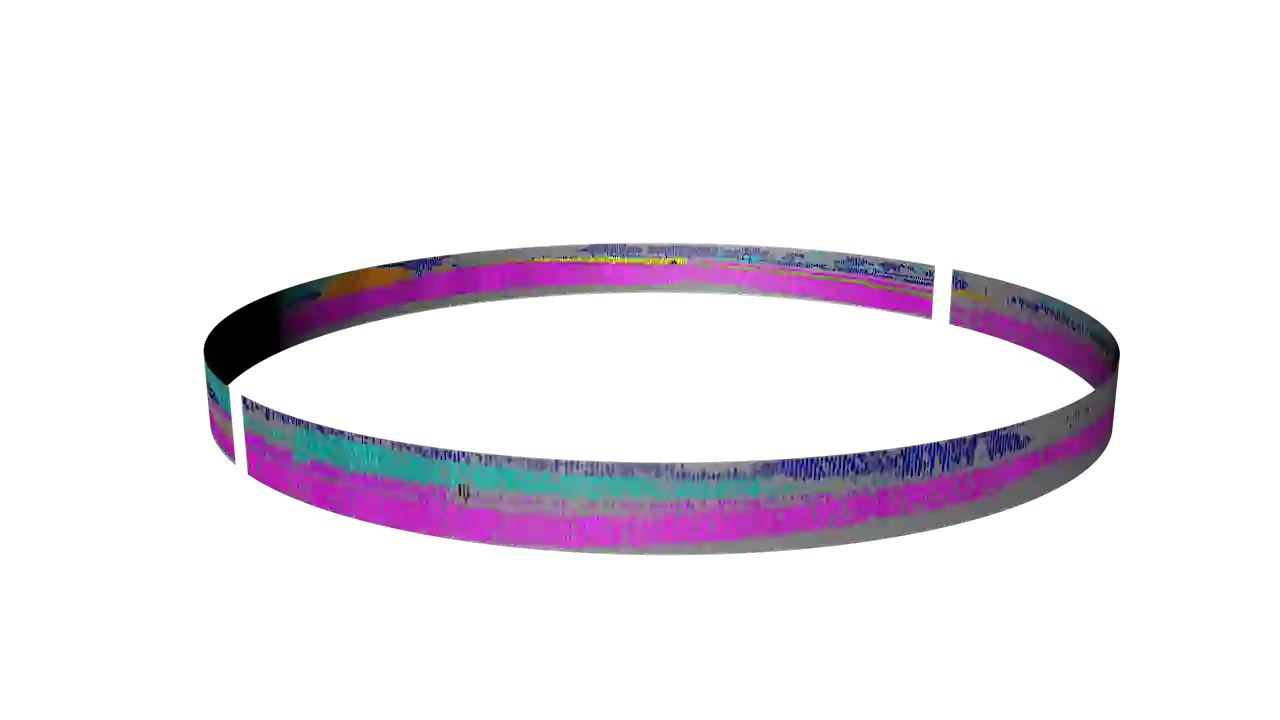
Transferring knowledge learned from the labeled source domain to the raw target domain for unsupervised domain adaptation (UDA) is essential to the scalable deployment of autonomous driving systems. State-of-the-art methods in UDA often employ a key idea: utilizing joint supervision signals from both source and target domains for self-training. In this work, we improve and extend this aspect. We present ConDA, a concatenation-based domain adaptation framework for LiDAR segmentation that: 1) constructs an intermediate domain consisting of fine-grained interchange signals from both source and target domains without destabilizing the semantic coherency of objects and background around the ego-vehicle; and 2) utilizes the intermediate domain for self-training. To improve the network training on the source domain and self-training on the intermediate domain, we propose an anti-aliasing regularizer and an entropy aggregator to reduce the negative effect caused by the aliasing artifacts and noisy pseudo labels. Through extensive studies, we demonstrate that ConDA significantly outperforms prior arts in mitigating domain gaps.
翻译:将标注源域中学到的知识迁移至无标注目标域,以实现无监督域自适应(UDA),是推动自动驾驶系统规模化部署的关键。当前UDA领域的先进方法常采用核心策略:借助源域与目标域的联合监督信号进行自训练。本文对此进行改进与拓展,提出名为ConDA的基于拼接的域自适应框架用于LiDAR分割,该框架:1)构建由源域与目标域细粒度交换信号组成的中间域,且不破坏自车周围物体与背景的语义连贯性;2)利用该中间域进行自训练。为优化网络在源域上的训练及在中间域上的自训练过程,我们提出抗混叠正则化器与熵聚合器,以降低混叠伪影与噪声伪标签带来的负面影响。通过广泛实验证明,ConDA在缩小域差距方面显著优于现有方法。





相关内容


 微信扫码咨询专知VIP会员