

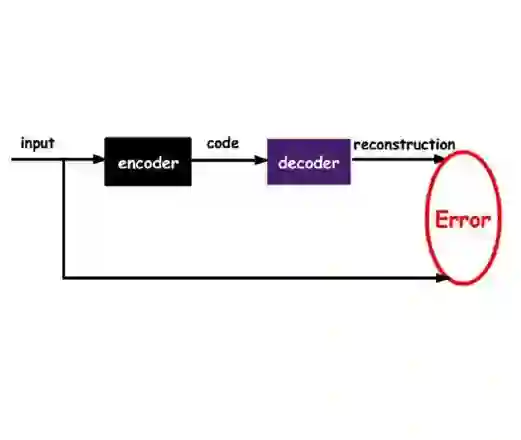
Well-calibrated traffic flow models are fundamental to understanding traffic phenomena and designing control strategies. Traditional calibration has been developed base on optimization methods. In this paper, we propose a novel physics-informed, learning-based calibration approach that achieves performances comparable to and even better than those of optimization-based methods. To this end, we combine the classical deep autoencoder, an unsupervised machine learning model consisting of one encoder and one decoder, with traffic flow models. Our approach informs the decoder of the physical traffic flow models and thus induces the encoder to yield reasonable traffic parameters given flow and speed measurements. We also introduce the denoising autoencoder into our method so that it can handles not only with normal data but also with corrupted data with missing values. We verified our approach with a case study of I-210 E in California.
翻译:校准良好的交通流模型是理解交通现象和设计控制策略的基础。传统校准方法基于优化算法。本文提出了一种新颖的物理信息学习校准方法,其性能可与甚至超越基于优化的方法。为此,我们将经典深度自编码器(一种由编码器和解码器组成的无监督机器学习模型)与交通流模型相结合。该方法使解码器感知物理交通流模型,从而引导编码器根据流量和速度数据生成合理的交通参数。同时,我们引入去噪自编码器,使其不仅能处理正常数据,还能处理存在缺失值的损坏数据。通过加州I-210 E高速公路案例研究验证了该方法的有效性。




相关内容




 微信扫码咨询专知VIP会员