

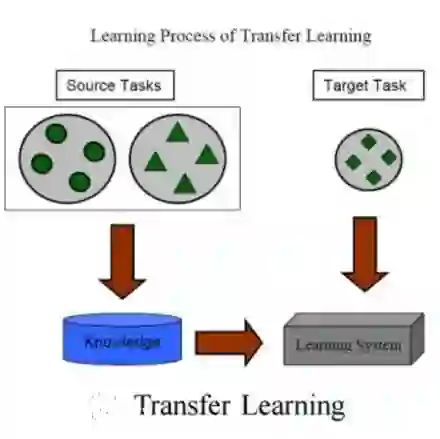
Presentation Attack Detection (PAD) is a crucial stage in facial recognition systems to avoid leakage of personal information or spoofing of identity to entities. Recently, pulse detection based on remote photoplethysmography (rPPG) has been shown to be effective in face presentation attack detection. This work presents three different approaches to the presentation attack detection based on rPPG: (i) The physiological domain, a domain using rPPG-based models, (ii) the Deepfakes domain, a domain where models were retrained from the physiological domain to specific Deepfakes detection tasks; and (iii) a new Presentation Attack domain was trained by applying transfer learning from the two previous domains to improve the capability to differentiate between bona-fides and attacks. The results show the efficiency of the rPPG-based models for presentation attack detection, evidencing a 21.70% decrease in average classification error rate (ACER) (from 41.03% to 19.32%) when the presentation attack domain is compared to the physiological and Deepfakes domains. Our experiments highlight the efficiency of transfer learning in rPPG-based models and perform well in presentation attack detection in instruments that do not allow copying of this physiological feature.
翻译:呈现攻击检测是人脸识别系统中防止个人信息泄露或身份欺骗的关键环节。近年来,基于远程光电容积描记法(rPPG)的脉搏检测在人脸呈现攻击检测中展现出有效性。本文提出了三种基于rPPG的呈现攻击检测方法:(i)生理域——使用基于rPPG模型的领域;(ii)深度伪造域——从生理域重新训练模型以专门检测深度伪造的领域;(iii)呈现攻击域——通过迁移学习结合前两个领域的特征训练新模型,提升区分真实样本与攻击的能力。结果表明基于rPPG的模型在呈现攻击检测中具有高效性,与生理域和深度伪造域相比,呈现攻击域的平均分类错误率(ACER)降低了21.70%(从41.03%降至19.32%)。我们的实验凸显了迁移学习在基于rPPG模型中的有效性,并证明该方法在无法复现生理特征的攻击工具中表现优异。




相关内容


 微信扫码咨询专知VIP会员