

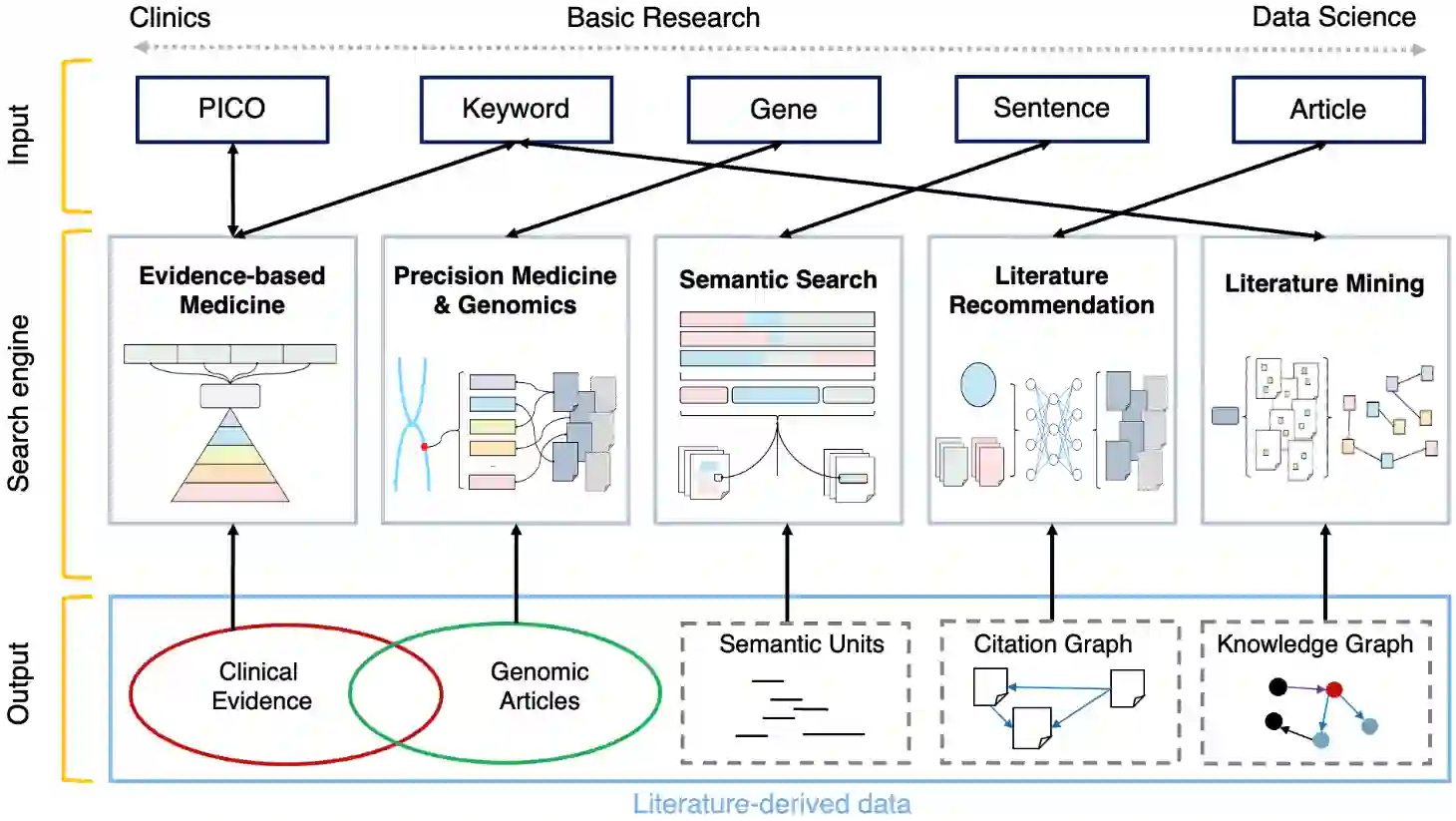
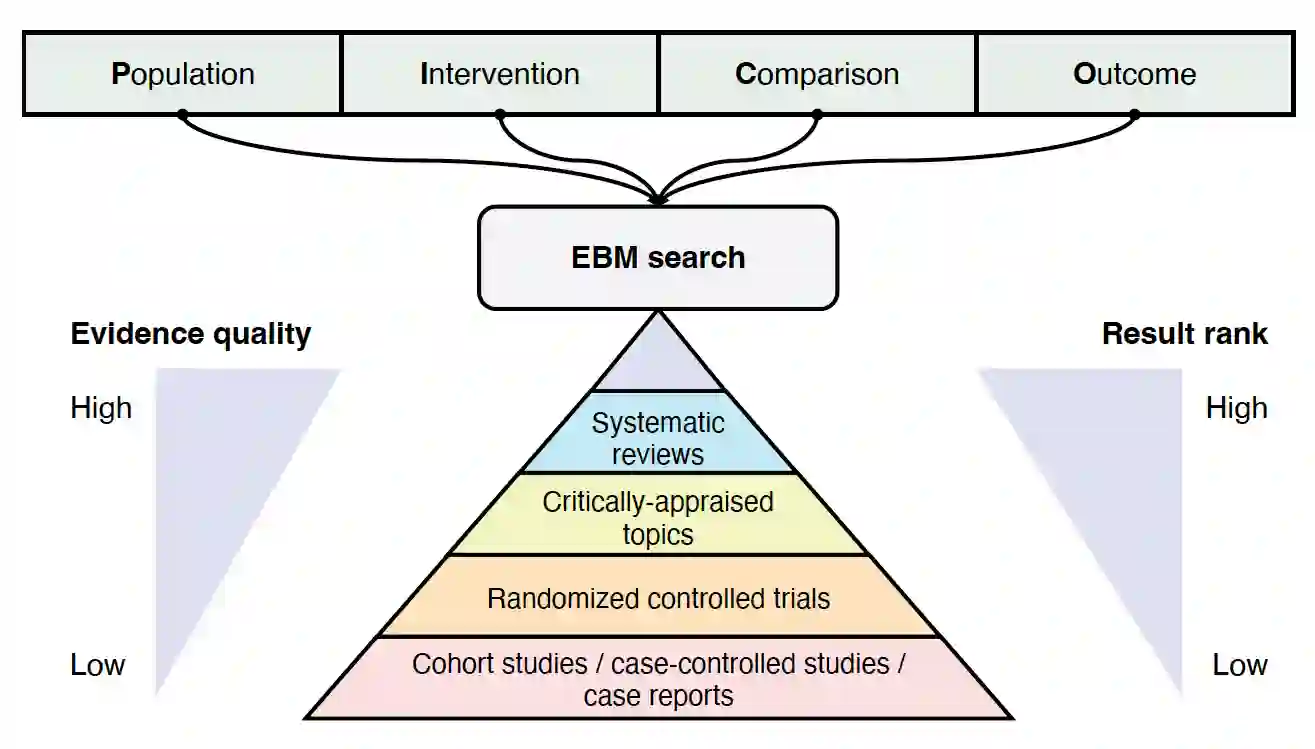
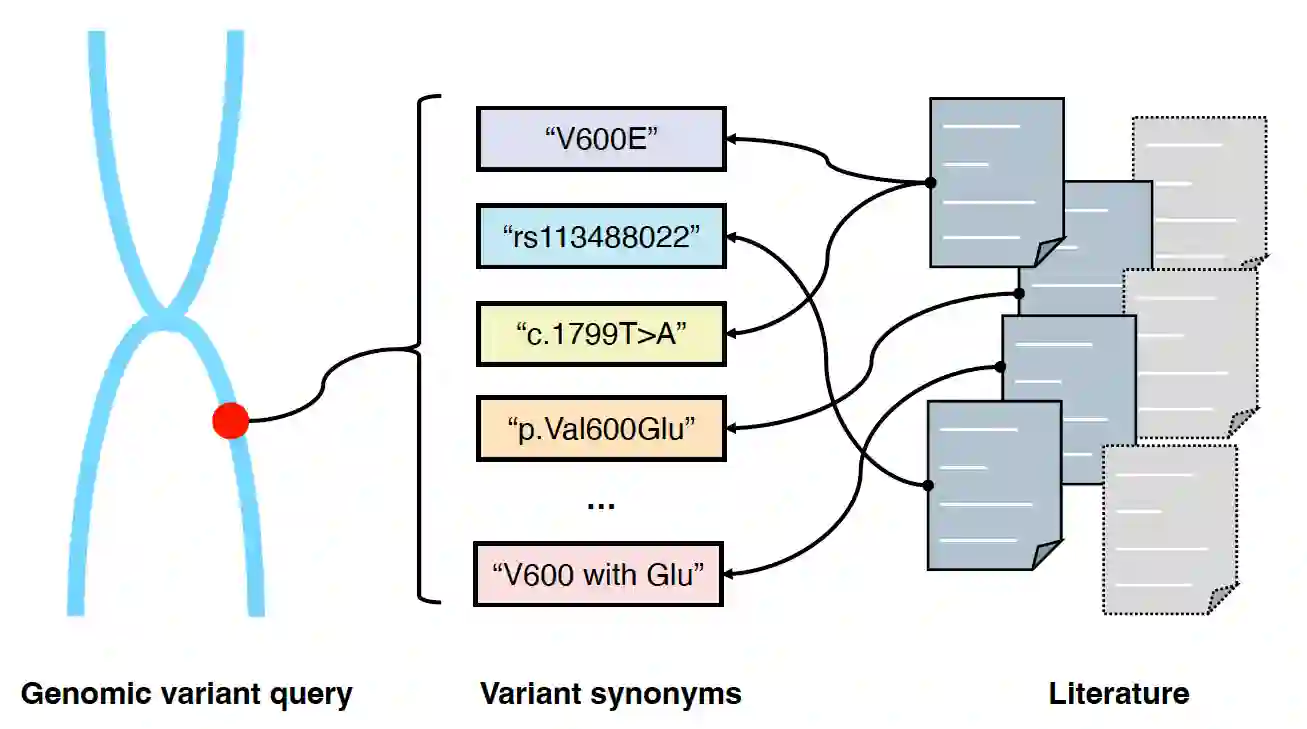
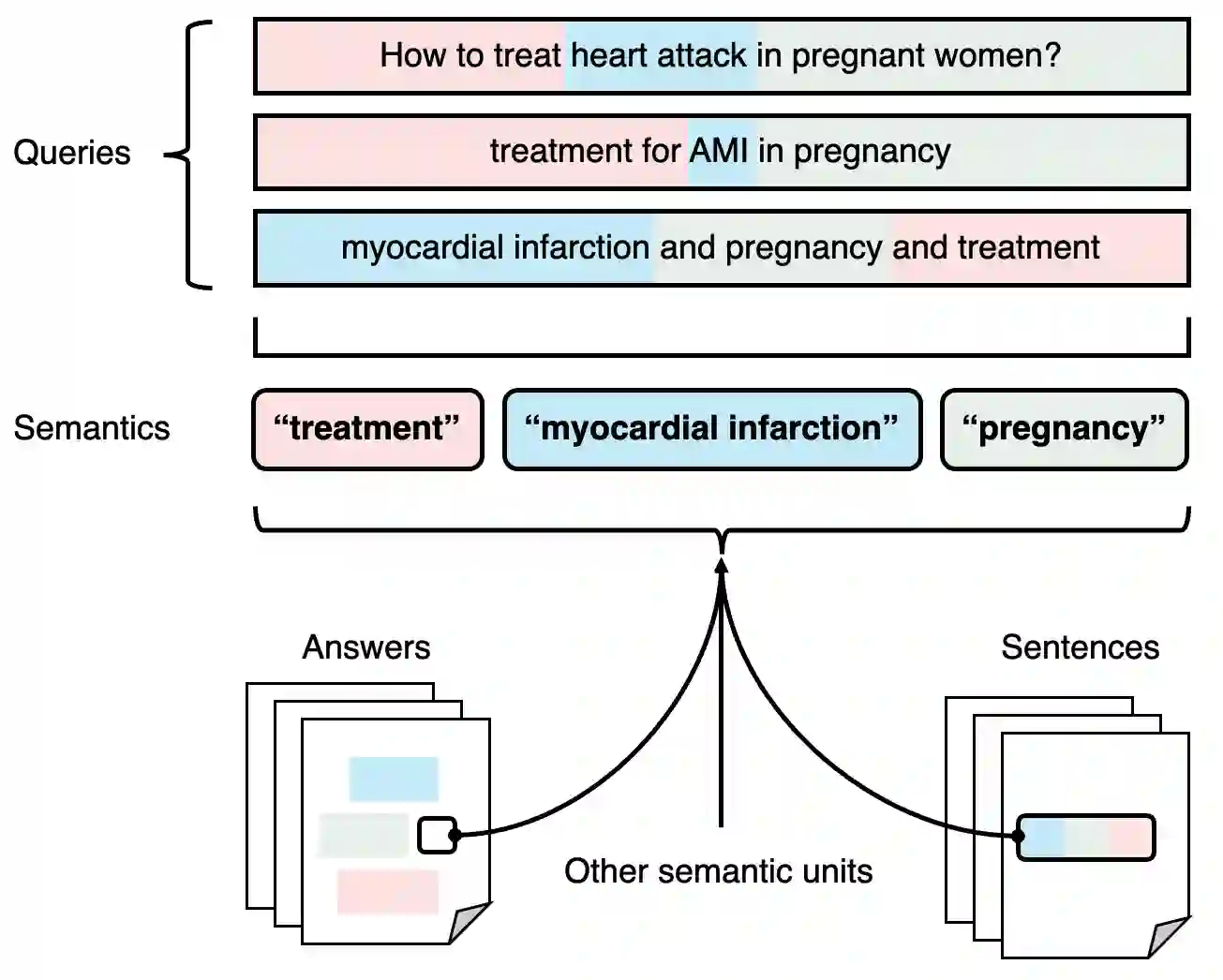
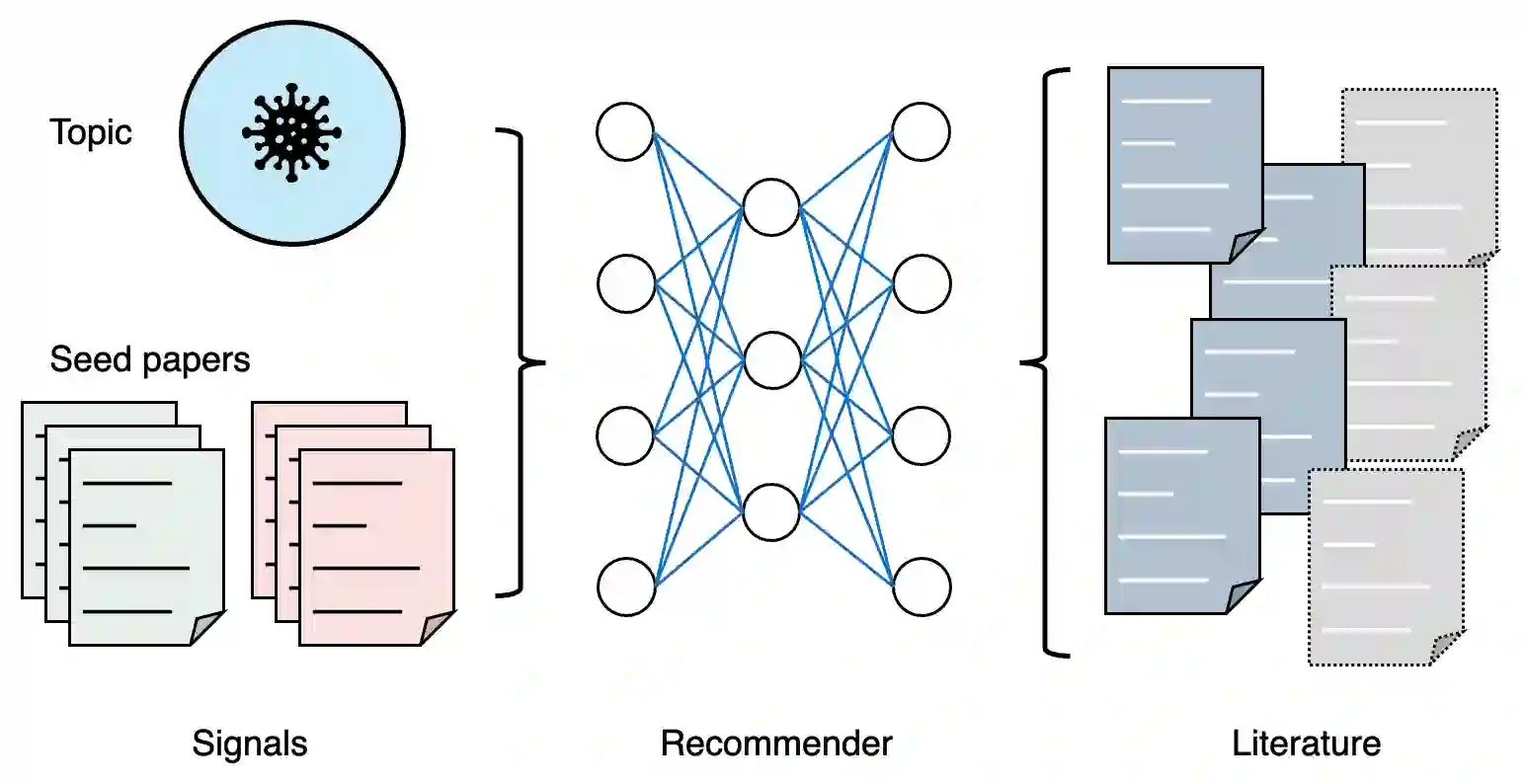
Biomedical research yields a wealth of information, much of which is only accessible through the literature. Consequently, literature search is an essential tool for building on prior knowledge in clinical and biomedical research. Although recent improvements in artificial intelligence have expanded functionality beyond keyword-based search, these advances may be unfamiliar to clinicians and researchers. In response, we present a survey of literature search tools tailored to both general and specific information needs in biomedicine, with the objective of helping readers efficiently fulfill their information needs. We first examine the widely used PubMed search engine, discussing recent improvements and continued challenges. We then describe literature search tools catering to five specific information needs: 1. Identifying high-quality clinical research for evidence-based medicine. 2. Retrieving gene-related information for precision medicine and genomics. 3. Searching by meaning, including natural language questions. 4. Locating related articles with literature recommendation. 5. Mining literature to discover associations between concepts such as diseases and genetic variants. Additionally, we cover practical considerations and best practices for choosing and using these tools. Finally, we provide a perspective on the future of literature search engines, considering recent breakthroughs in large language models such as ChatGPT. In summary, our survey provides a comprehensive view of biomedical literature search functionalities with 36 publicly available tools.
翻译:生物医学研究产生了海量信息,其中大部分仅能通过文献获取。因此,文献检索是临床与生物医学研究中构建先前知识体系的重要工具。尽管人工智能的最新进展已拓展了超越关键词检索的功能,但临床医生和研究者可能对这些进展尚不熟悉。为此,我们针对生物医学中通用与特定信息需求,系统综述了文献检索工具,旨在帮助读者高效满足信息需求。我们首先探讨广泛使用的PubMed搜索引擎,分析其近年来的改进与持续挑战;继而介绍满足五类特定信息需求的文献检索工具:1. 识别高质量临床研究以支持循证医学;2. 检索基因相关信息助力精准医学与基因组学;3. 基于语义(包括自然语言问题)进行检索;4. 通过文献推荐定位相关文章;5. 挖掘文献以发现疾病与遗传变异等概念间的关联。同时,我们涵盖选择和使用这些工具的实践考量与最佳实践。最后,基于ChatGPT等大语言模型的最新突破,展望文献检索引擎的未来发展。总而言之,本综述通过36个公开可用工具,全面展示了生物医学文献检索功能。




相关内容



 微信扫码咨询专知VIP会员