

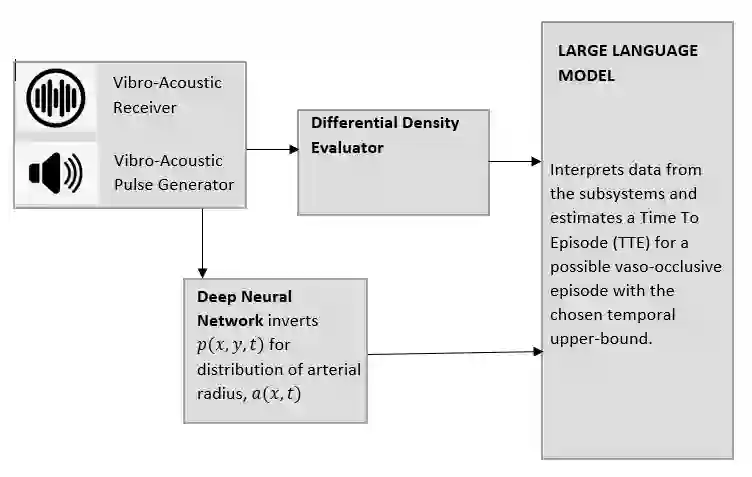
This study investigates the potential of an ambulatory device that incorporates Large Language Models (LLMs) in cadence with other specialized ML models to assess anemia severity in sickle cell patients in real time. The device would rely on sensor data that measures angiogenic material levels to assess anemia severity, providing real-time information to patients and clinicians to reduce the frequency of vaso-occlusive crises because of the early detection of anemia severity, allowing for timely interventions and potentially reducing the likelihood of serious complications. The main challenges in developing such a device are the creation of a reliable non-invasive tool for angiogenic level assessment, a biophysics model and the practical consideration of an LLM communicating with emergency personnel on behalf of an incapacitated patient. A possible system is proposed, and the limitations of this approach are discussed.
翻译:本研究探讨了一种集成大语言模型与其它专用机器学习模型的便携式设备的潜力,用于实时评估镰状细胞患者的贫血严重程度。该设备将依赖测量血管生成物质水平的传感器数据来评估贫血严重程度,向患者和临床医生提供实时信息,通过早期检测贫血严重程度减少血管闭塞危象的发生频率,从而允许及时干预并可能降低严重并发症的可能性。开发此类设备的主要挑战包括:创建可靠的非侵入性工具用于血管生成水平评估、建立生物物理模型,以及考虑大语言模型在患者无法行动时代表其与急救人员沟通的实际问题。本文提出了一种可能的系统方案,并讨论了该方法的局限性。




相关内容




 微信扫码咨询专知VIP会员