

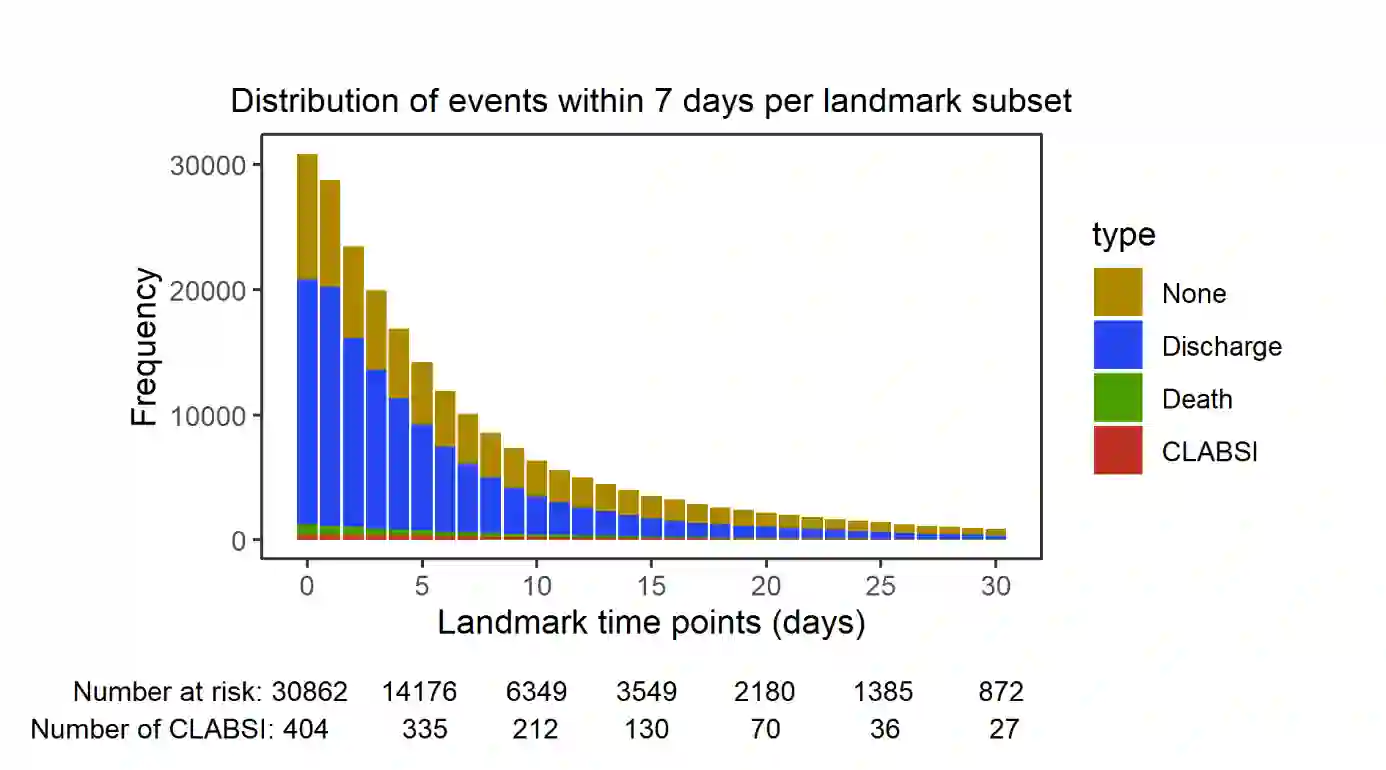
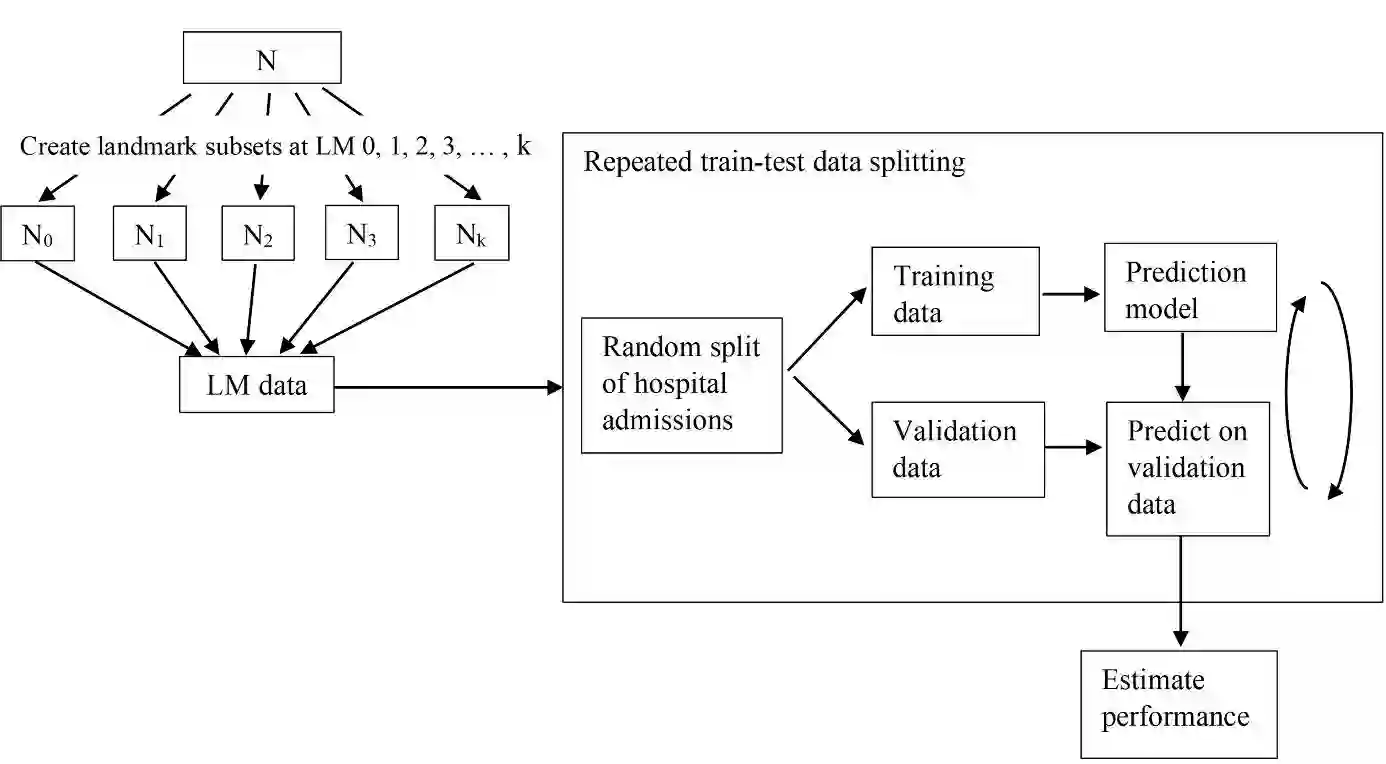
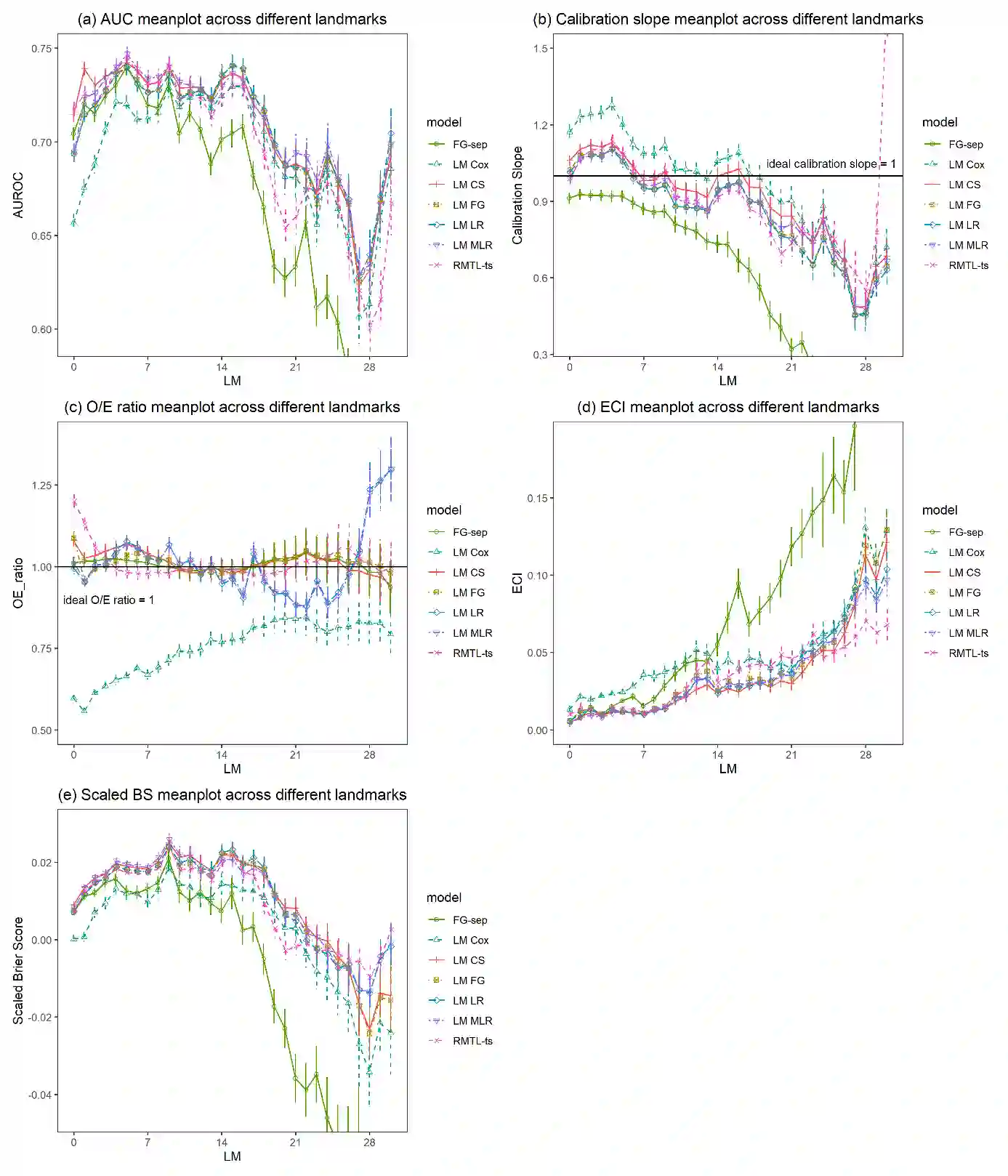
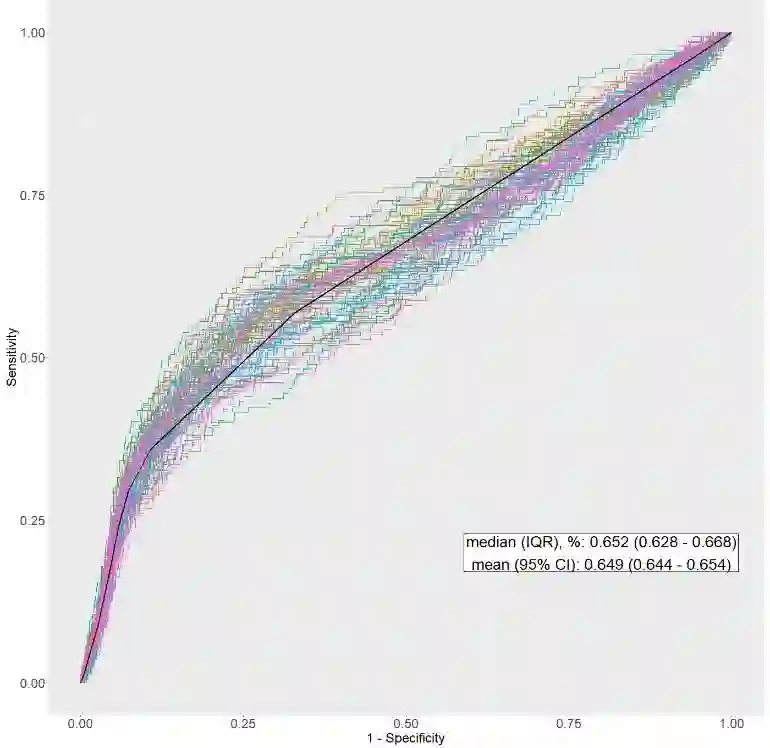
Objective Hospitals register information in the electronic health records (EHR) continuously until discharge or death. As such, there is no censoring for in-hospital outcomes. We aimed to compare different dynamic regression modeling approaches to predict central line-associated bloodstream infections (CLABSI) in EHR while accounting for competing events precluding CLABSI. Materials and Methods We analyzed data from 30,862 catheter episodes at University Hospitals Leuven from 2012 and 2013 to predict 7-day risk of CLABSI. Competing events are discharge and death. Static models at catheter onset included logistic, multinomial logistic, Cox, cause-specific hazard, and Fine-Gray regression. Dynamic models updated predictions daily up to 30 days after catheter onset (i.e. landmarks 0 to 30 days), and included landmark supermodel extensions of the static models, separate Fine-Gray models per landmark time, and regularized multi-task learning (RMTL). Model performance was assessed using 100 random 2:1 train-test splits. Results The Cox model performed worst of all static models in terms of area under the receiver operating characteristic curve (AUC) and calibration. Dynamic landmark supermodels reached peak AUCs between 0.741-0.747 at landmark 5. The Cox landmark supermodel had the worst AUCs (<=0.731) and calibration up to landmark 7. Separate Fine-Gray models per landmark performed worst for later landmarks, when the number of patients at risk was low. Discussion and Conclusion Categorical and time-to-event approaches had similar performance in the static and dynamic settings, except Cox models. Ignoring competing risks caused problems for risk prediction in the time-to-event framework (Cox), but not in the categorical framework (logistic regression).
翻译:目的 医院在电子健康记录(EHR)中持续记录患者从入院至出院或死亡的信息,因此住院期间结局不存在删失问题。我们旨在比较不同动态回归建模方法,在考虑可能阻止中心静脉导管相关血流感染(CLABSI)发生的竞争事件下,利用EHR预测CLABSI。材料与方法 我们分析了2012-2013年鲁汶大学医院30862例导管置管事件数据,预测7天内CLABSI发生风险。竞争事件包括出院和死亡。静态模型在导管置入时建立,包括逻辑回归、多项逻辑回归、Cox模型、病因特异性风险模型及Fine-Gray回归模型。动态模型每日更新预测至导管置入后30天(即标志点0至30天),包括静态模型的标志点超级模型扩展、每个标志点独立的Fine-Gray模型以及正则化多任务学习(RMTL)。采用100次随机2:1训练-测试拆分评估模型性能。结果 在受试者工作特征曲线下面积(AUC)和校准度方面,Cox模型在所有静态模型中表现最差。动态标志点超级模型在标志点5达到峰值AUC(0.741-0.747)。Cox标志点超级模型在标志点7之前的AUC(≤0.731)和校准度均最差。在后期标志点(当风险患者数量较少时),各标志点独立的Fine-Gray模型表现最差。讨论与结论 除Cox模型外,分类方法与时间事件方法在静态和动态设置中表现相似。忽略竞争事件在时间事件框架(Cox模型)中导致风险预测问题,但在分类框架(逻辑回归)中未出现。





相关内容




 微信扫码咨询专知VIP会员