

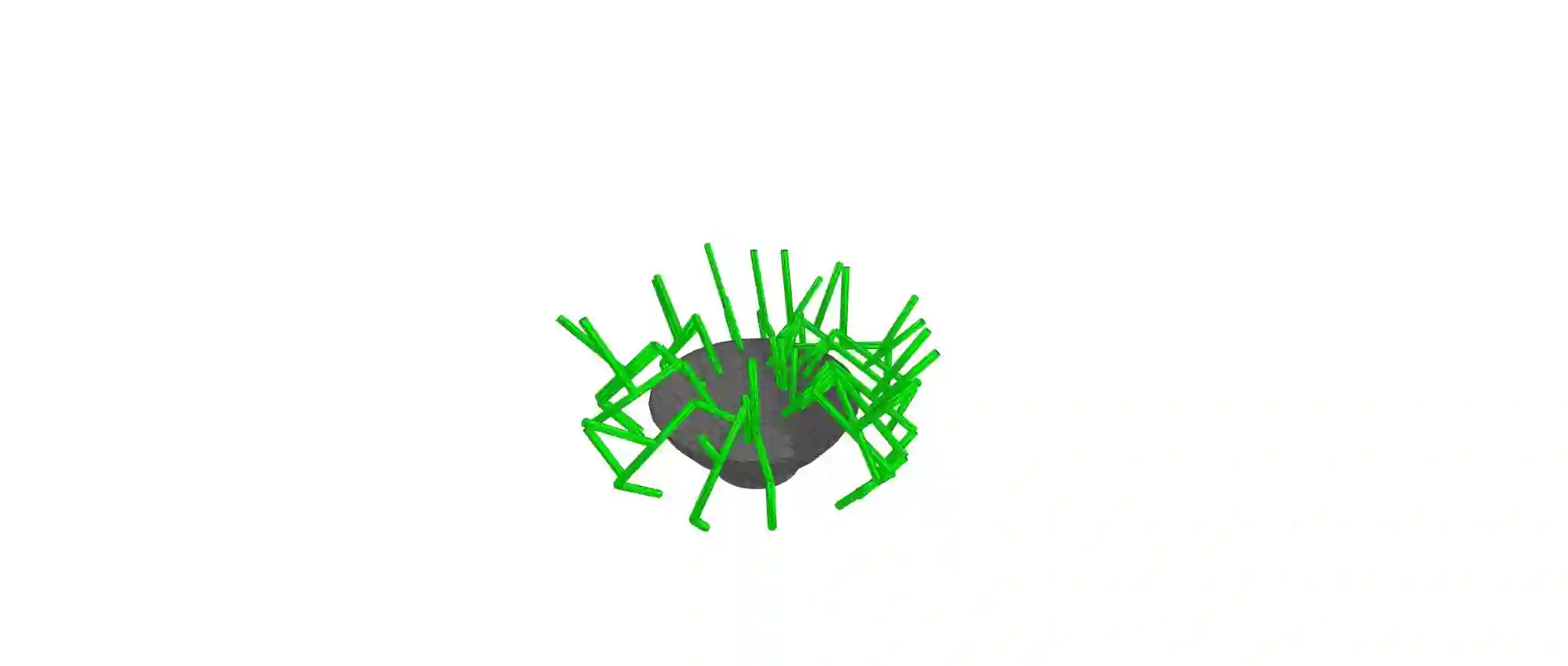
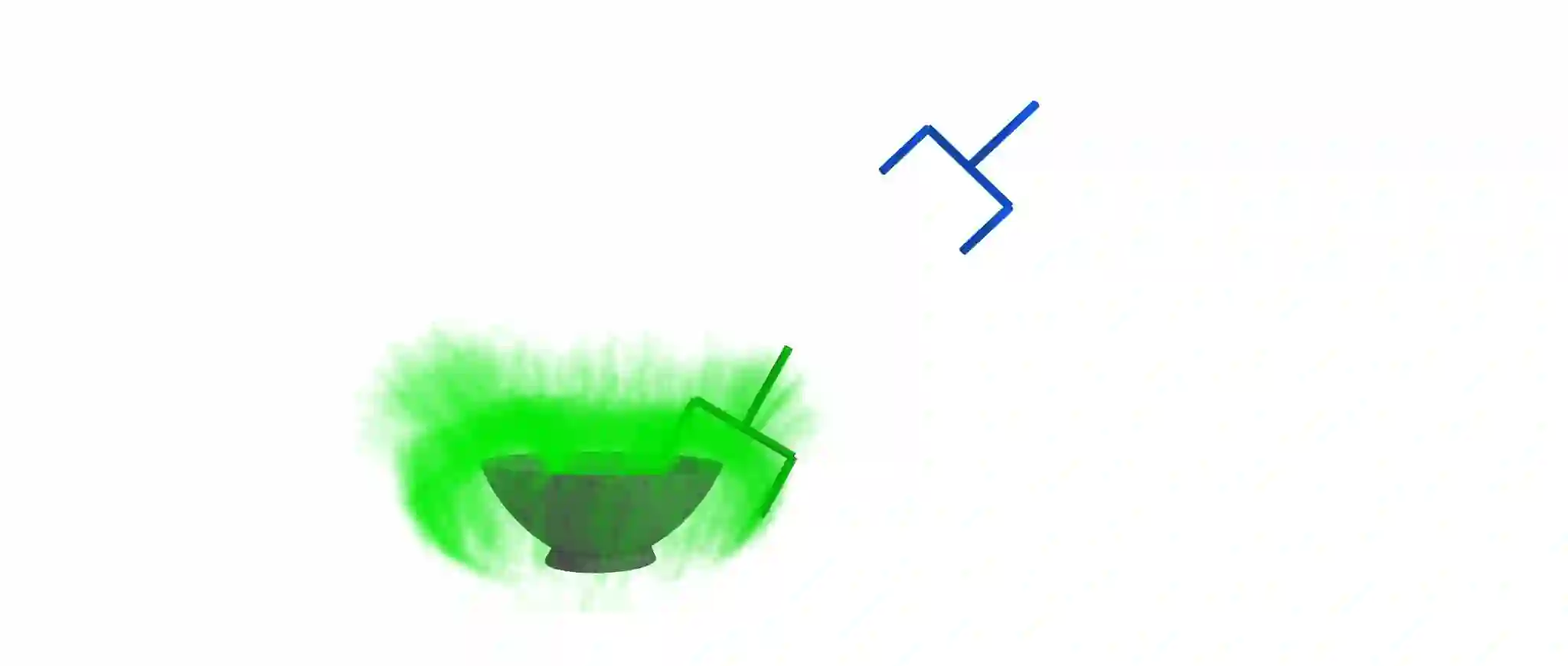
We formulate grasp learning as a neural field and present Neural Grasp Distance Fields (NGDF). Here, the input is a 6D pose of a robot end effector and output is a distance to a continuous manifold of valid grasps for an object. In contrast to current approaches that predict a set of discrete candidate grasps, the distance-based NGDF representation is easily interpreted as a cost, and minimizing this cost produces a successful grasp pose. This grasp distance cost can be incorporated directly into a trajectory optimizer for joint optimization with other costs such as trajectory smoothness and collision avoidance. During optimization, as the various costs are balanced and minimized, the grasp target is allowed to smoothly vary, as the learned grasp field is continuous. We evaluate NGDF on joint grasp and motion planning in simulation and the real world, outperforming baselines by 63% execution success while generalizing to unseen query poses and unseen object shapes. Project page: https://sites.google.com/view/neural-grasp-distance-fields.
翻译:我们将抓取学习形式化为一种神经场,并提出了神经抓取距离场(NGDF)。该方法将机器人末端执行器的6D位姿作为输入,输出该位姿到物体有效抓取连续流形的距离。与当前预测一组离散候选抓取的方法不同,基于距离的NGDF表示可轻松解释为代价函数,通过最小化该代价可生成成功的抓取位姿。此抓取距离代价可直接融入轨迹优化器中,与轨迹平滑度、避碰等其他代价进行联合优化。在优化过程中,由于所学抓取场具有连续性,当平衡并最小化各项代价时,抓取目标可以平滑变化。我们在仿真和真实世界中评估了NGDF在联合抓取与运动规划任务中的表现,其执行成功率比基线方法提升63%,同时能泛化至未见过的查询位姿和物体形状。项目页面:https://sites.google.com/view/neural-grasp-distance-fields。






相关内容



 微信扫码咨询专知VIP会员